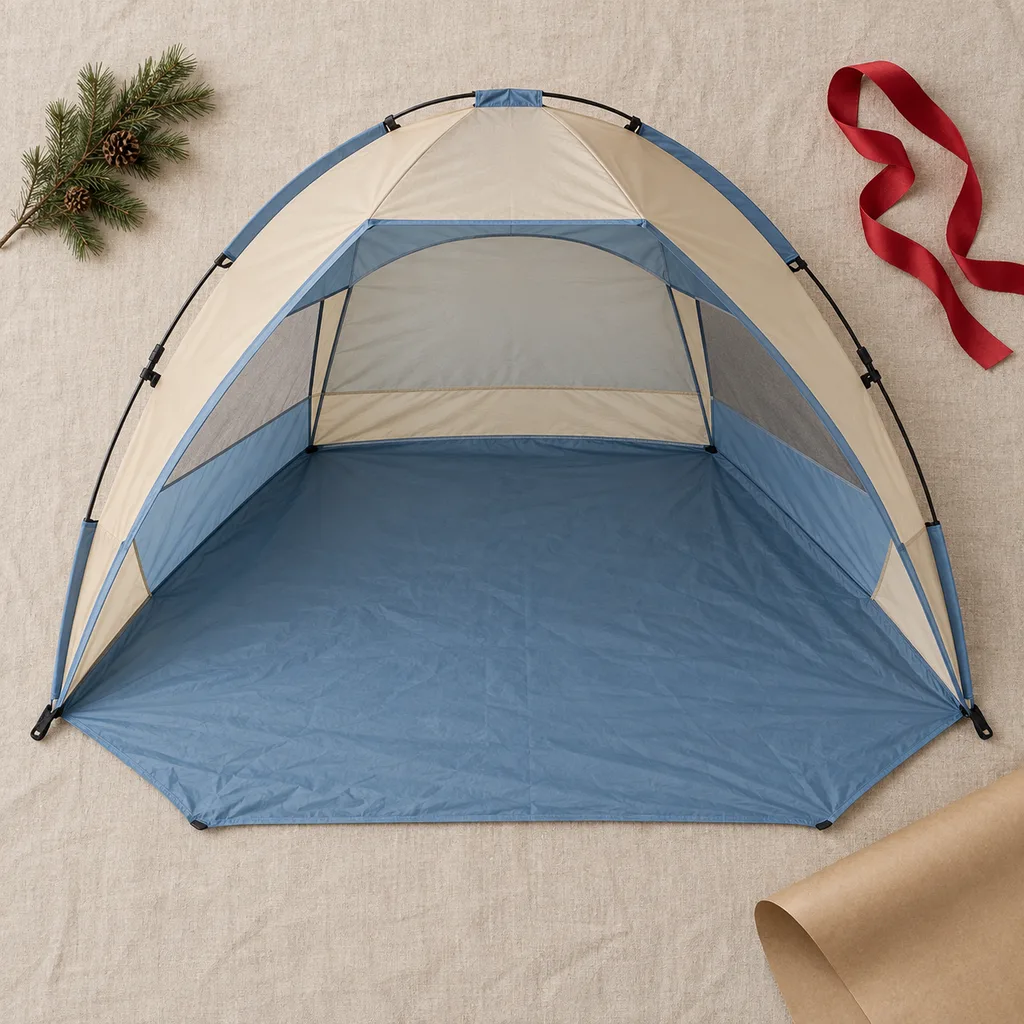
Portable beach sun shelter
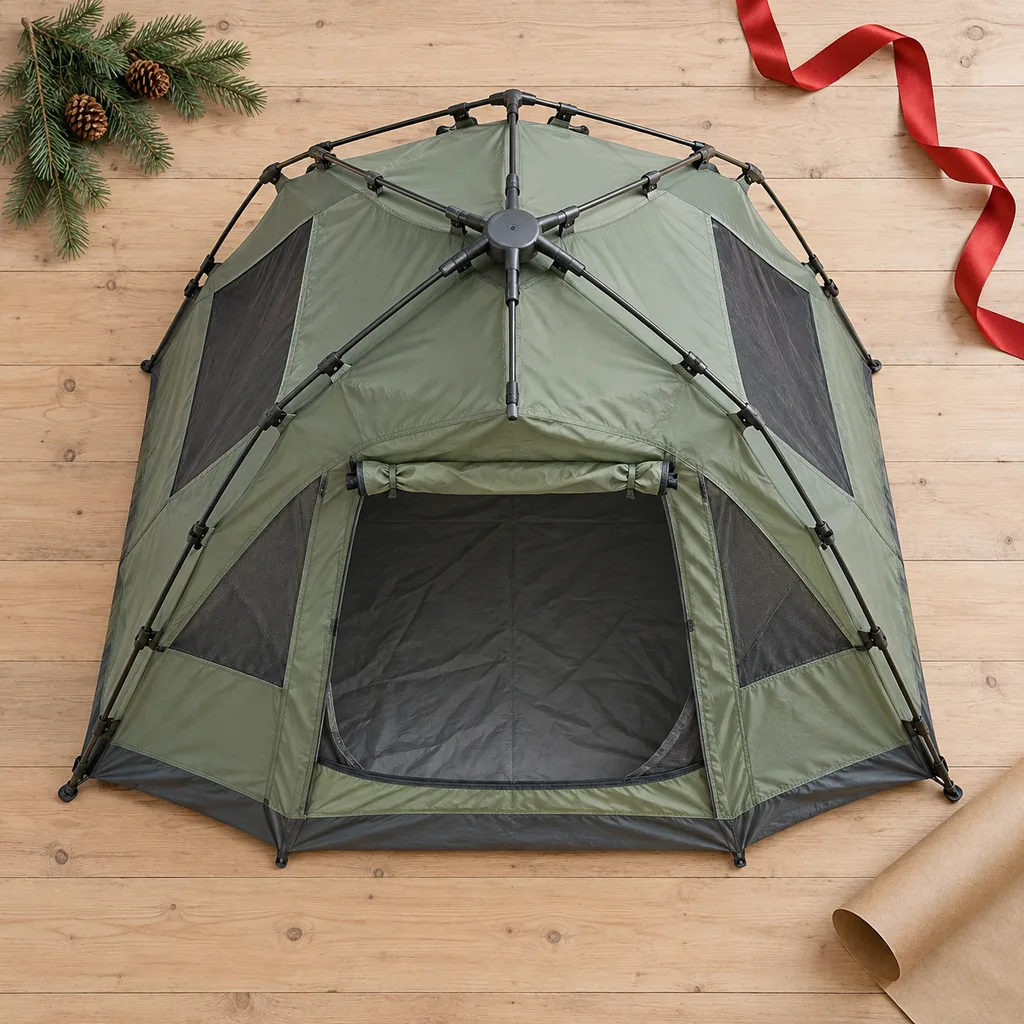
This lightweight and compact shelter offers essential UV protection and a shaded retreat for individuals or small groups enjoying a day at the beach or park.
Outdoors & Adventure
8 kinds worth knowing, 8 picks, and what to check before you buy.
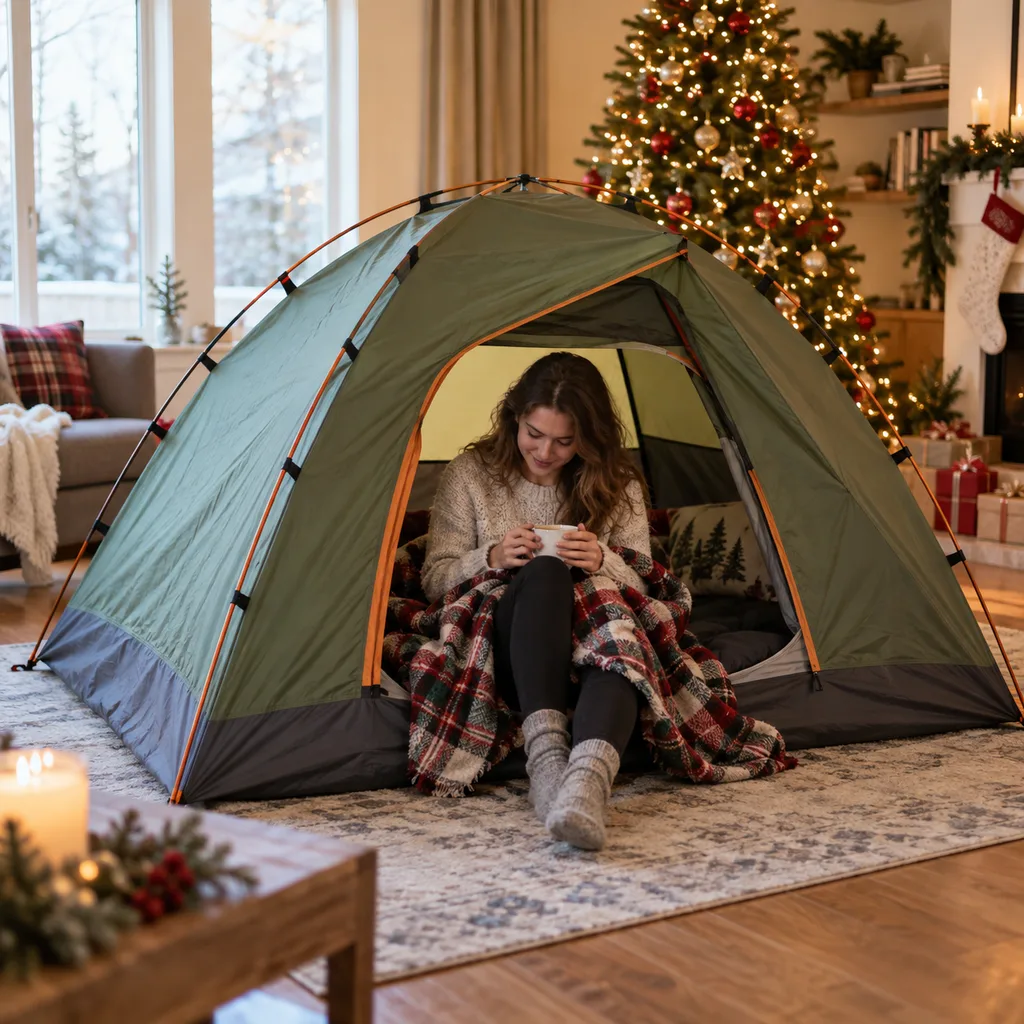
Tents make sense for people who already spend nights or long days outside, or who keep saying they want to. The ones that get used match how the person actually gets out: a pop-up shade for sandy afternoons at the lake, a roomy camping tent for car-camping weekends, or something light enough to carry on a multi-day hike. Think about where they go, how many people come along and how they travel, whether that means a pickup, a canoe or their own two feet. A tent that suits those habits gets packed every summer. One bought for an imagined trip usually stays in the garage.
Kind 1 of 8
A beach tent is a light, open-fronted shelter that blocks sun and wind at the beach, a lakeside park or a kids' soccer tournament. It suits families with young children and anyone who stays out all afternoon. Before buying, check how it anchors in loose sand, since sand pockets or stakes long enough for soft ground make a real difference. Look at how small it packs and whether one person can set it up. Also check whether the floor and side panels suit the way they use it.
This lightweight and compact shelter offers essential UV protection and a shaded retreat for individuals or small groups enjoying a day at the beach or park.
Kind 2 of 8
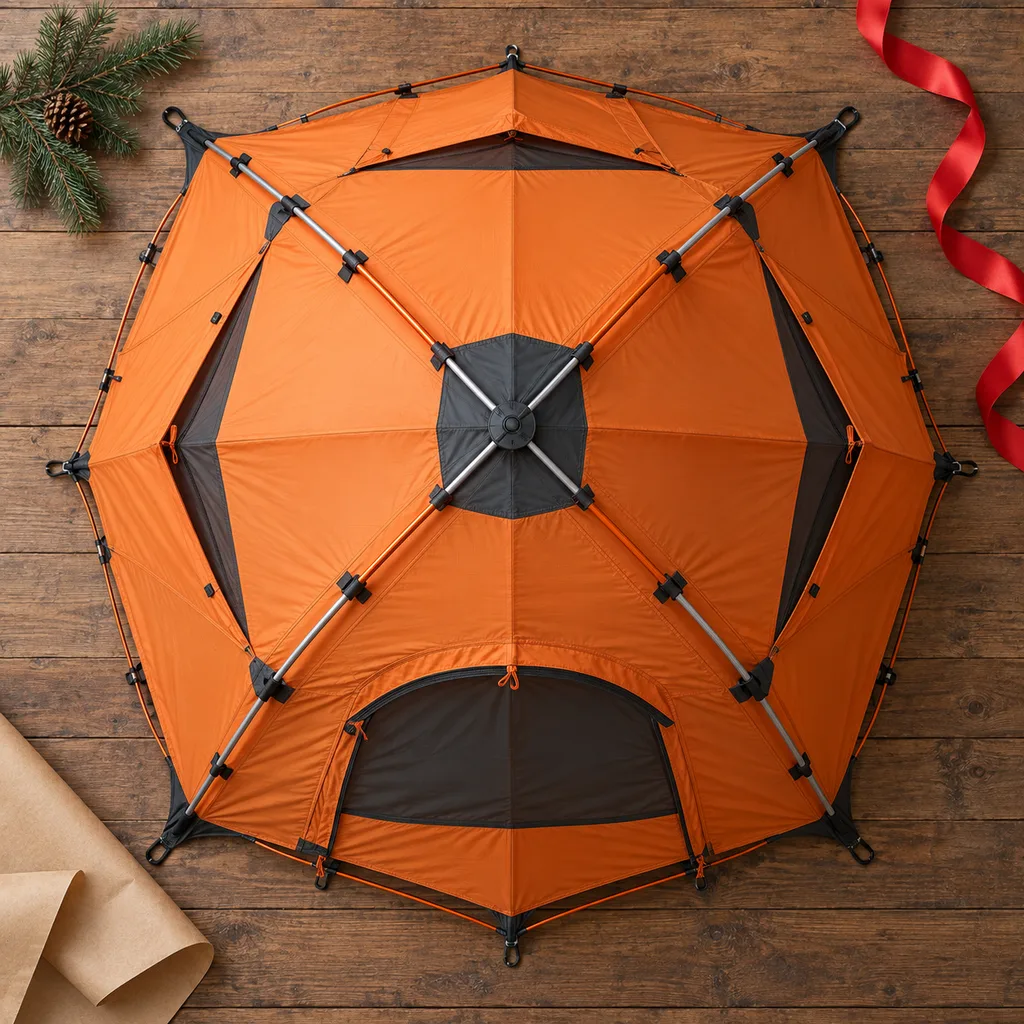
A general camping tent is built for campgrounds and drive-in sites, where weight matters less than space and easy setup. It suits couples and small groups who camp a few weekends each season. Check the sleeping capacity, and remember that most people are more comfortable with one spot more than they need. Look at the peak height, the number of doors and vestibule space for boots and packs. If they camp in spring, fall or at high elevation, a sturdier four-season design is worth a look.
Ideal for casual campers or those who value convenience, this tent deploys rapidly, minimizing setup time at the campsite.
Engineered for extreme weather, this durable shelter provides essential protection for mountaineers and winter campers in harsh environments.
Kind 3 of 8
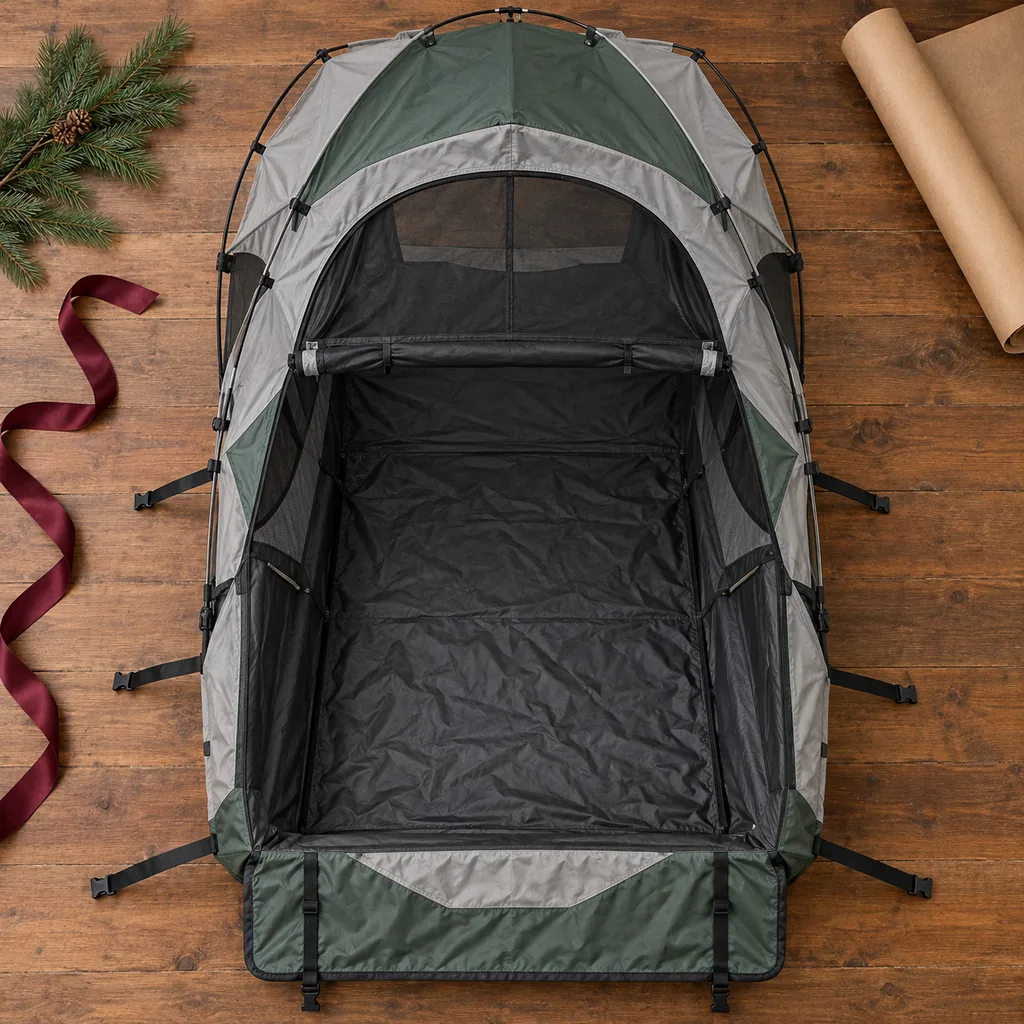
A truck bed tent sets up in the box of a pickup, so the sleeper stays off the ground and needs no flat tent pad. It suits hunters, anglers and anyone who likes rough roads and quick overnight stops. Before buying, confirm the truck's make, model and box length, because these tents are sized for specific beds. Also check whether a tonneau cover, toolbox or bed liner will get in the way, and plan for a mattress that fits the wheel wells.
Designed to fit securely in a pickup truck bed, this unique shelter elevates campers off the ground, providing a dry and comfortable sleeping area.
Kind 4 of 8
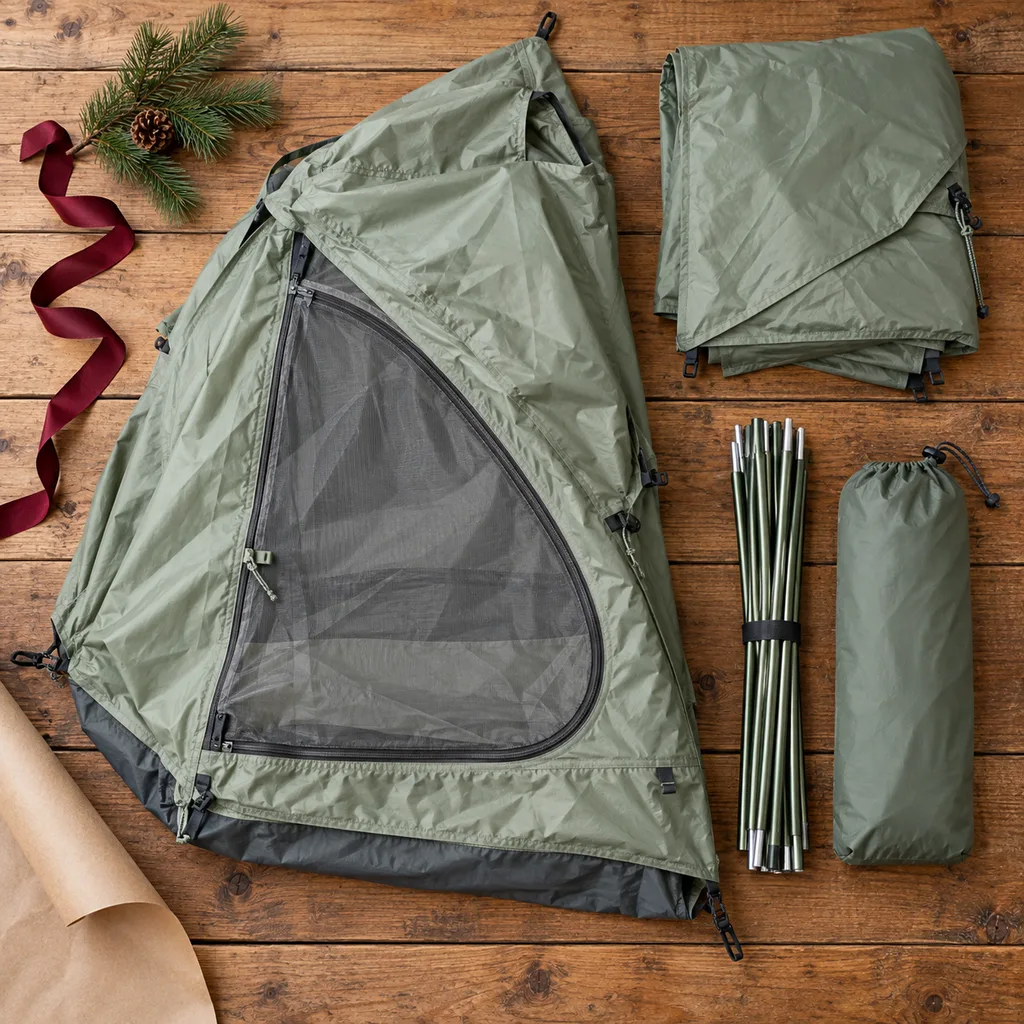
A backpacking tent trades extra space for low weight and a small packed size. It suits hikers, canoe trippers and anyone who carries everything to camp. Check the packed weight and the size stuffed into a pack, and whether it needs trekking poles to pitch. A one-person tent is very tight, so many hikers go up a size. Ask what trips they have planned, because a gift for someone with firm gear preferences can be hard to get right.
This compact shelter is ideal for solo adventurers or duos who prioritize minimal weight and pack size on long treks.
Kind 5 of 8
A canvas tent breathes well, stays cooler in summer sun and holds up to many seasons of use. It suits people who set up base camp for a week, hunting camps and anyone who likes a more permanent feel. These tents are heavy and bulky, so check that they have a vehicle and storage space for one. Canvas also has to dry fully before it is packed away. Some models can take a wood stove through a stove jack, so check that if they camp in cold weather.
Kind 6 of 8
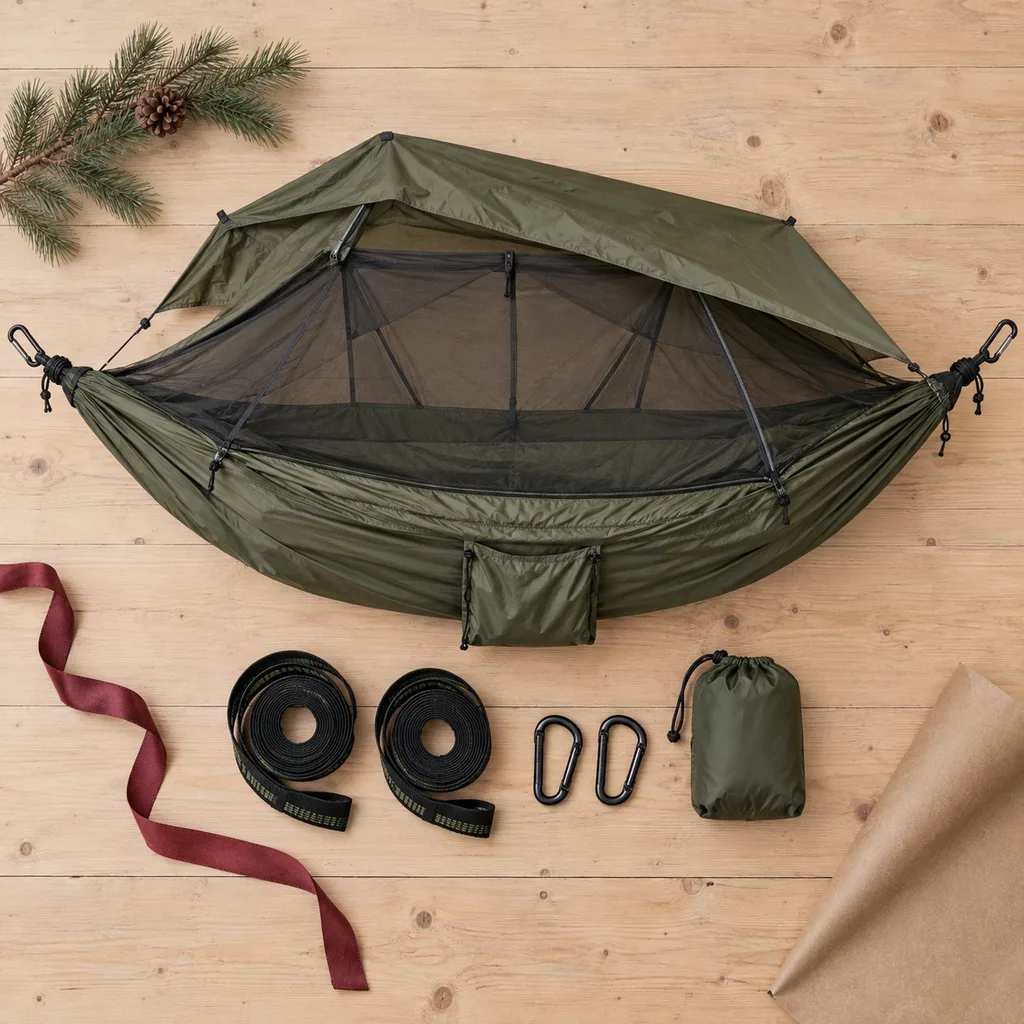
A hammock tent combines a hammock with a bug net and a rain tarp, so the sleeper hangs between two trees instead of lying on rocks and roots. It suits hikers in wooded country and people who find sleeping pads uncomfortable. Before buying, remember they need trees spaced the right distance apart, which rules out beaches and open campsites. Check that it comes with tree straps. Side sleepers and people who sleep cold may need an underquilt or insulated pad to stay comfortable.
This innovative system combines a comfortable sleeping hammock with integrated bug netting and a rainfly, offering a lightweight and versatile elevated shelter.
Kind 7 of 8
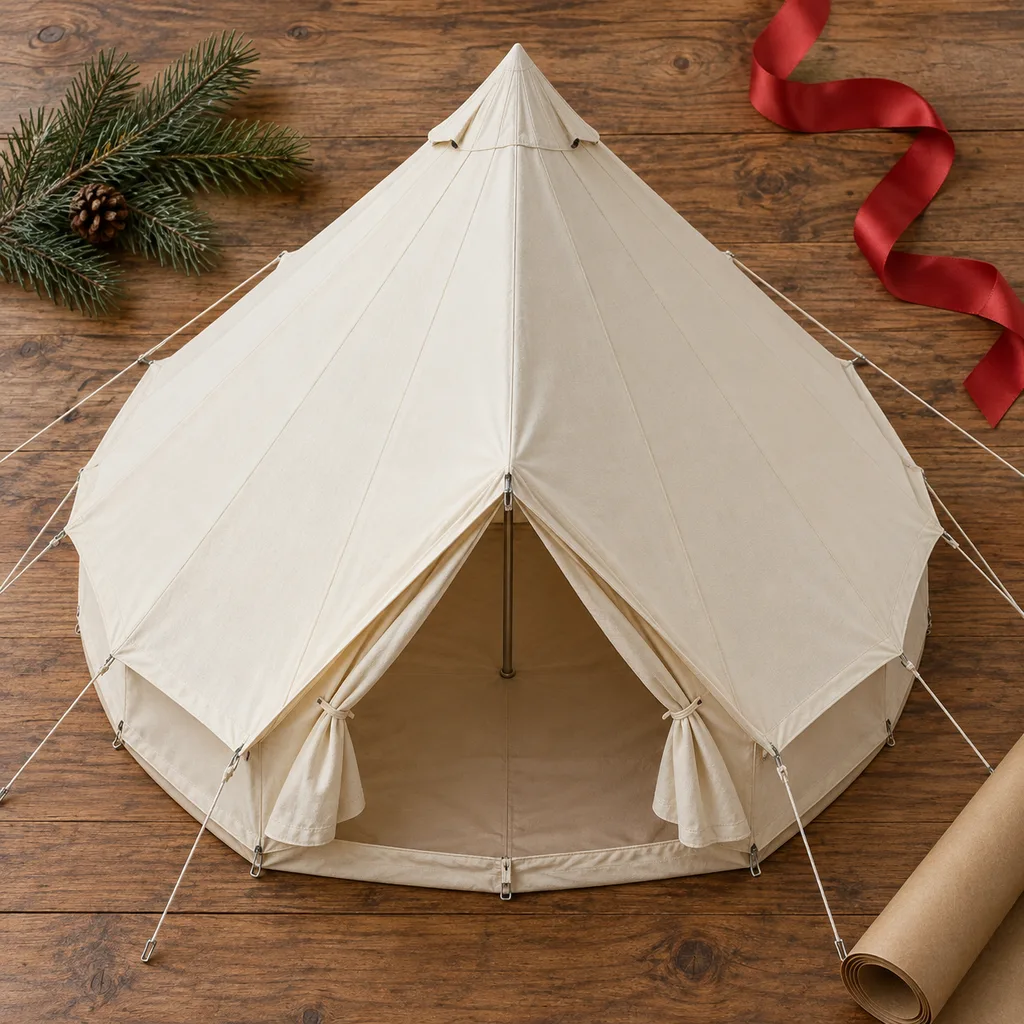
A bell tent is a round canvas tent with a single centre pole, tall enough to stand up in and wide enough for real beds. It suits families, people who host glamping weekends and anyone who likes a comfortable camp. Check the diameter against the sites they use, since larger bell tents need a big flat pad. Look at the weight, how long it takes to pitch and whether the groundsheet zips out for easy cleaning.
Offering a blend of rustic charm and spacious comfort, this durable tent is perfect for glamping, extended base camps, or backyard retreats.
Kind 8 of 8
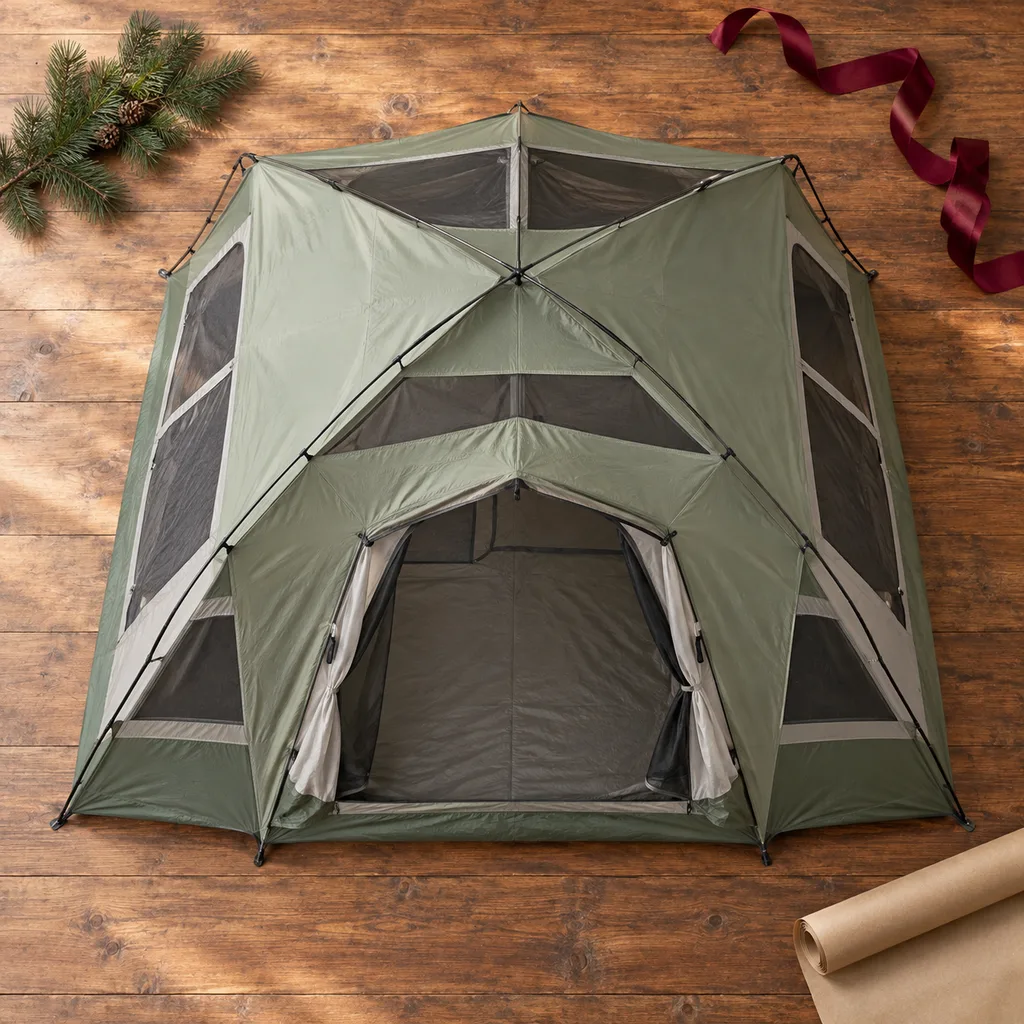
A family tent is a large tent, often with room dividers, several doors and enough height to change clothes standing up. It suits parents with kids and groups who share one campsite. Check the floor plan along with the stated capacity, since that number assumes sleeping bags packed shoulder to shoulder. Look for a separate room or large vestibule for gear, and check that the pitching steps are simple enough for two adults to handle with kids running around.
Perfect for families or groups, this tent offers ample interior space and comfortable standing room for extended stays at a campsite.
Looking for one person in particular? Shop by person.
Everything else
Showing 1–8 of 8