Anti shock trekking poles
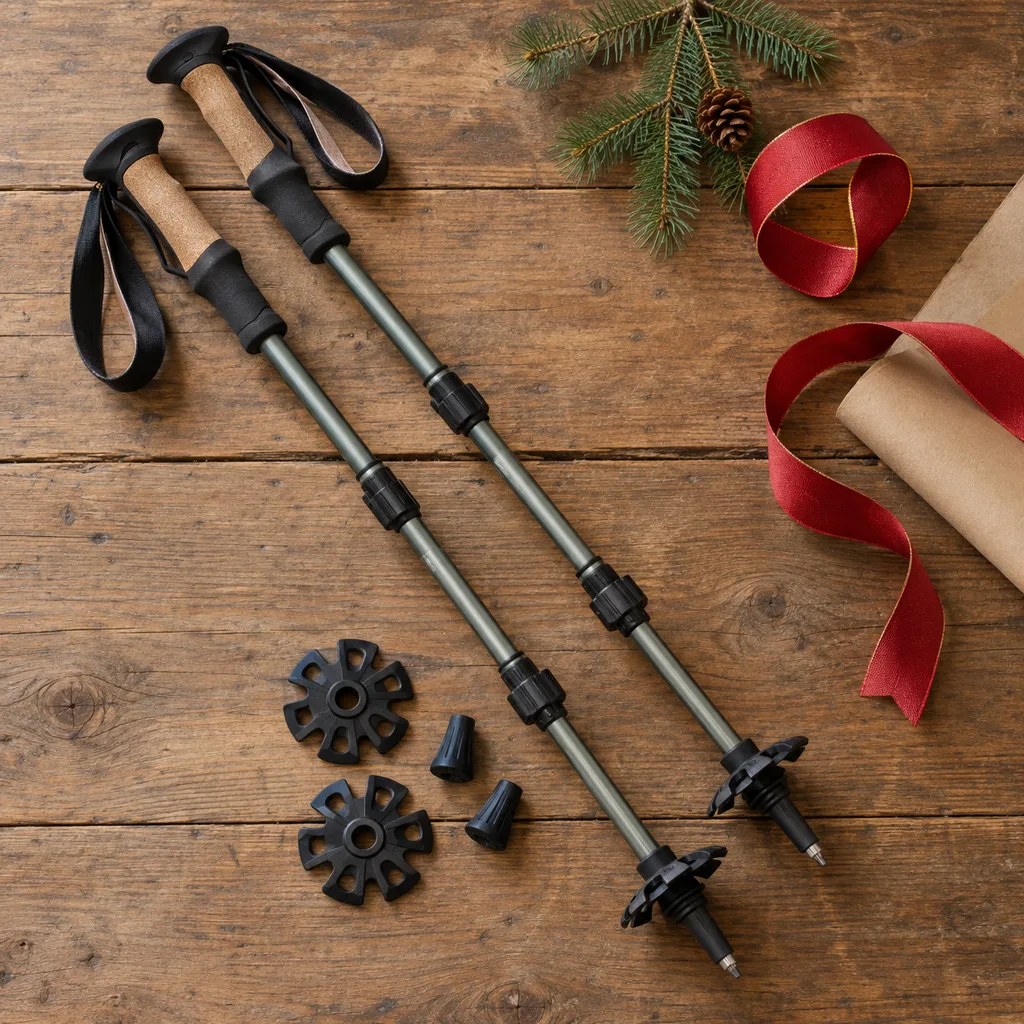
These poles help protect joints by absorbing impact, making them suitable for hikers with sensitive knees or hips on varied terrain.
Outdoors & Adventure
7 kinds worth knowing, 8 picks, and what to check before you buy.
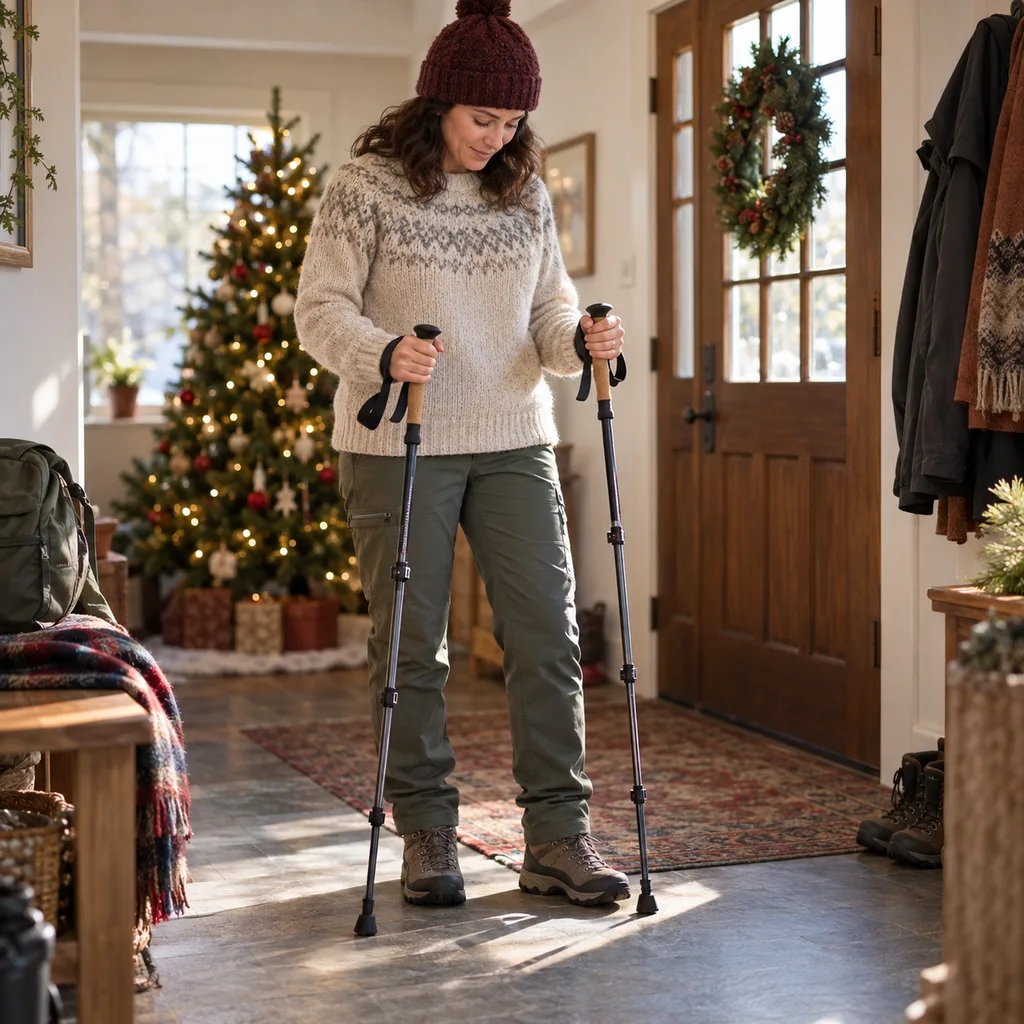
Hiking poles suit the person who already walks trails most weekends, plus the one who's just starting to go further and wants more steadiness on rough ground. What gets used is a pair that fits their height, packs easily and doesn't slip in the hand. Before you buy, think about where they walk. A day hiker on rocky, hilly trails wants something different from someone on gravel paths near home or someone who travels with poles in a suitcase. Plain trekking poles cover most people. Folding walking poles make more sense for travellers and anyone who wants poles out of sight when they're not using them. It's a practical gift that works best when it matches how they get outside.
Kind 1 of 7
Trekking poles come as a pair and are made for uneven trails, hills and long days on foot. They suit someone who hikes often and wants more balance on climbs, descents and stream crossings. Before buying, look at the grip material, how the length locks and whether the tips come with rubber covers for pavement or rock. Some add a spring in the shaft to soften the jolt on hard ground, which some walkers like and others find bouncy. Swappable baskets help with mud and snow for anyone who hikes year-round.
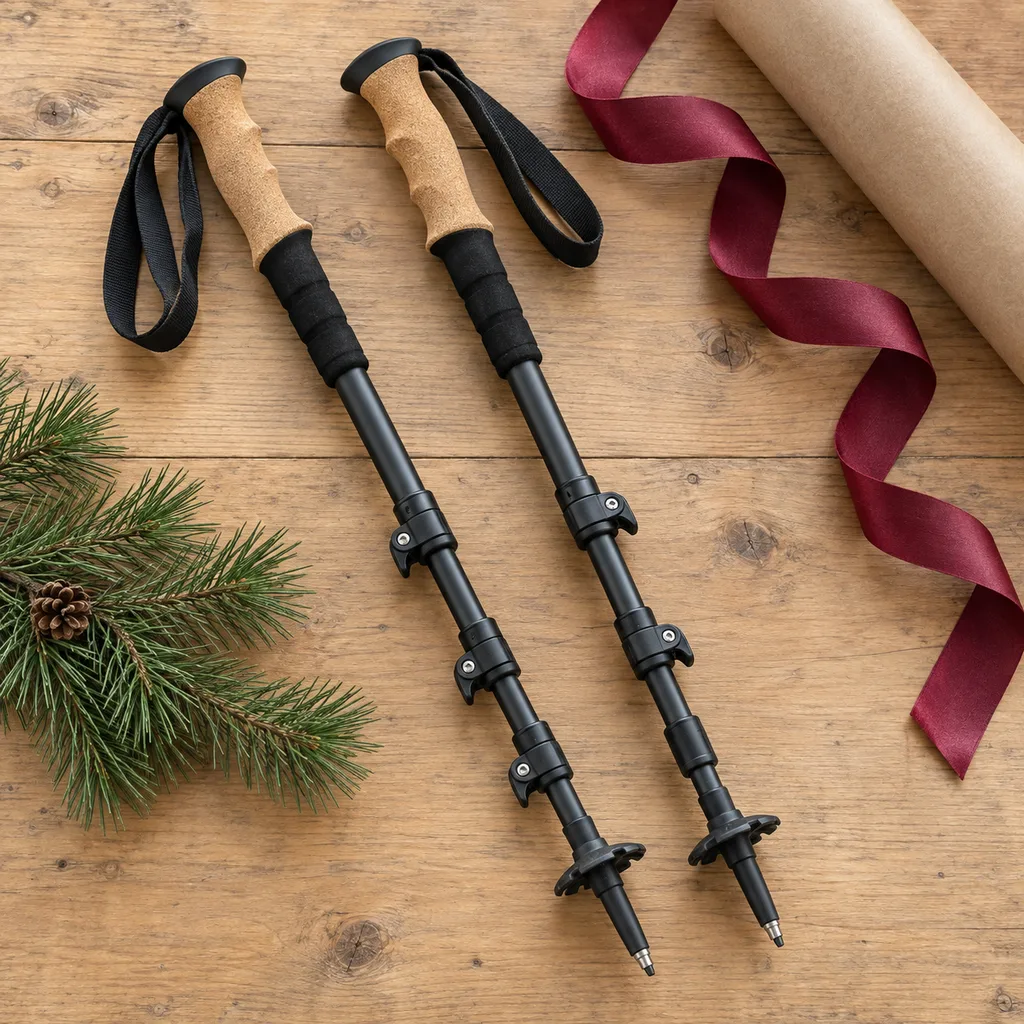
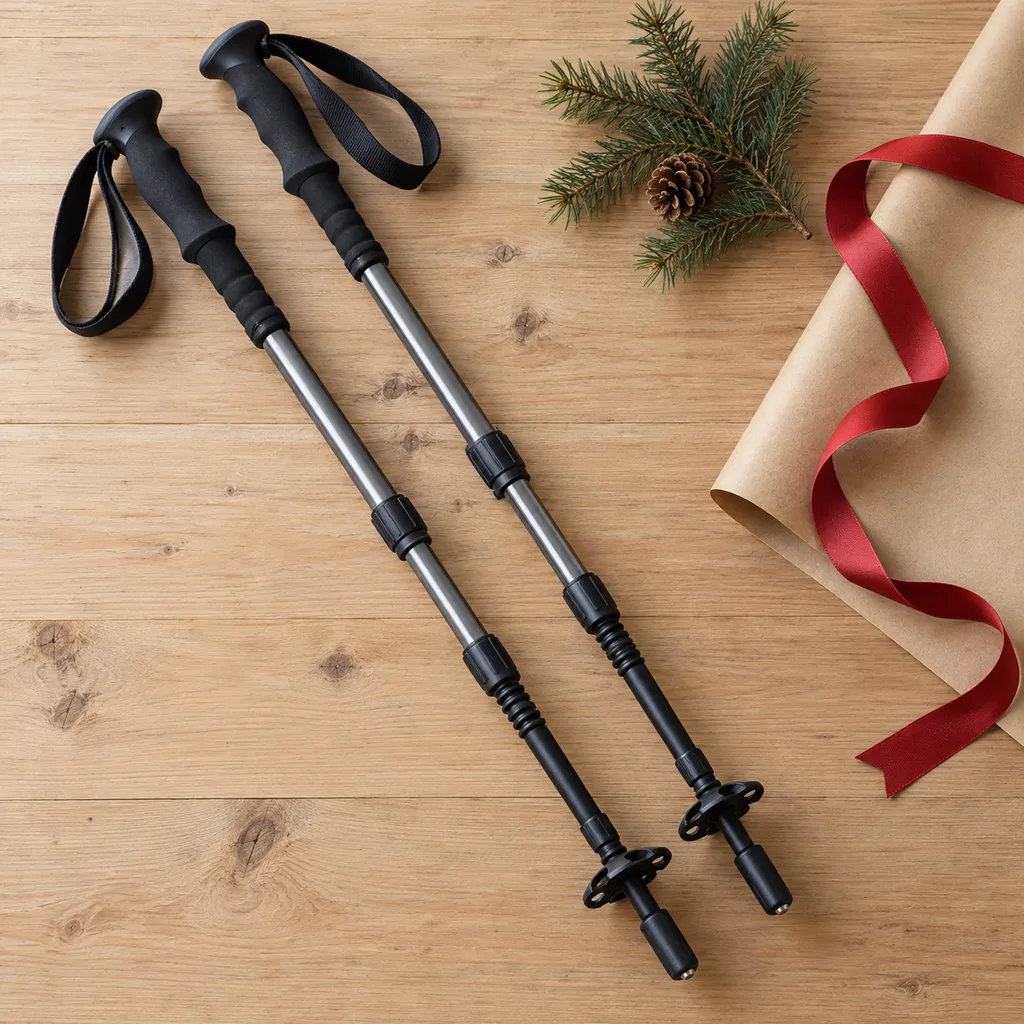
These poles help protect joints by absorbing impact, making them suitable for hikers with sensitive knees or hips on varied terrain.
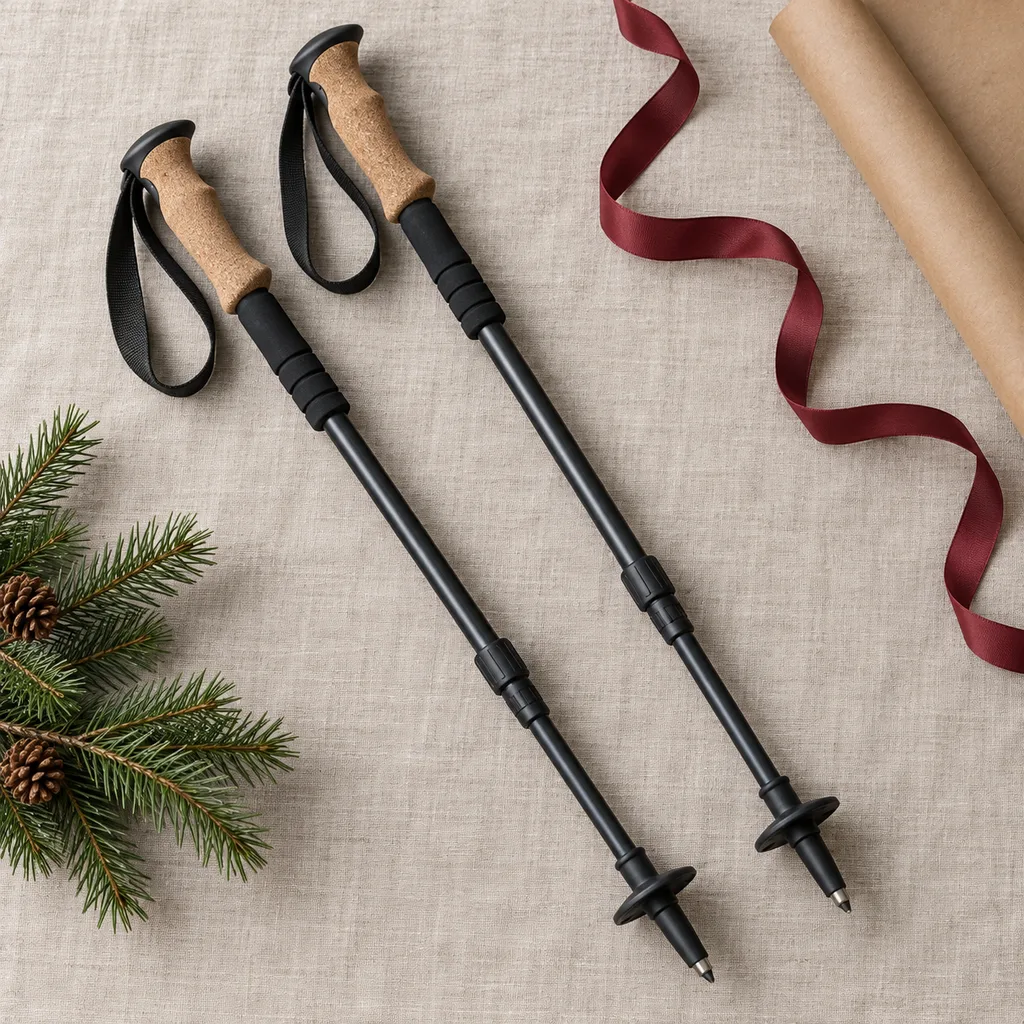
Versatile poles equipped for diverse environments, from summer trails to winter snowshoeing adventures, offering year-round utility.
Offers superior grip comfort and moisture-wicking properties, ideal for hikers on warm weather trails or those with sweaty hands.
Kind 2 of 7
Folding hiking poles break into sections held together by an inner cord, much like tent poles, and fold into a short bundle. They suit hikers who put their poles away for stretches of a hike, scramble with their hands free or carry a small daypack. Check the folded length against the bag they use, and see whether the pole also adjusts in length or comes in fixed sizes. Fixed-length folding poles have to be bought in the right size for the person's height, so find that out first.
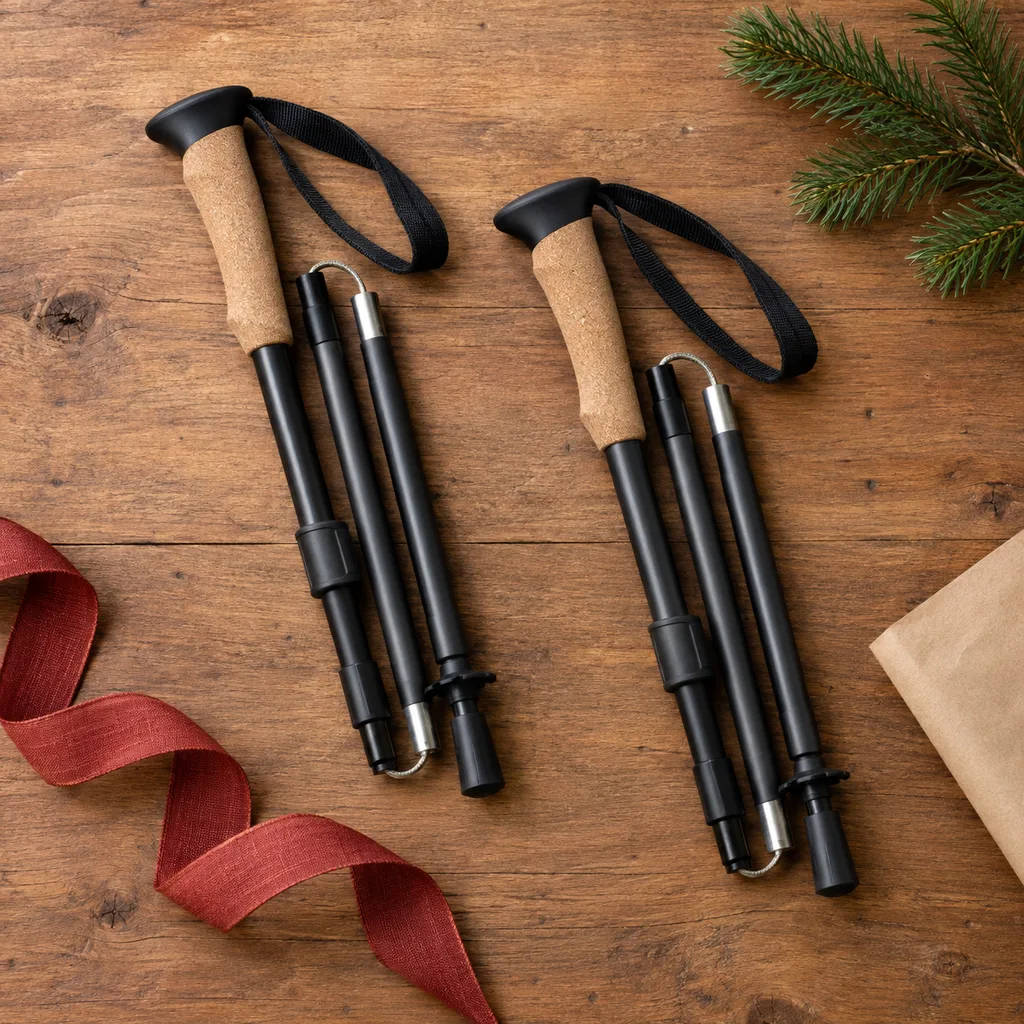
Perfect for travelers and day hikers who need poles that pack down small for easy transport and convenient storage.
Kind 3 of 7
Folding walking poles are often meant for everyday walks, park paths and travel, not steep backcountry trails. They suit someone who walks a lot on holidays, takes the bus to a trailhead or wants poles that fit in a tote bag. Look for a quick way to snap the sections together, a comfortable grip and rubber tips for sidewalks and indoor floors. A carry pouch makes them much easier to take along, so check if one is included.
Kind 4 of 7
Adjustable hiking poles slide in and out to different lengths, so they're the safest pick when you're not sure how tall the person is or how they like to hold their poles. Hikers also shorten them for climbs and lengthen them for descents. Check the locking style: lever locks clamp from the outside and are easy to adjust with gloves on, while twist locks are slimmer but can be fiddly in the cold. Printed length markings make it easy to set both poles to match.
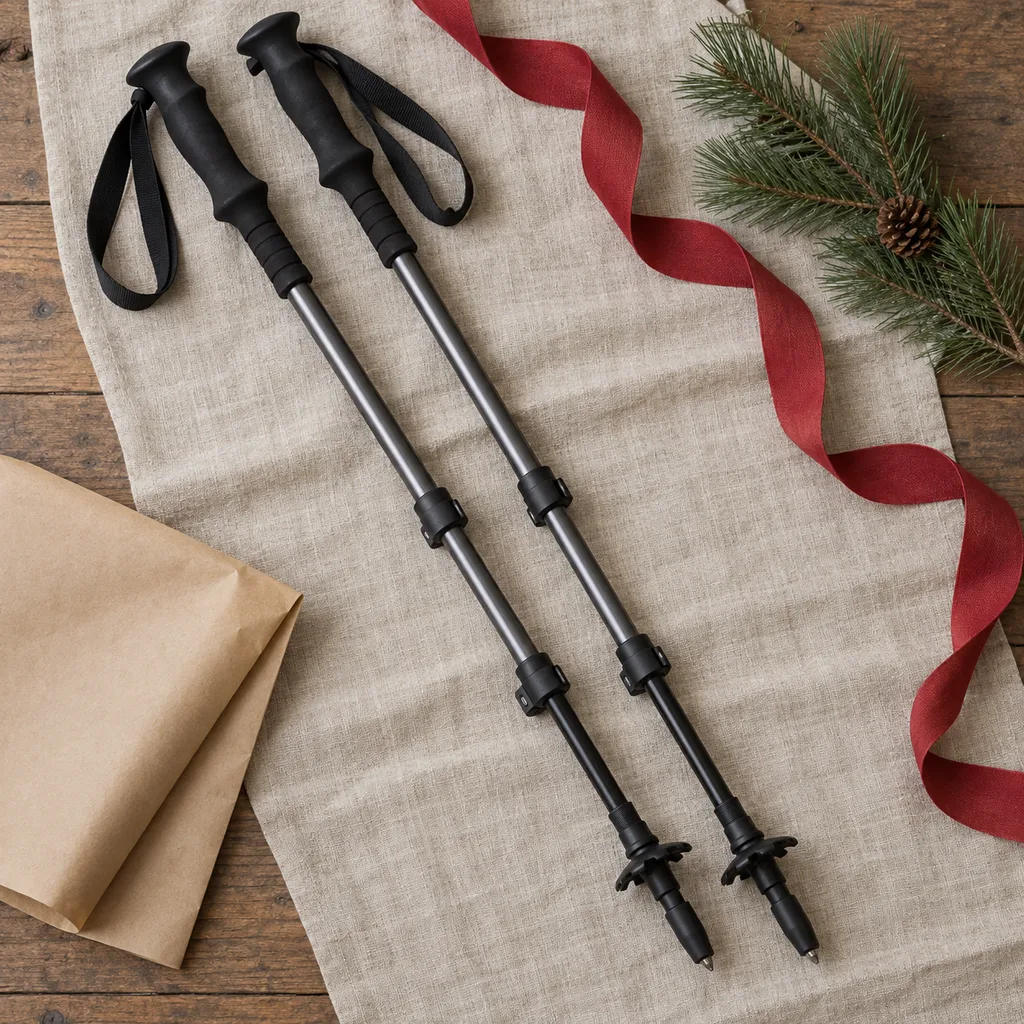
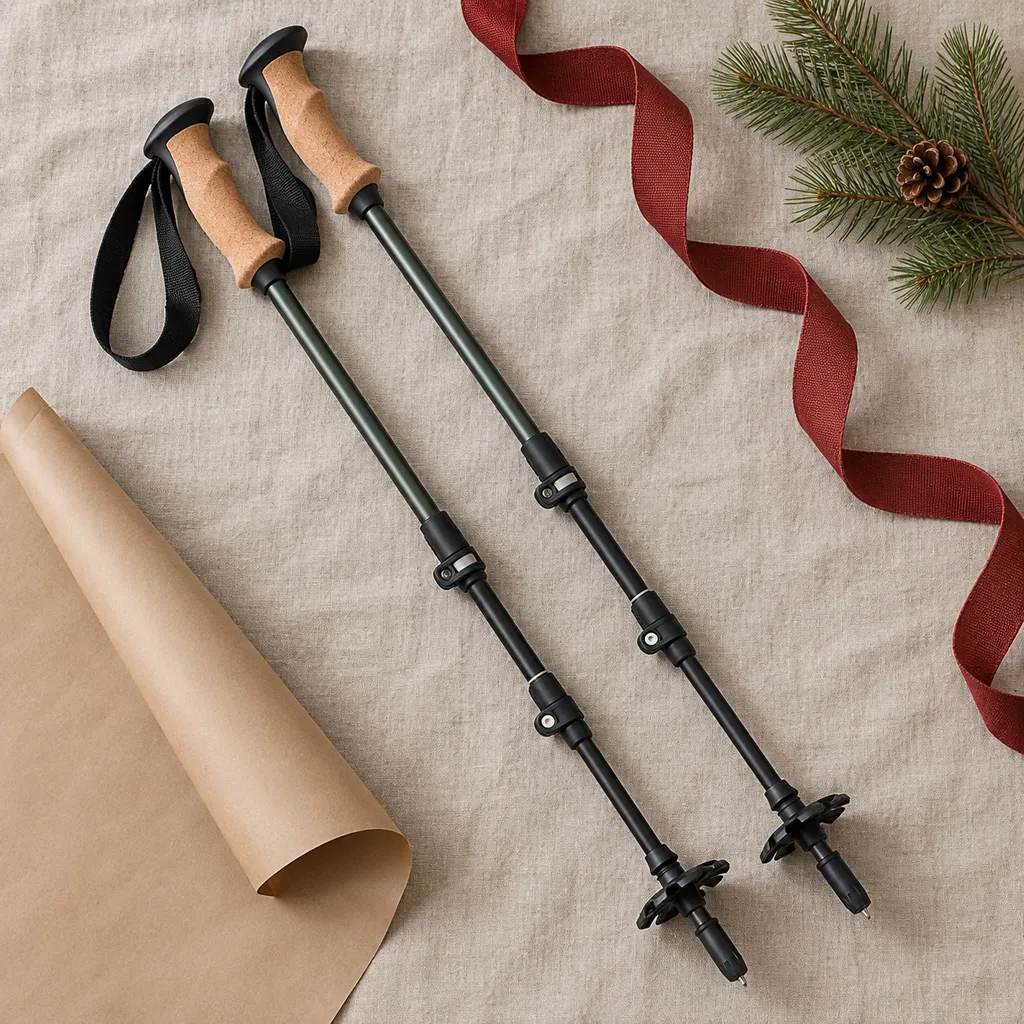
These versatile poles provide stability and reduce strain for hikers on various terrains, enhancing comfort on any trail.
Designed for hikers who need fast and secure length adjustments, even with gloves on or in challenging weather conditions.
Kind 5 of 7
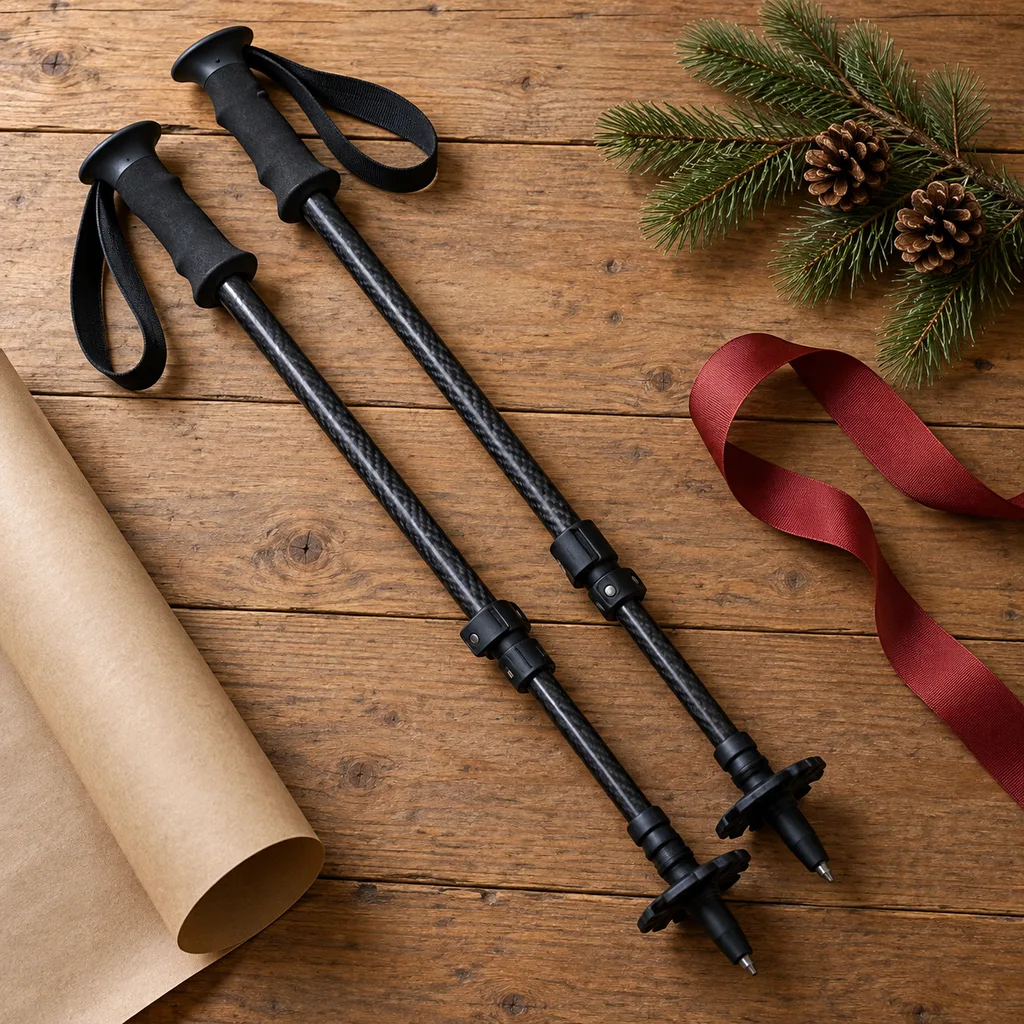
Carbon fibre poles are lighter and absorb vibration differently from aluminum, which many long-distance hikers notice after a full day. They suit someone who already hikes a lot and cares about weight in their hand and pack. Keep in mind that carbon can crack under a hard sideways hit, while aluminum tends to bend. For rough, rocky ground or someone hard on their gear, aluminum may hold up better. Check the grip, the lock type and whether the shafts are all carbon or mixed.
Ideal for long-distance hikers and backpackers seeking to minimize pack weight and reduce arm fatigue on extended journeys.
Kind 6 of 7
Ultralight hiking poles cut weight wherever they can, with thin shafts, small grips and few extras. They're for backpackers and trail runners who count every gram and already know what they like. Casual walkers are usually better off with something sturdier. Before buying, check the weight per pole, whether the length adjusts and how small they pack. Some ultralight backpacking tents use trekking poles in place of tent poles, so if they have one, check that the length range works with it.
Kind 7 of 7
Poles sold as women's fit usually have a shorter length range, slimmer grips and sometimes a lighter build. They suit anyone with smaller hands or a shorter frame, whatever their gender. The real test is fit: the grip should feel secure without a strained hold, and the shortest setting should let the elbow bend at about a right angle on flat ground. If the person is tall, a standard pole may fit better, so go by height and hand size, not the label.
Designed with smaller grips and shorter maximum lengths to provide a more comfortable and ergonomic fit for women hikers.
Looking for one person in particular? Shop by person.
Everything else
Showing 1–8 of 8