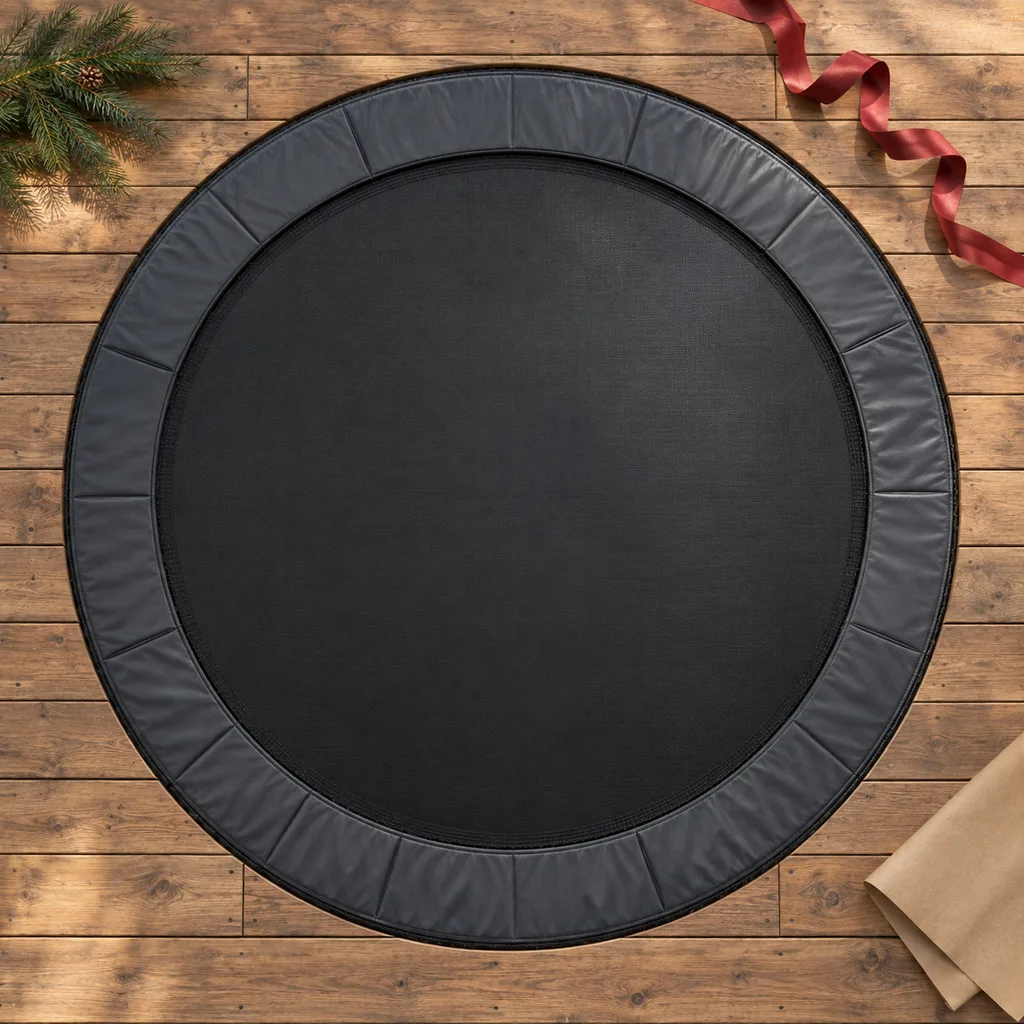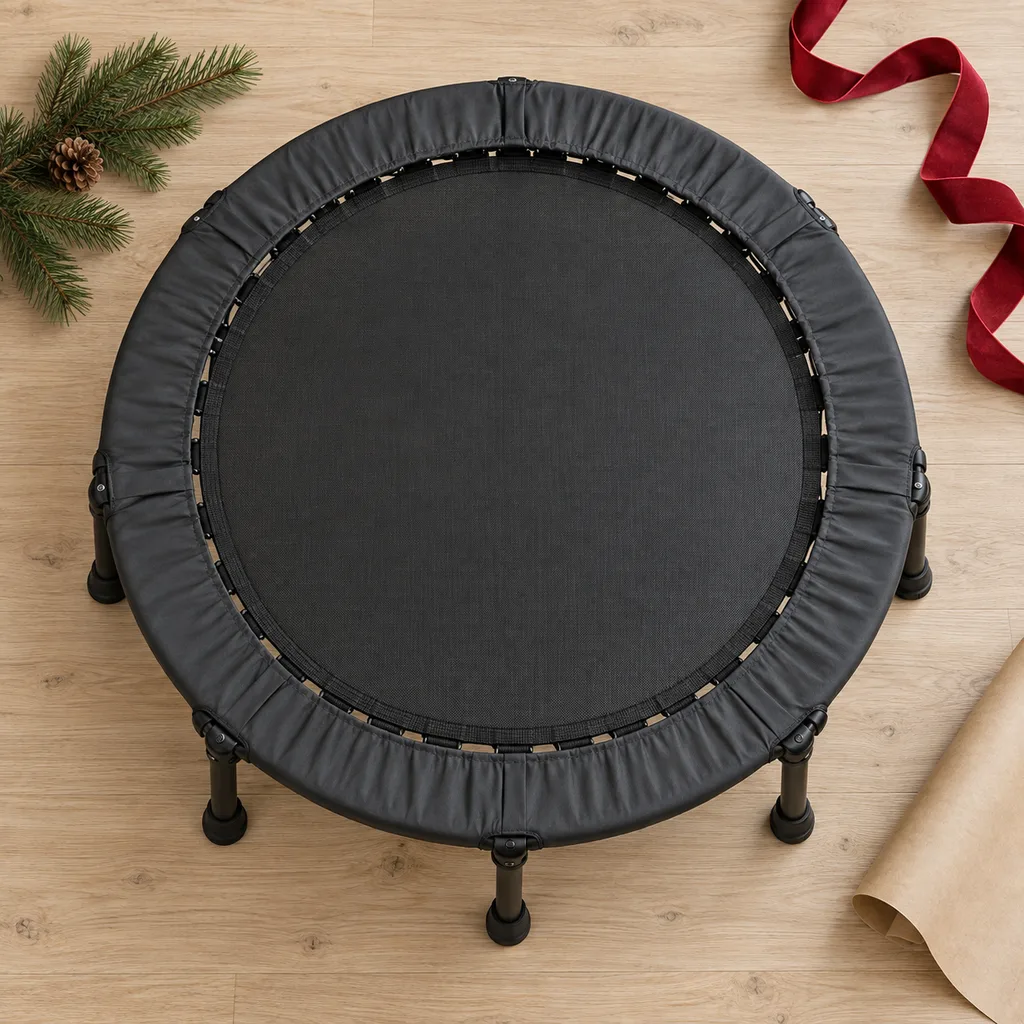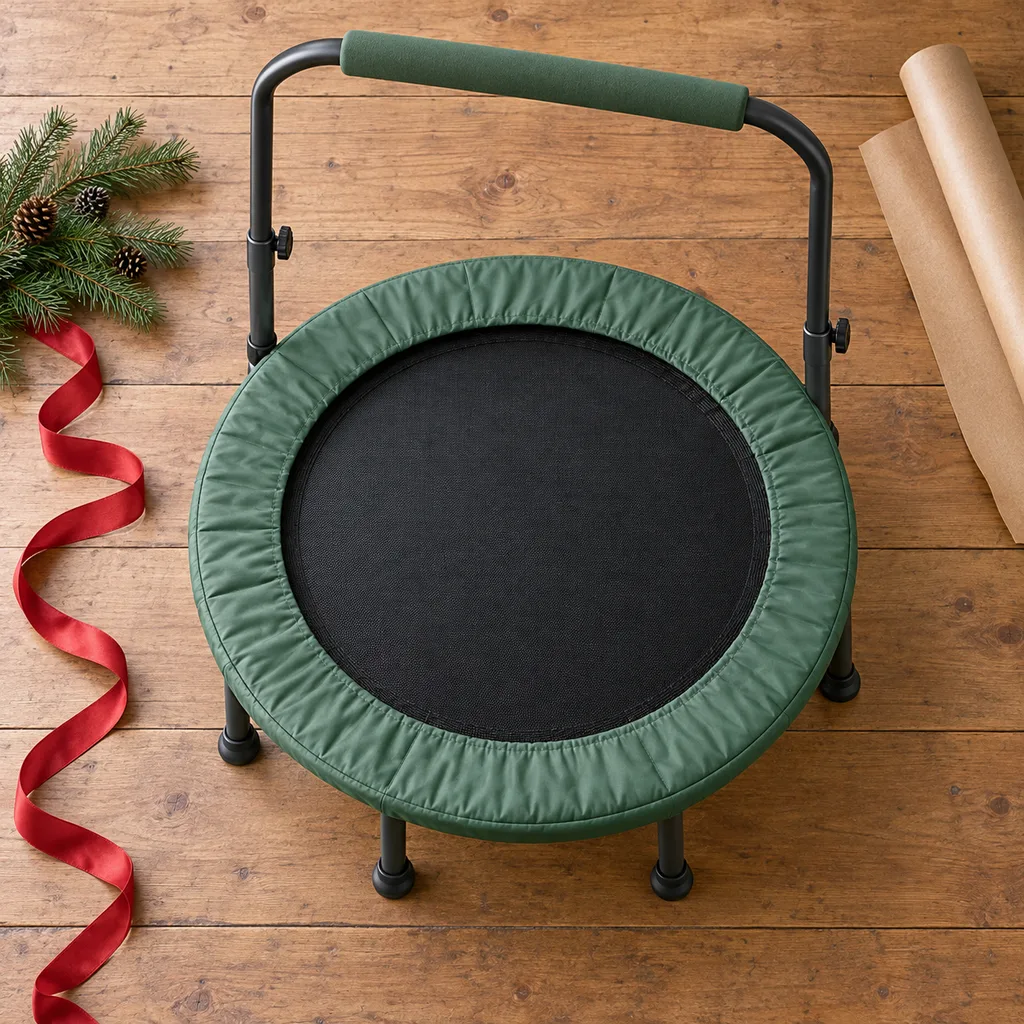
Kids' handlebar safety trampoline
Designed for young children, this provides a safe and fun way for toddlers to develop balance and coordination.
Kids & Baby
8 kinds worth knowing, 8 picks, and what to check before you buy.
Trampolines are usually a family gift, bought by parents or grandparents for kids who need somewhere to burn off energy. The ones that get used most suit the space you actually have and the ages of the kids who'll be jumping. A small kids trampoline with a handlebar works well for toddlers indoors. A full outdoor frame is better for school-age kids with a yard. Before you choose, measure the space, check the ceiling height or overhead branches, and think about where it will go in winter. A trampoline is a big thing to give as a surprise, so it's worth a quiet word with the parents first.
Kind 1 of 8
These are compact trampolines for toddlers and young kids, often with a handlebar to hold onto and a low frame that fits in a playroom or basement. They suit kids who are too small for a backyard model, and families without much yard space. Before buying, check the age range and weight limit, how much floor space it takes up, and whether it comes apart easily for storage. A padded frame cover and a mat that's easy to wipe clean make daily use simpler.
Designed for young children, this provides a safe and fun way for toddlers to develop balance and coordination.
Kind 2 of 8
An in-ground trampoline sits in a dug-out pit, so the mat is level with the lawn. It looks tidier in the yard and there's no climbing up to get on. It suits families who plan to stay put and are ready for a proper backyard project, since it means excavation, drainage and sometimes a hired crew. Check your soil and drainage, look into any underground utility lines before digging, and make sure the kit includes retaining walls and airflow vents. Think of this as a family gift rather than a gift for one child.
Provides a sleek, flush-with-the-ground bouncing experience that blends seamlessly into any modern backyard landscape.
Kind 3 of 8
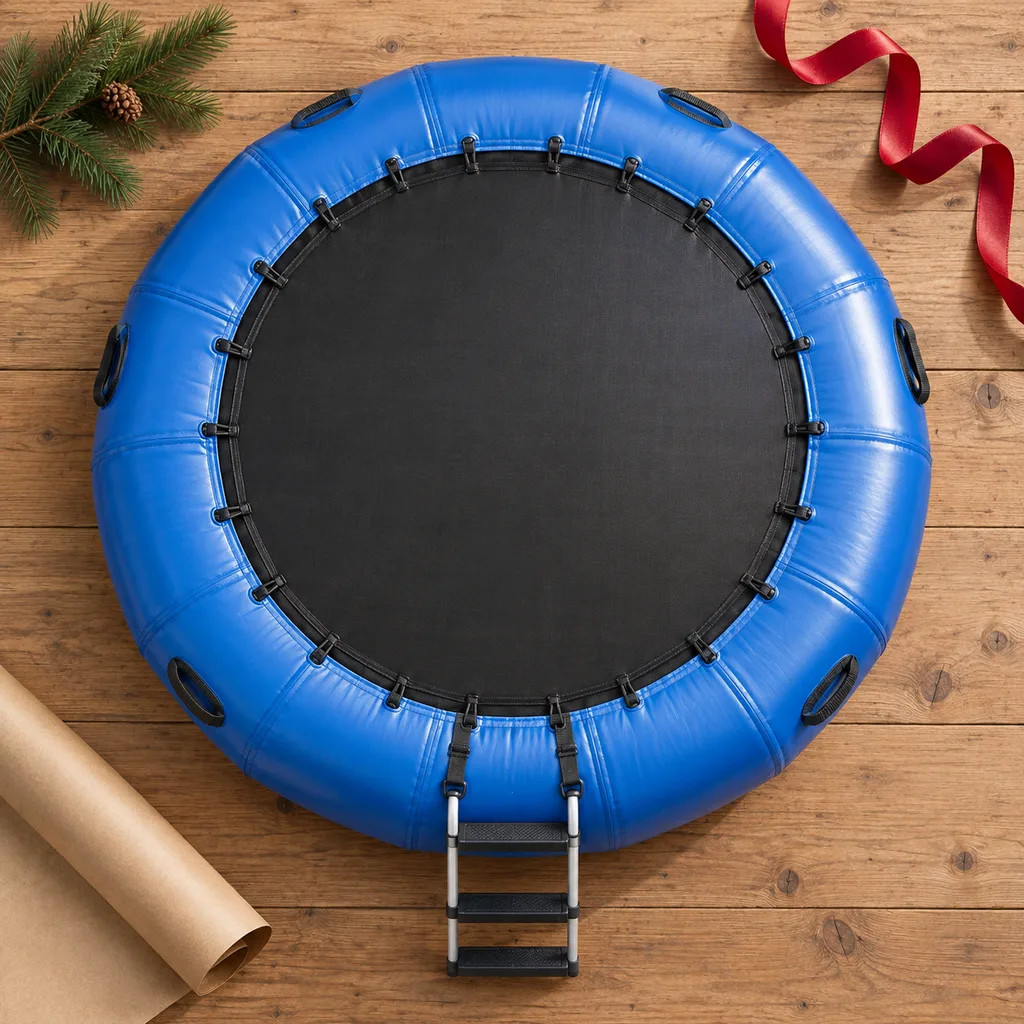
A water trampoline is an inflatable ring with a jumping mat that floats and gets anchored off a dock or shoreline. It suits cottage families and anyone with regular lake access, and it tends to become the centre of summer weekends. Before buying, check the diameter against your swimming area, and make sure the water is deep enough under it. Look at what the anchor kit includes, what kind of pump it needs, and whether you have space to dry and store it over the winter.
Transforms any lake or large pool into an exciting aquatic play zone for summer adventures and active fun.
Kind 4 of 8
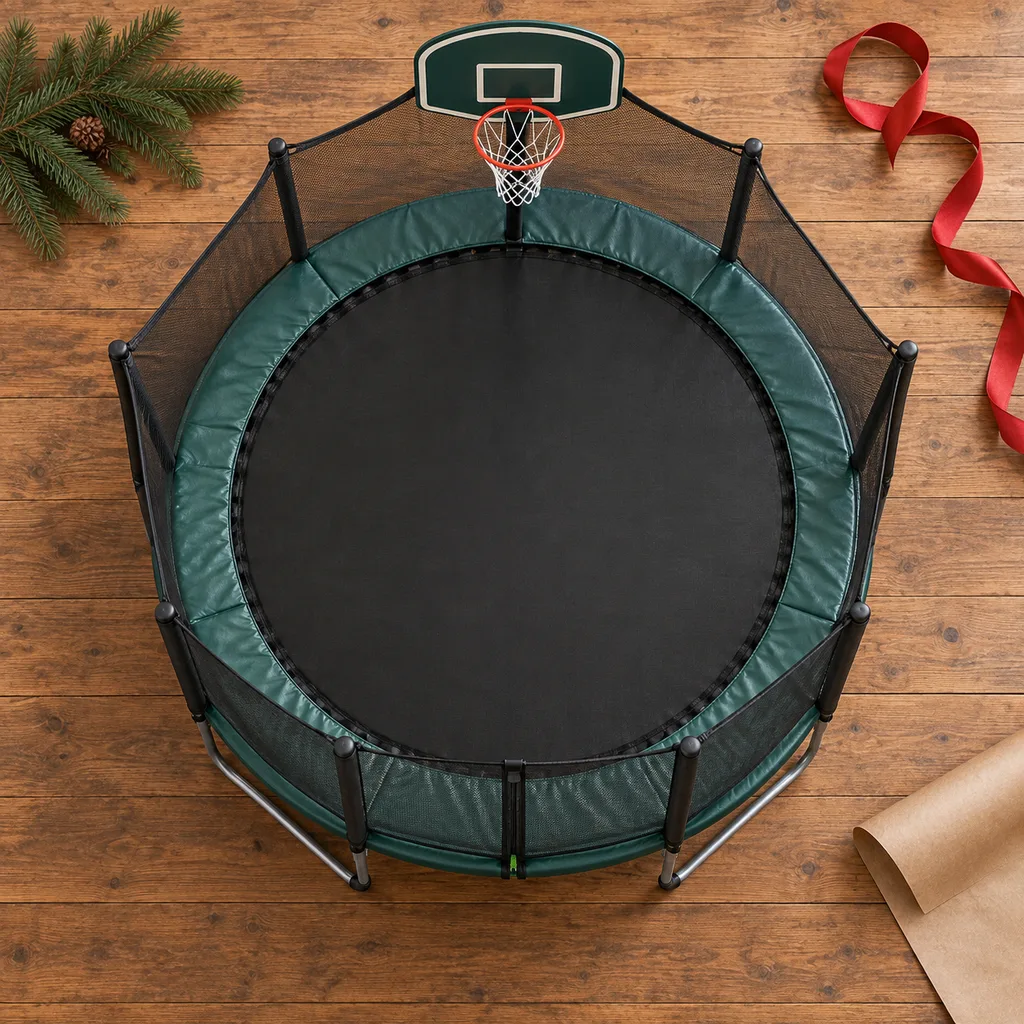
These are backyard trampolines with a small basketball hoop attached to the enclosure, usually with a soft ball included. They suit kids who get bored with plain jumping and like having a game to play, and they work well when siblings or friends jump together. Check how the hoop attaches, whether the backboard and rim are padded, and whether the hoop can come off later. The trampoline's frame size and enclosure matter more than the hoop, so compare those first.
Combines the joy of jumping with the excitement of basketball, encouraging active play and friendly competition for all ages.
Kind 5 of 8
The round outdoor trampoline with a netted enclosure is still what most families picture. It suits school-age kids with a flat yard and room around the frame. Measure the space, including clearance on every side and overhead from branches or wires. Look for a galvanized steel frame, a UV-resistant mat and netting, and anchor stakes for windy areas. In Canada and the northern US, think about whether you'll take the mat and net down for winter, because snow load can damage them.
Provides hours of active outdoor entertainment for families and children in the backyard.
Kind 6 of 8
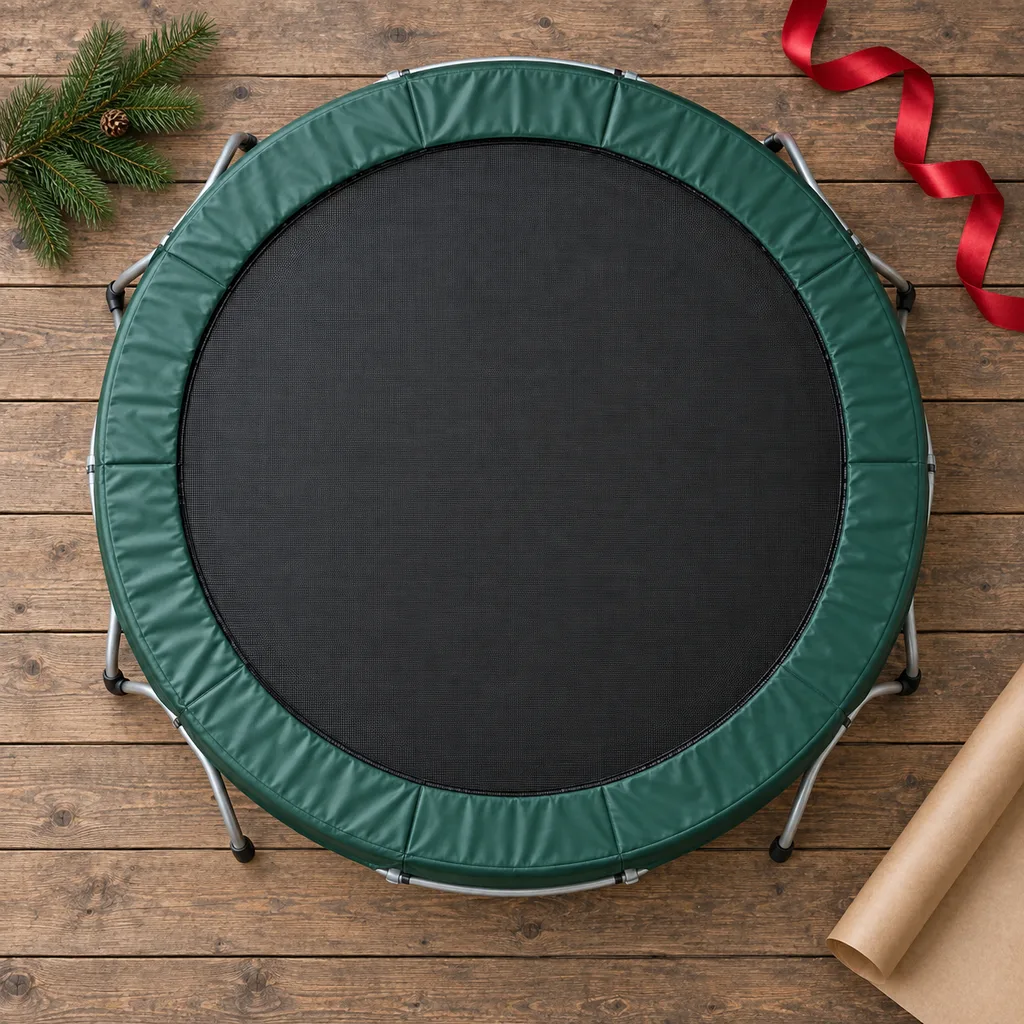
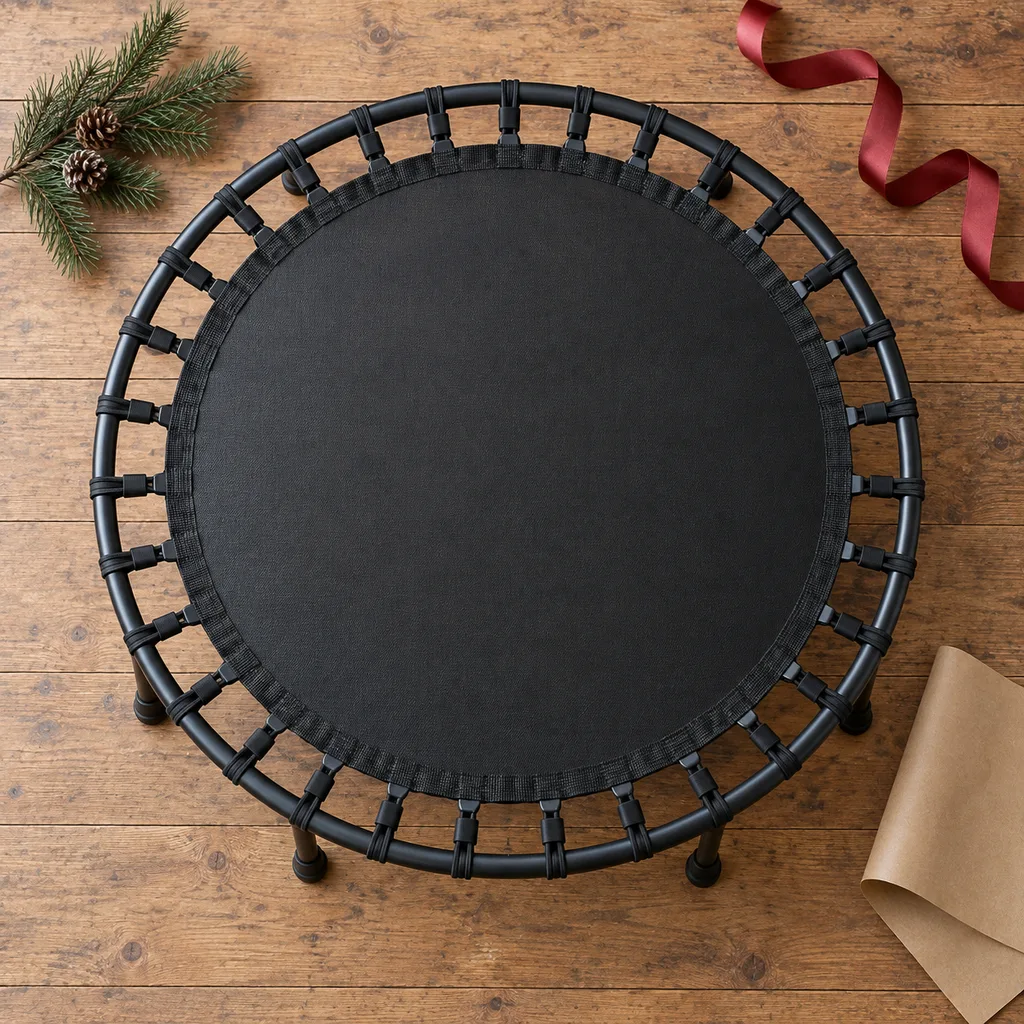
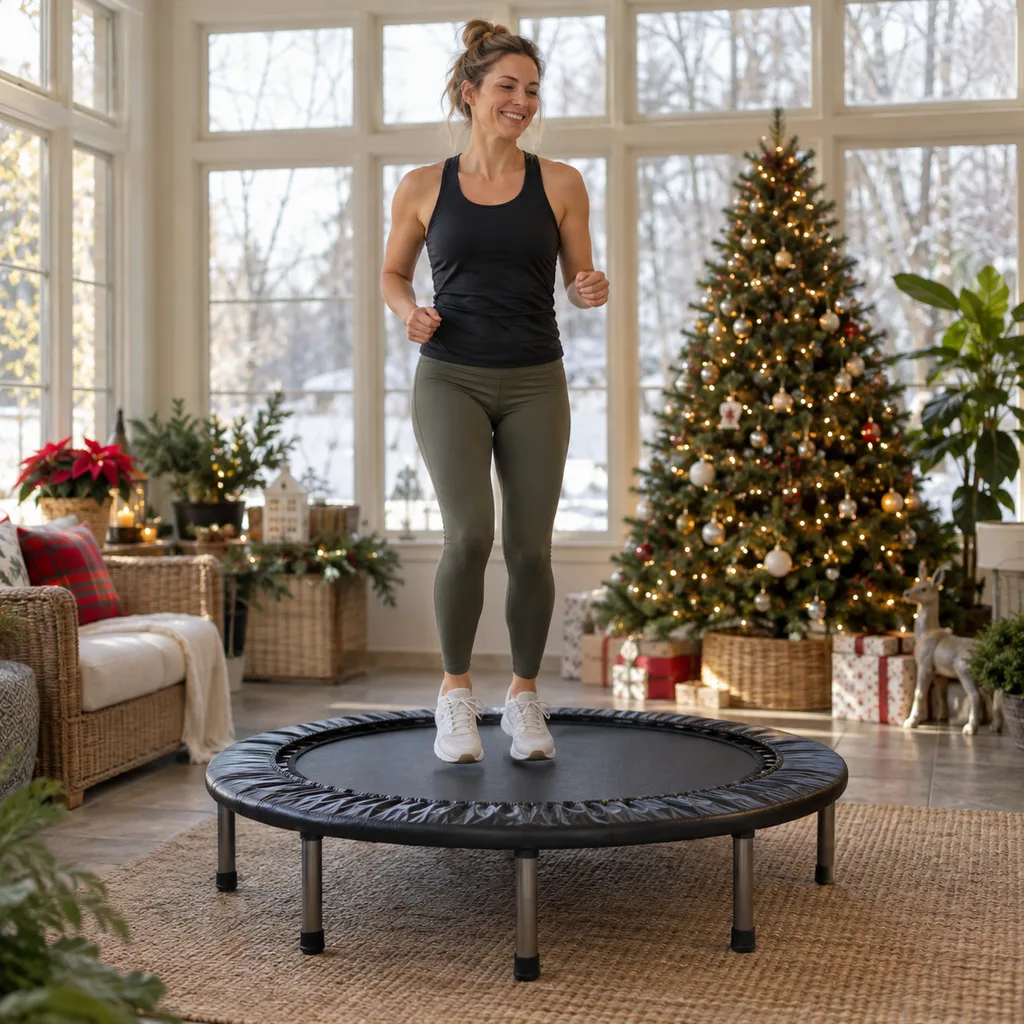
Folding trampolines are small rebounders with legs or a frame that fold down so they fit under a bed or in a closet. They suit apartment living, adults who want a bit of indoor exercise, and families who don't want a trampoline out all the time. Check the folded size, how easy the folding mechanism is to use, and whether it uses springs or bungee cords, since bungees are usually quieter. A handlebar is useful for beginners and older users.
A convenient fitness tool that folds for easy storage and transport, perfect for compact living spaces or on-the-go workouts.
Offers a low-impact workout solution for adults seeking to improve cardiovascular health and core strength indoors.
Kind 7 of 8
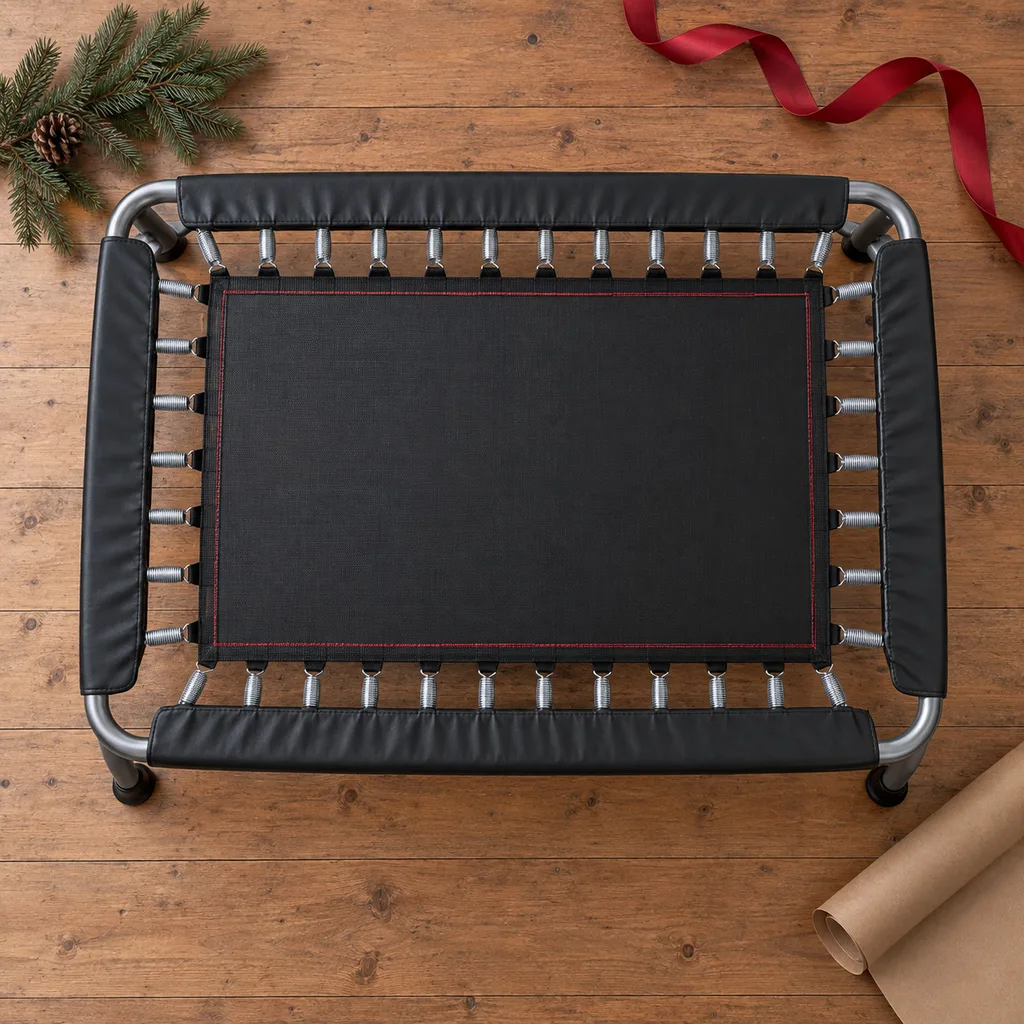
Gymnastic trampolines are usually rectangular, which gives a more even, controlled bounce than a round frame. They suit kids who take gymnastics, cheer or diving and want to practise skills at home. They need more yard space and a flat surface. Check the mat size, the spring count and length, and whether an enclosure is available. Ask the child's coach what kind of home practice makes sense before buying, since some skills belong in the gym only.
Offers a powerful and consistent bounce, ideal for gymnasts, athletes, or serious jumpers seeking advanced aerial practice.
Kind 8 of 8
Inflatable trampolines are air-filled bouncers with no metal frame, often sized for younger kids and used on grass or indoors. They're lighter to move and pack away well, which suits families who want something seasonal or for birthday parties. Check whether the blower has to run the whole time, how much noise it makes, and whether a repair kit comes with it. Look at the age range and how many kids can use it at once.
Looking for one person in particular? Shop by person.
Everything else
Showing 1–8 of 8