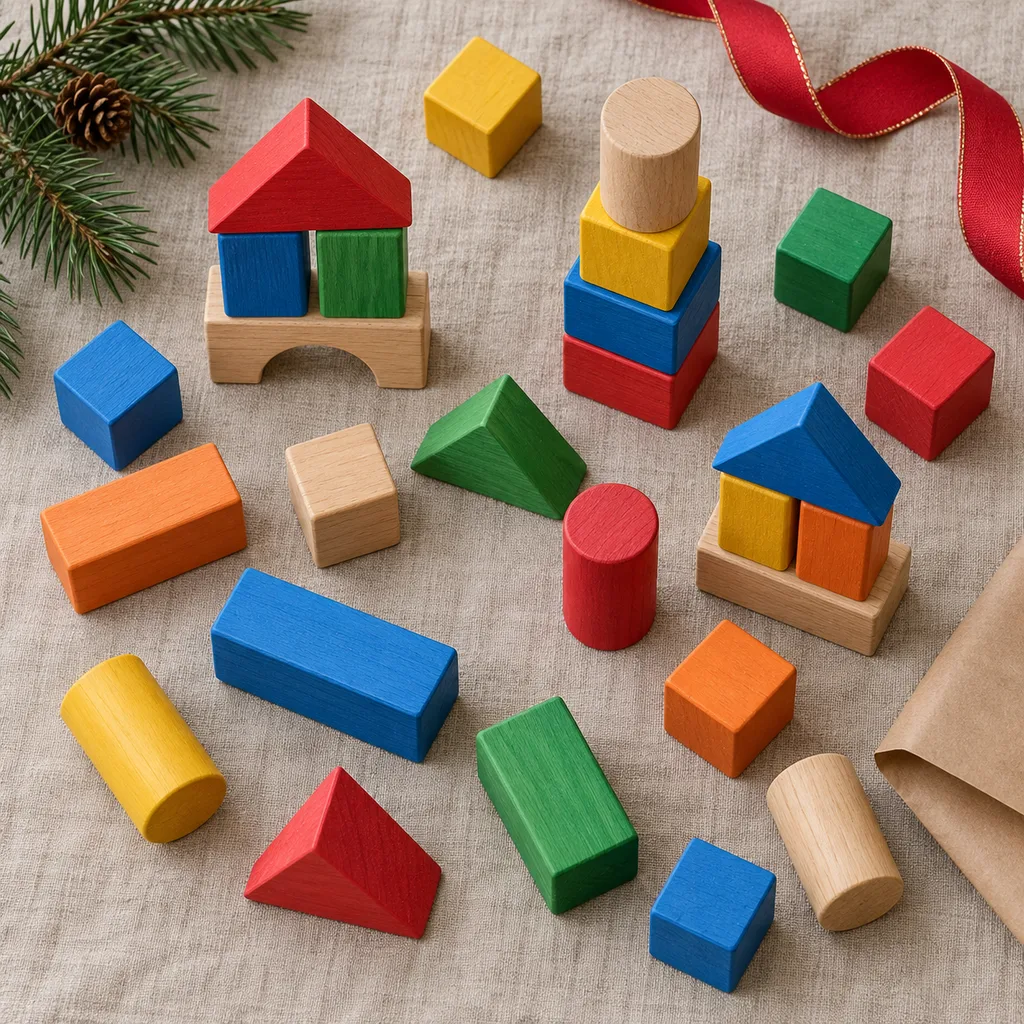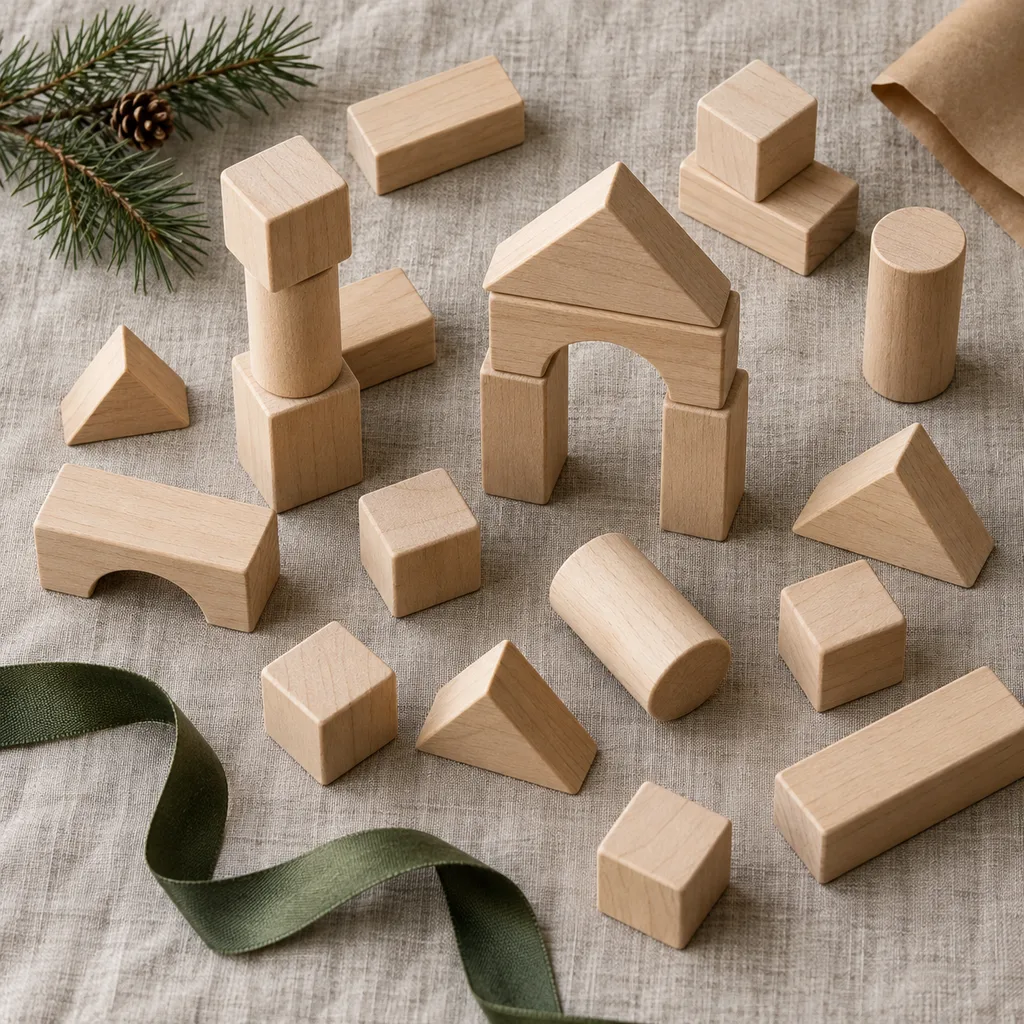
Classic natural wooden building blocks set
This timeless toy encourages open-ended play and fine motor skill development for toddlers and preschoolers.
Kids & Baby
8 kinds worth knowing, 8 picks, and what to check before you buy.
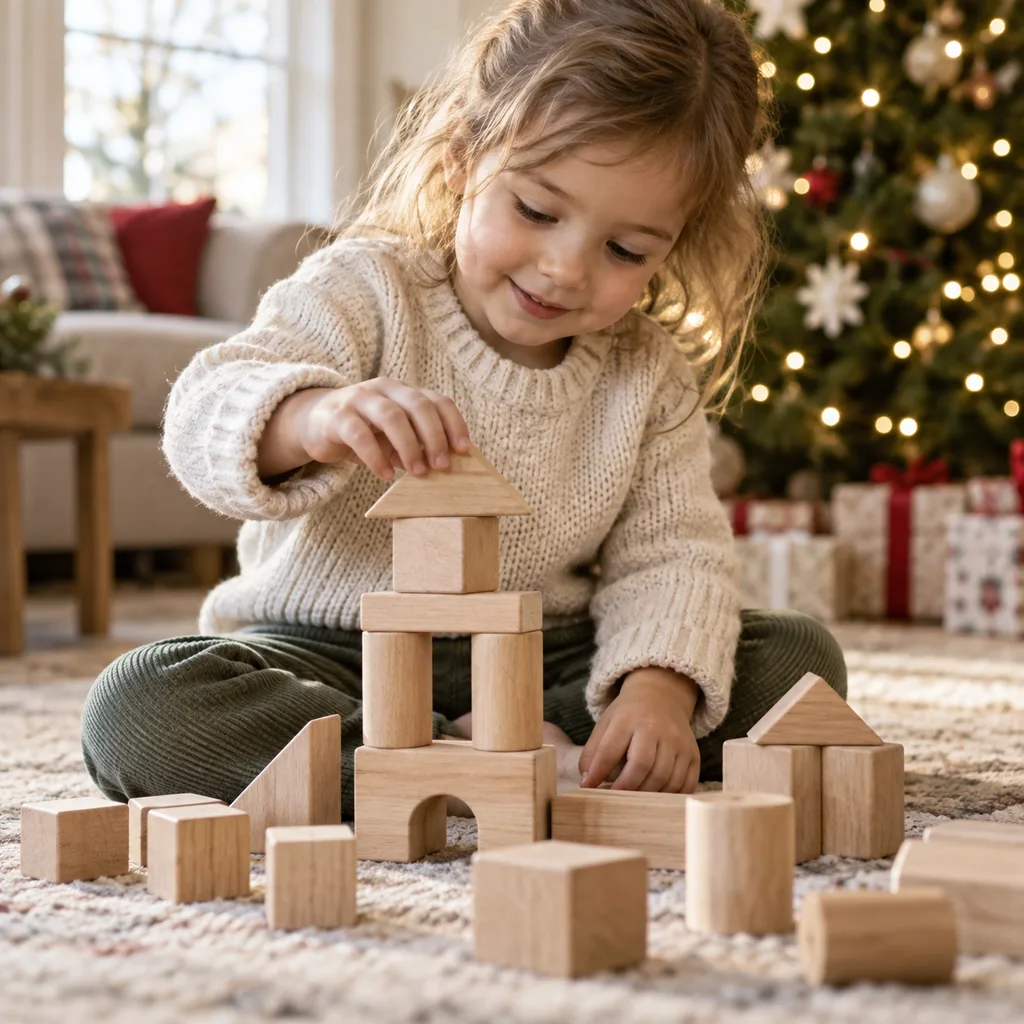
Wooden blocks tend to go to toddlers and preschoolers, often from grandparents, aunts, uncles and godparents who want a gift that lasts past the first week. The sets that get played with most are simple: plain shapes, enough pieces to build something real, and a size that suits the child's hands. Wooden building blocks with unit shapes grow with a child for years, while wooden alphabet blocks add letters for stacking and early word play. Think about the child's age, how much floor space the family has, and whether they already own a set you could add to instead of starting over.
Kind 1 of 8
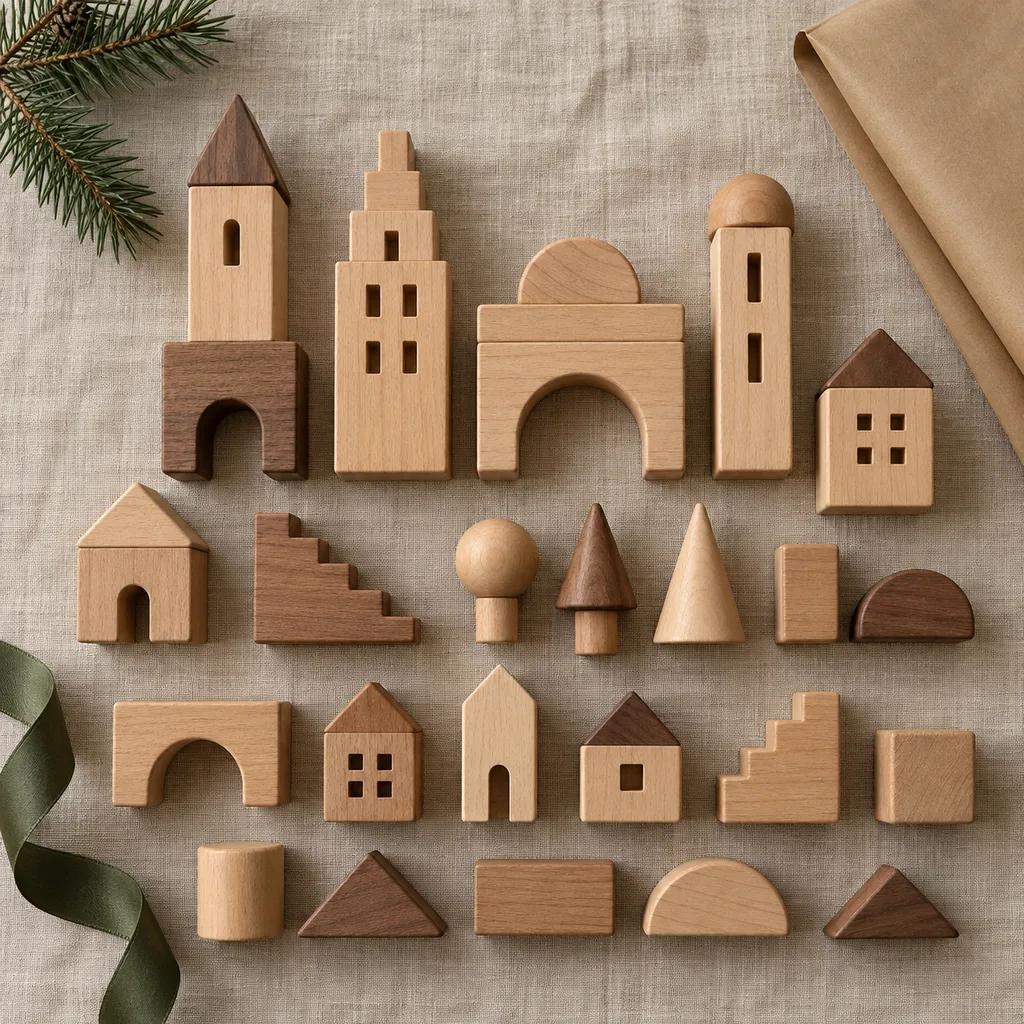
A classic set usually comes in standard unit sizes: squares, rectangles, half-units, cylinders, arches and triangles, all cut to proportion so pieces line up neatly. That proportion is what lets a toddler stack a tower and a five-year-old build a whole garage with ramps. These sets suit families who want one toy that stays in rotation for years. Before buying, check the piece count, whether the shapes follow a consistent unit size, how smooth the edges and finish feel, and whether it comes with a bin or bag so cleanup stays manageable.
This timeless toy encourages open-ended play and fine motor skill development for toddlers and preschoolers.
Inspire budding architects and engineers with unique shapes designed for constructing intricate buildings, bridges, and cityscapes.
Kind 2 of 8
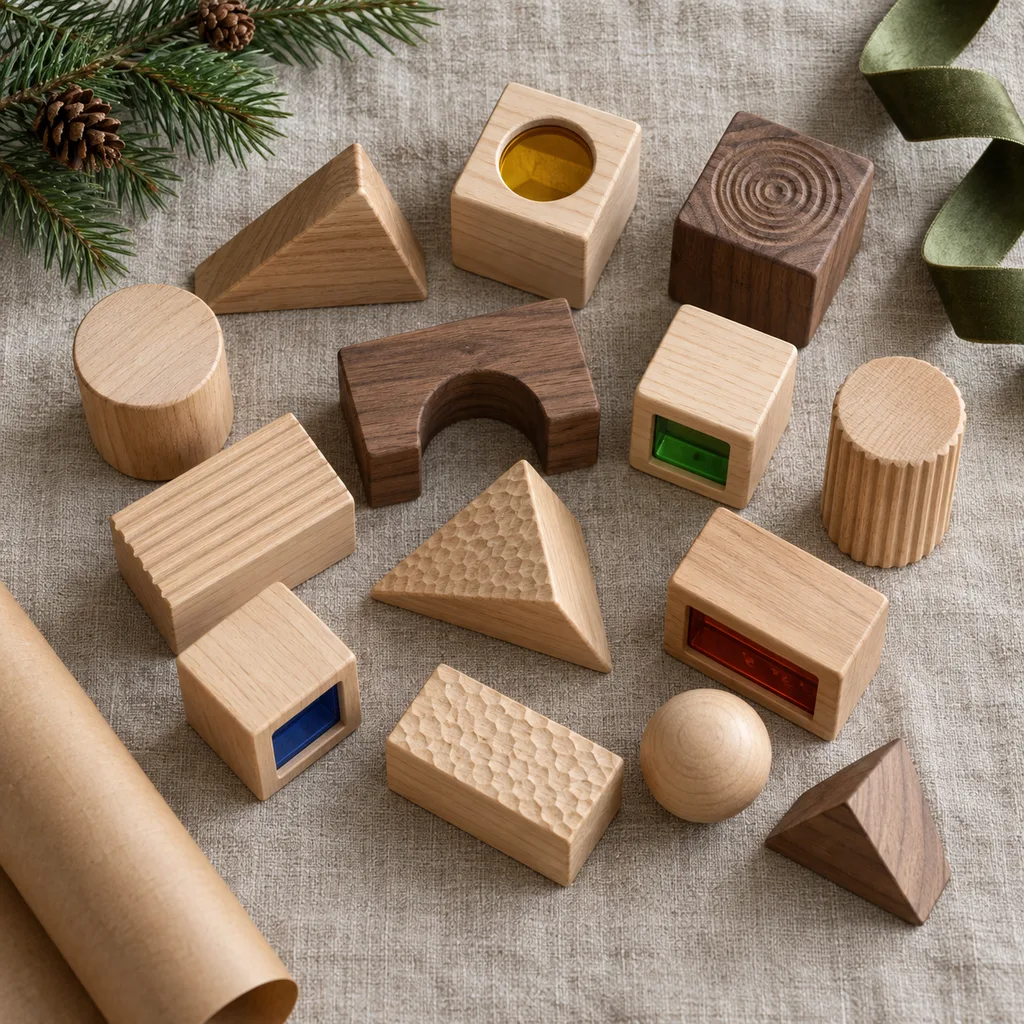
Play blocks is a broad term for sets made for free play rather than one kind of building. Some add textures, sounds, windows or see-through panels that give little hands something to explore beyond stacking. They suit younger toddlers who are still grabbing, shaking and knocking things over more than building. Check that the pieces are big enough for the child's age, look at the finish and colours, and think about noise: blocks with rattles or bells get lots of use, and parents will hear every bit of it.
Stimulate multiple senses with blocks featuring different textures, sounds, or visual elements, perfect for exploratory play.
Kind 3 of 8
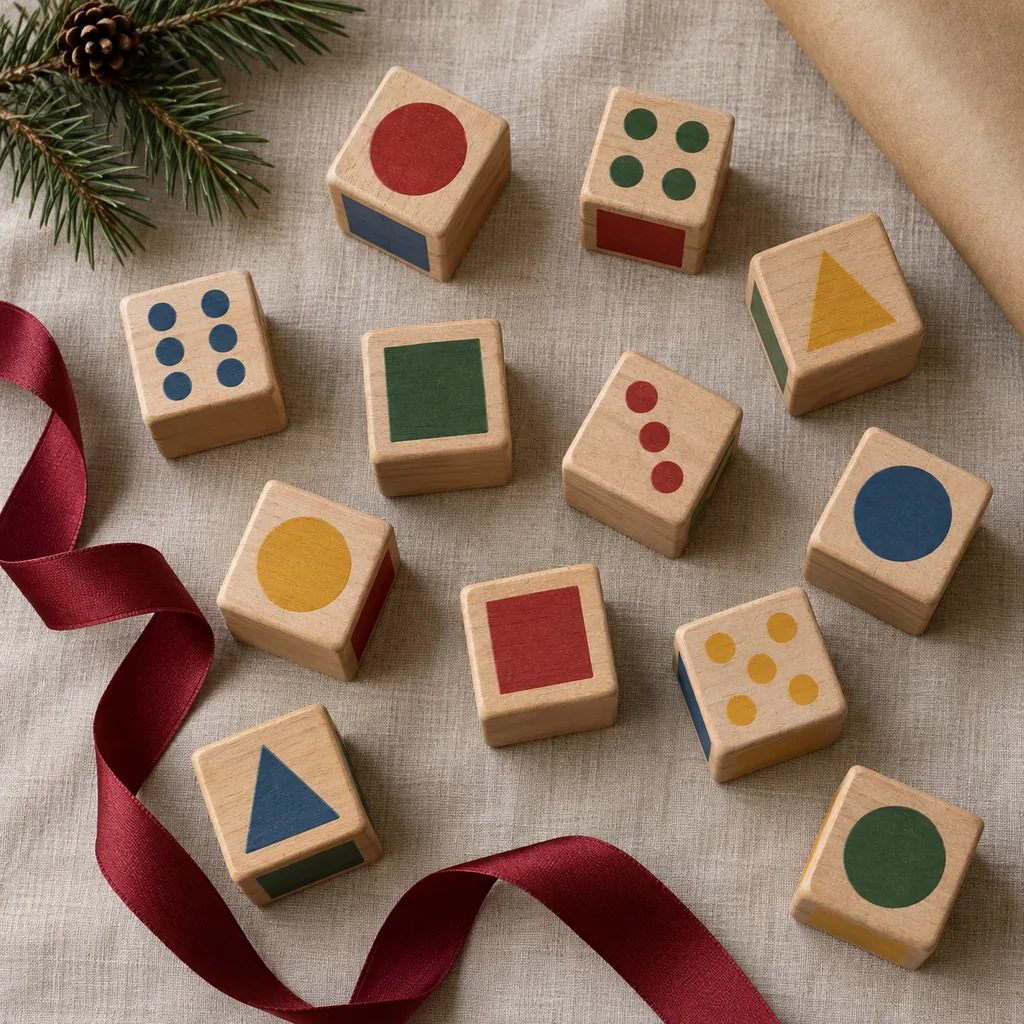
Alphabet blocks are cubes with letters, numbers and often pictures on their faces. Kids stack them long before they read them, and later spell out names or count along. They make a thoughtful gift for a new baby or first birthday, and a nice keepsake if you choose a classic look. Check whether the letters are printed, painted or carved, since carved letters hold up better over the years. See if the set covers the full alphabet plus numbers, and whether the design suits the family's style if the blocks will sit on a shelf.
These versatile blocks help children learn letters, numbers, and early word formation through engaging tactile play.
Kind 4 of 8
Large blocks are oversized pieces meant for forts, walls, roads and structures a child can sit beside or even inside. They are easy for small hands to grip and satisfying to knock down. They suit families with a playroom or basement, and daycares or kids who like to build big. Check the overall size and weight of the set, how many pieces you get, and where it will be stored. A large set can take up a corner of a room, so it is worth asking the parents first.
Kind 5 of 8
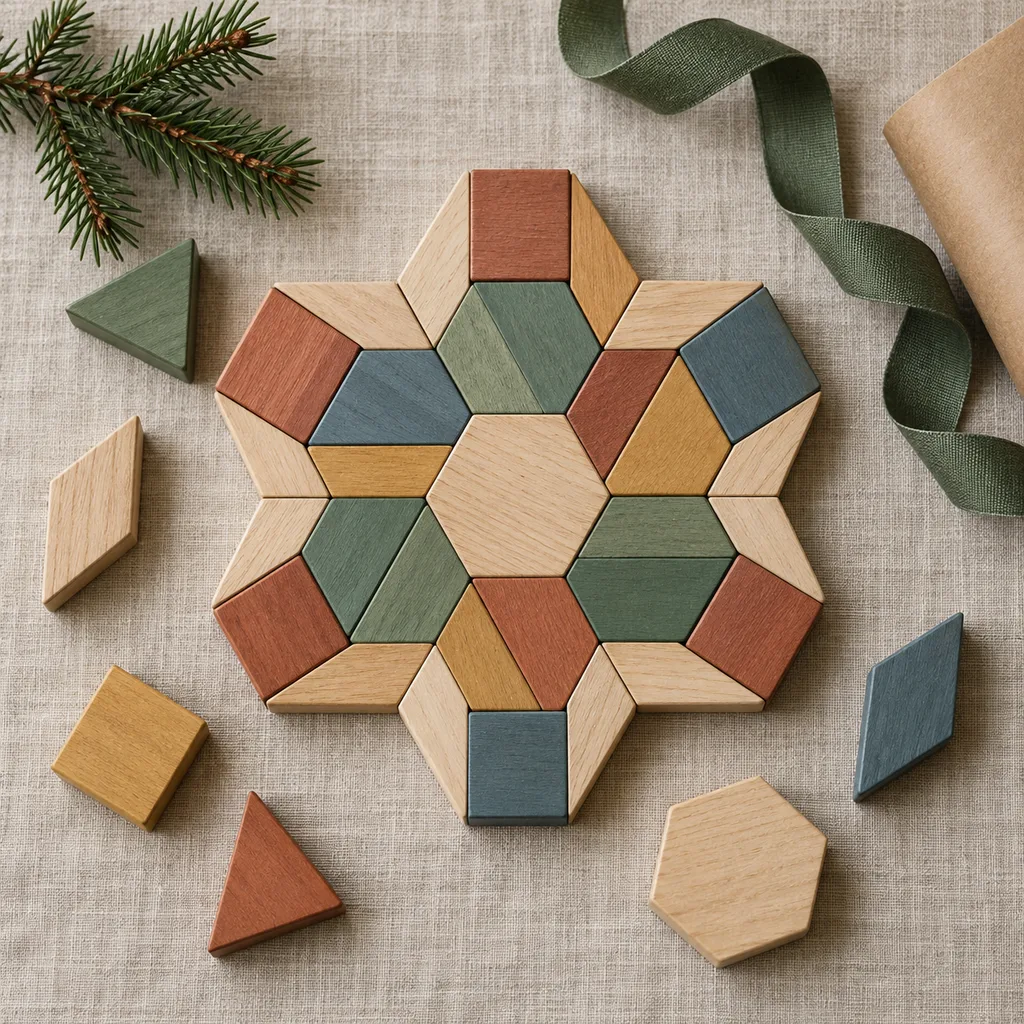
Small blocks give older preschoolers and school-age kids more detail to work with: pattern tiles, little towers and scenes they can finish on a tabletop. They take up less storage space and travel well to a grandparent's house or cottage. They suit children who are past putting things in their mouths and have the patience for finer building. Check the recommended age on the packaging, the number of shapes and colours, and whether pattern cards or a storage tray are included to keep the pieces together.
Engage children in mathematical concepts and artistic design as they arrange these blocks to create intricate patterns and mosaics.
Kind 6 of 8
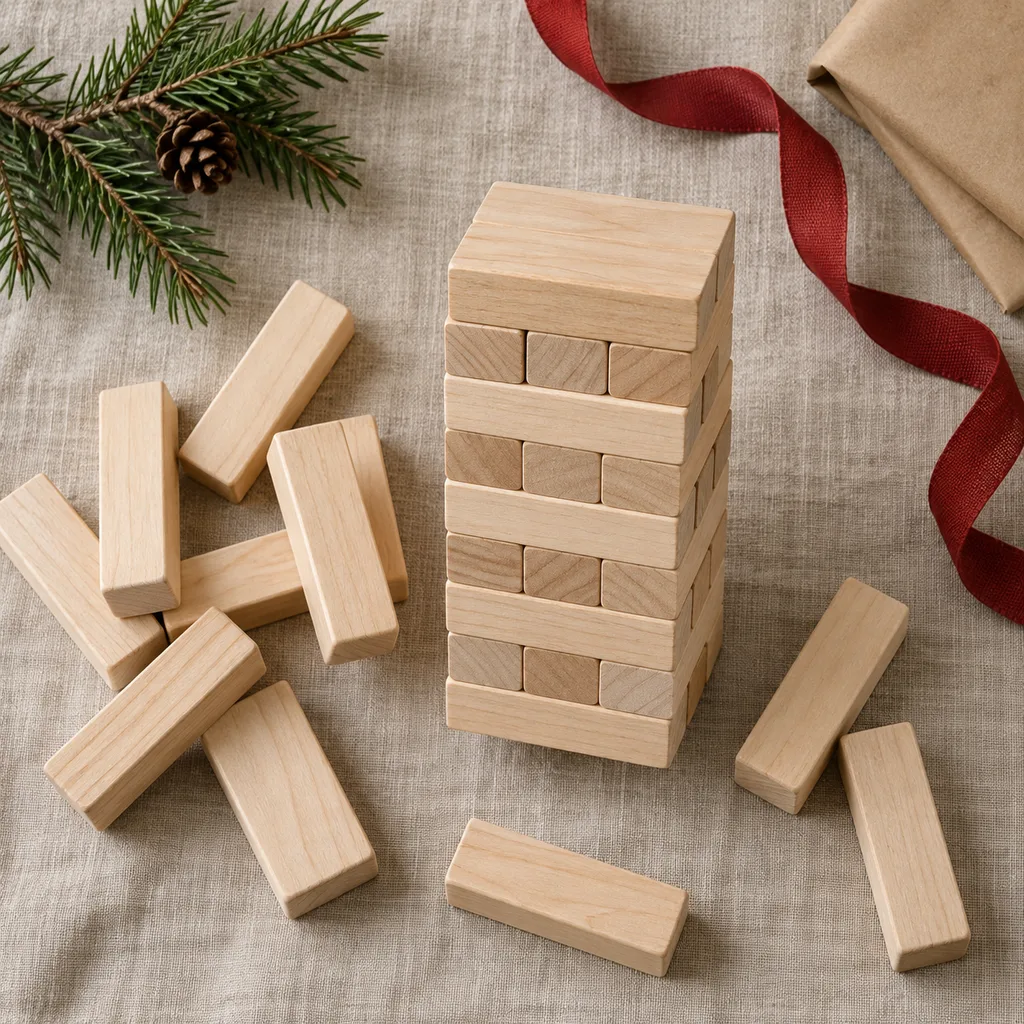
Stacking blocks are made for balance: graduated cubes, shaped pieces that nest or perch on each other, or tower games where players take turns pulling pieces out. Toddlers enjoy the simple stacking kind, while tower games work for older kids and whole families on a holiday afternoon. Check whether the set is meant for solo play or group games, how evenly the pieces are cut, since uneven pieces make towers frustrating, and whether it comes with a box that keeps everything together between games.
Introduce young children to basic shapes and colors while enhancing their hand-eye coordination and spatial reasoning.
This classic game provides fun for the whole family, challenging dexterity and strategic thinking with each careful block removal.
Kind 7 of 8
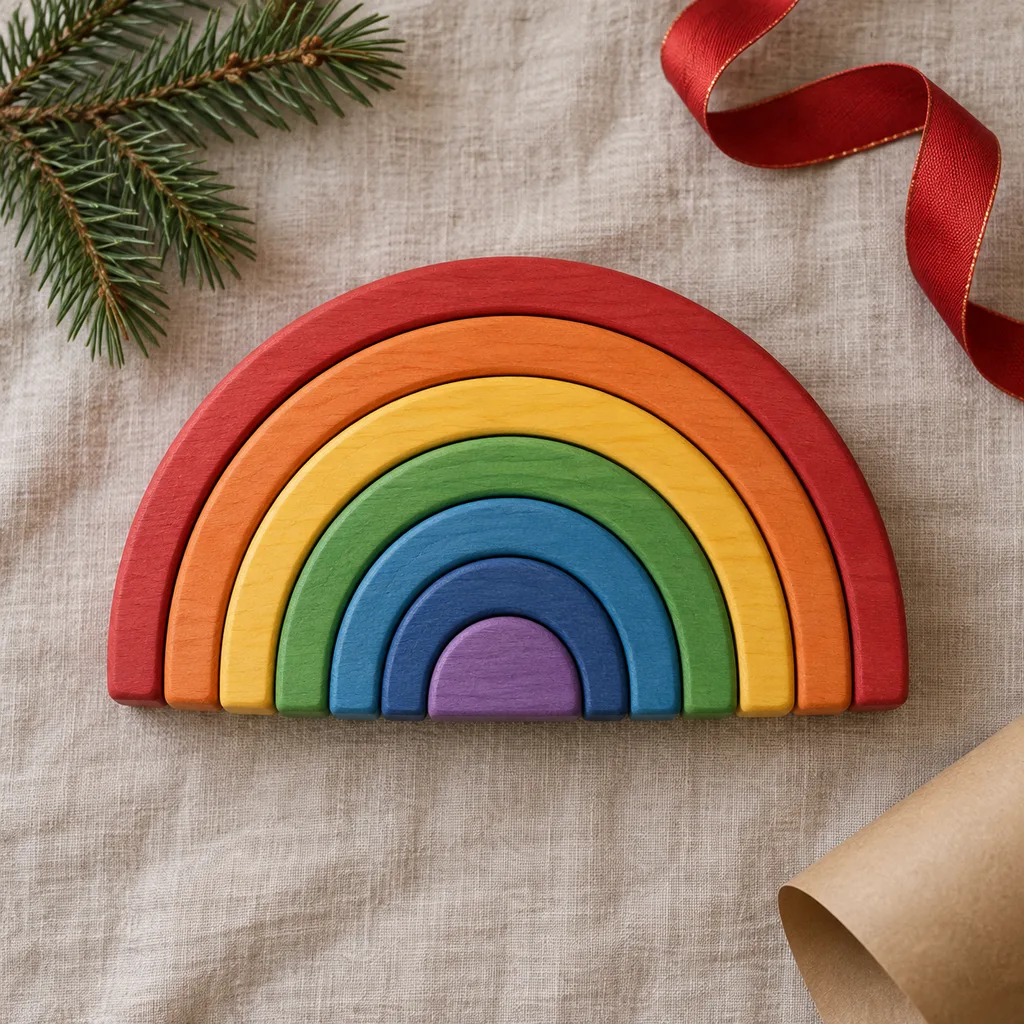
Rainbow sets are curved arches in graduated sizes that nest together into a half circle. Kids use them as tunnels, bridges, cradles for small figures and ramps, and parents often like how they look on a shelf. They suit toddlers through early school age and families who like open-ended toys. Check the number of arches, whether the colours are painted or stained, and how steady the pieces sit when stood upright, since wobbly arches make building harder for small children.
These beautiful, open-ended blocks foster creativity, balance skills, and imaginative play with their versatile curved shapes.
Kind 8 of 8
Mini blocks are tiny pieces used for detailed models, crafts, stamping or table-top building projects. They fit older kids, teens and adults who enjoy fine building more than young children who need something to grab. They also make a good stocking stuffer for a crafty child. Check the recommended age, the piece size, and whether the set comes in a container that closes well, because loose mini pieces scatter across a floor quickly.
Looking for one person in particular? Shop by person.
Everything else
Showing 1–8 of 8