Foldable fabric play tent
This lightweight and portable play space is perfect for indoor adventures or temporary outdoor fun, offering a cozy retreat for imaginative games.
Kids & Baby
8 kinds worth knowing, 8 picks, and what to check before you buy.
Playhouses are usually bought by parents and grandparents for kids from toddler age to about eight, and the ones that get used most fit the space and the child's age. A small house in the corner of a bedroom works differently from a structure in the backyard. A foldable playhouse tent is easy to put up and easy to store. A wooden outdoor playhouse is a bigger project that can last for years. Before you choose, decide where it will go, who will put it together and how long the child is likely to play in it. A backyard playhouse given at Christmas in Canada or the northern US often can't be used until spring, so plan for the wait.
Kind 1 of 8
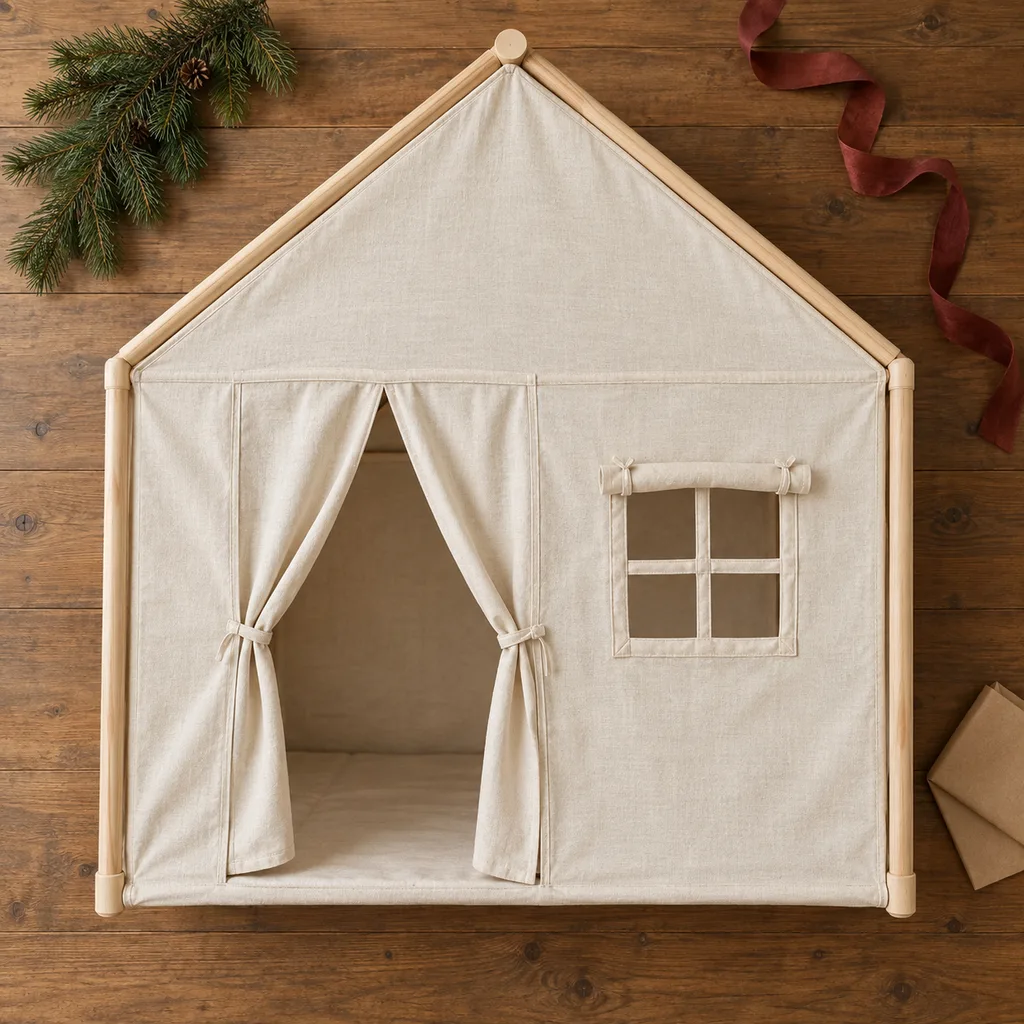
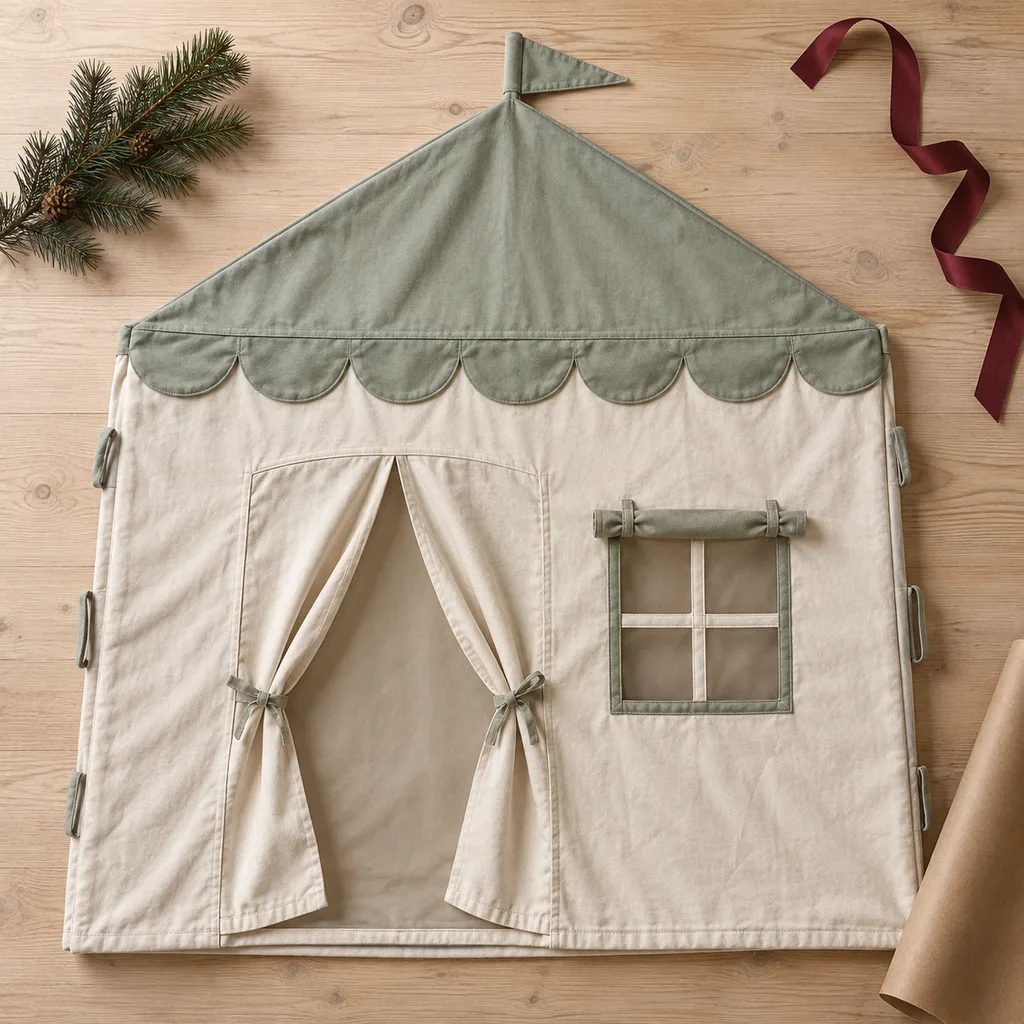
A playhouse tent is a fabric shell on a light frame, often shaped like a cottage, castle or teepee. It suits toddlers and younger kids who like a hideout for reading, naps or pretend play, and it works well in homes where it can't stay up all the time. Check how it folds and whether it fits in a closet. See if the cover can come off to be washed, and whether the poles snap together easily or take two adults. Measure the floor space and the doorway so a child can crawl in without knocking it over.
This lightweight and portable play space is perfect for indoor adventures or temporary outdoor fun, offering a cozy retreat for imaginative games.
Kind 2 of 8
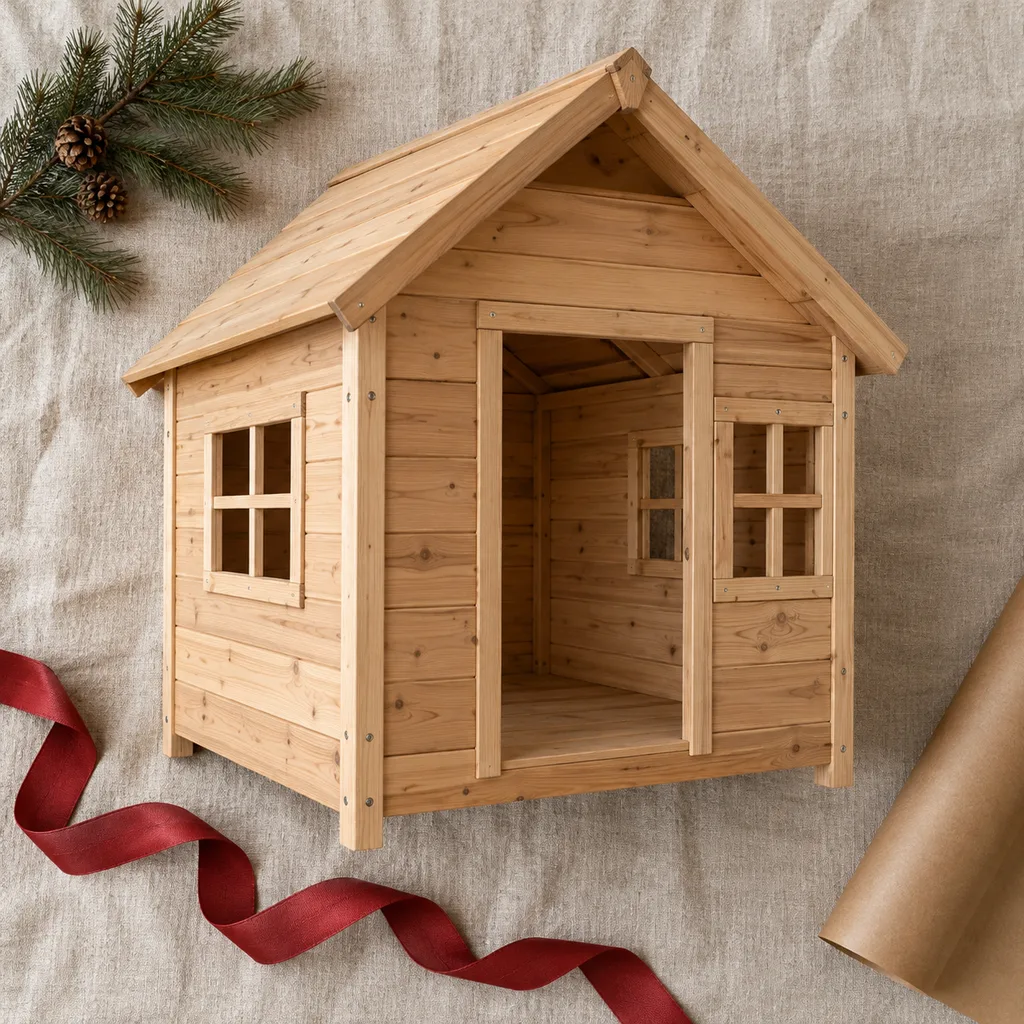
A wooden outdoor playhouse is a small permanent building for the yard, often with a door, windows and a porch. It suits families with space and a child young enough to use it for several years, and siblings can share it. Before you buy, check the footprint and the ground it needs, since a level base matters. Find out how long assembly takes and how many people it needs. Ask whether the wood is treated or needs staining. Think about who will do the build, especially if the box sits in the garage until the snow melts.
This sturdy outdoor structure provides a timeless space for children to engage in imaginative play and create lasting memories.
Kind 3 of 8
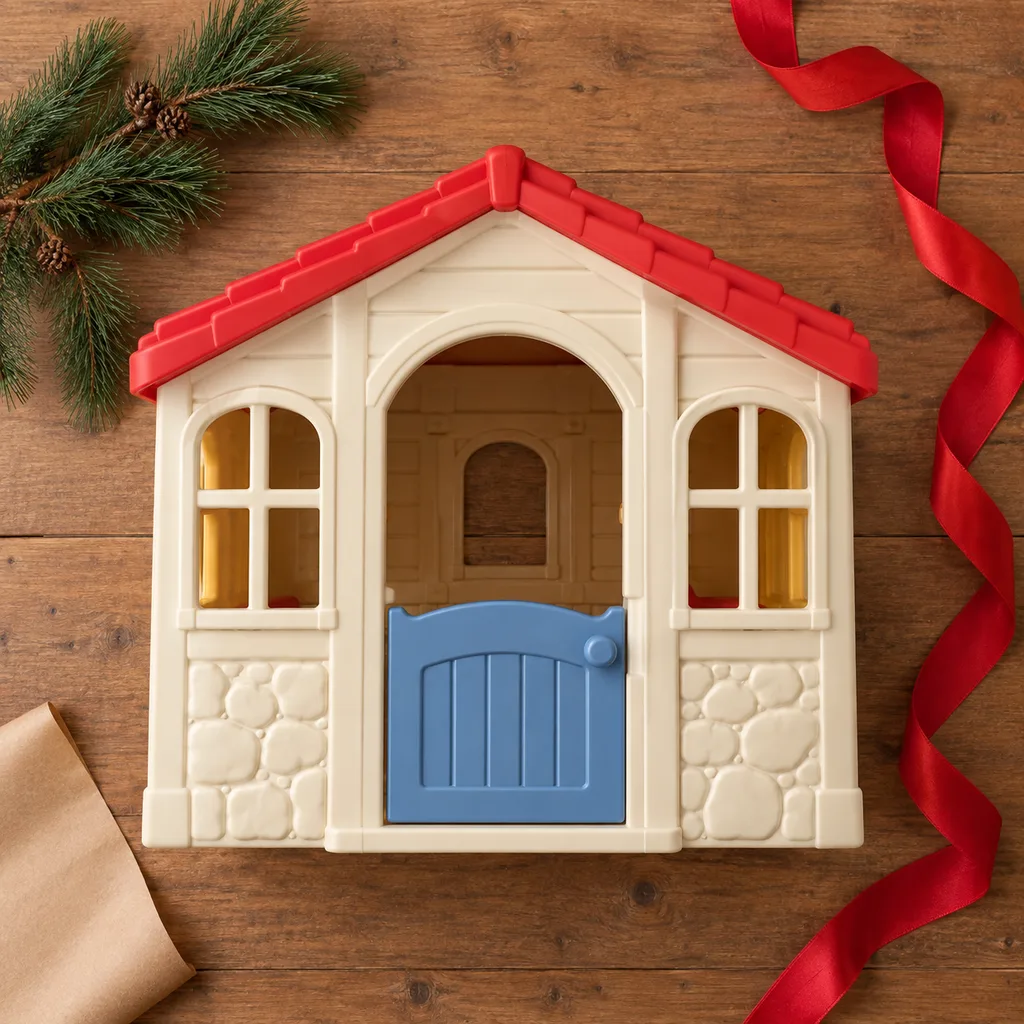
A plastic playhouse is moulded in bright panels that clip or snap together. It suits toddlers and preschoolers, and families who want something that wipes clean and can move between the yard and the basement. Check the interior height against the child's height. Some models feel roomy at two and cramped by five. Look at how many panels there are, whether it can be taken apart for winter storage and how much the colours fade in strong sun. Doors, shutters, a play kitchen or a doorbell add a lot to pretend play.
A bright and weather-resistant option, this playhouse offers a safe and engaging environment for younger children to explore their creativity.
Kind 4 of 8
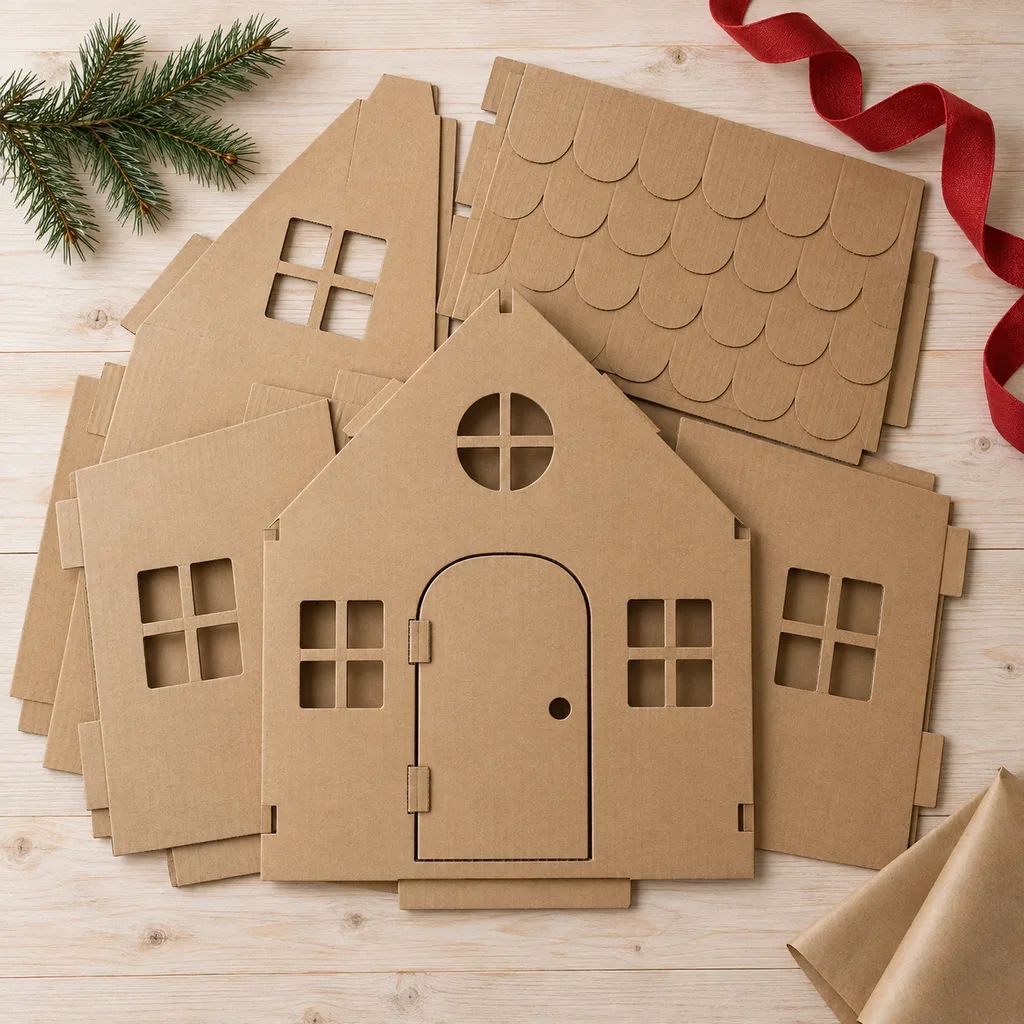
An indoor playhouse is scaled for a playroom, bedroom or basement. It might be a small wooden frame, a panel house or a cardboard house a child can colour and decorate. It suits kids who want a space of their own on long winter days. Measure the ceiling height and floor space first, and check how it stands on carpet or hardwood. Cardboard versions are a good short-term gift that doubles as a craft project. Framed versions last longer but take up a corner for years, so ask the parents before you buy.
Designed specifically for interior spaces, this compact playhouse creates a dedicated area for imaginative play during any weather.
An eco-friendly and creative option, this playhouse provides a blank canvas for children to decorate and personalize their own unique space.
Kind 5 of 8
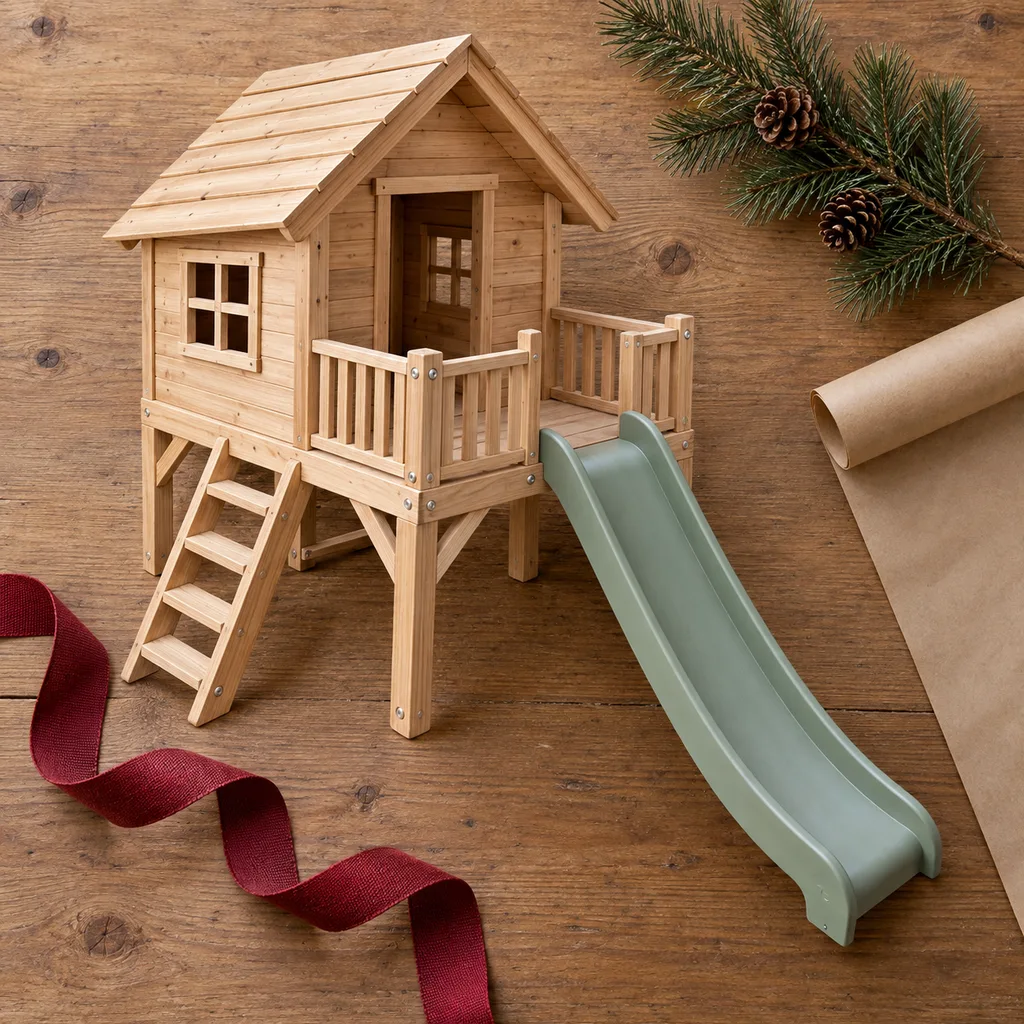
A playhouse with a slide combines a small house with a climbing step or ladder and a slide out the side. It suits active preschoolers who get bored with a house alone. Kids tend to spend more time climbing and sliding than playing house. Check the age range and the height of the platform. Make sure there is clear space at the bottom of the slide and enough yard or room for the full length. Plastic versions are easier to move indoors for winter. Wooden ones usually stay in one spot.
Combine the fun of a playhouse with an exciting slide, offering children both a cozy retreat and an active element for physical play.
Kind 6 of 8
An indoor play tent is a compact fabric tent, often a teepee, pop-up dome or tunnel, made for use inside. It suits toddlers and young kids who like a cozy reading nook or a fort, and it fits in apartments where a full playhouse won't. Check the footprint, whether the floor is padded or needs a mat and how quickly it pops up and packs away. Neutral colours can blend into a shared room, while themed prints appeal more to the child.
Kind 7 of 8
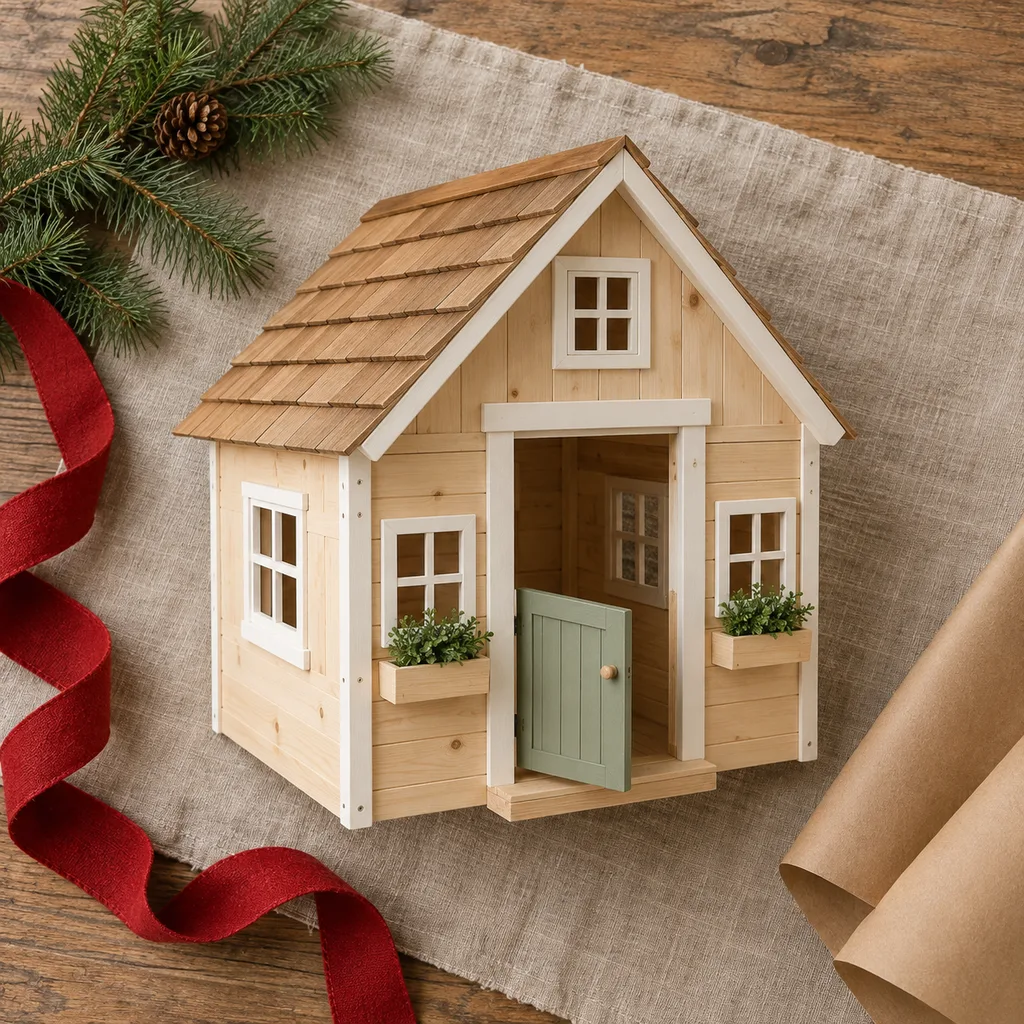
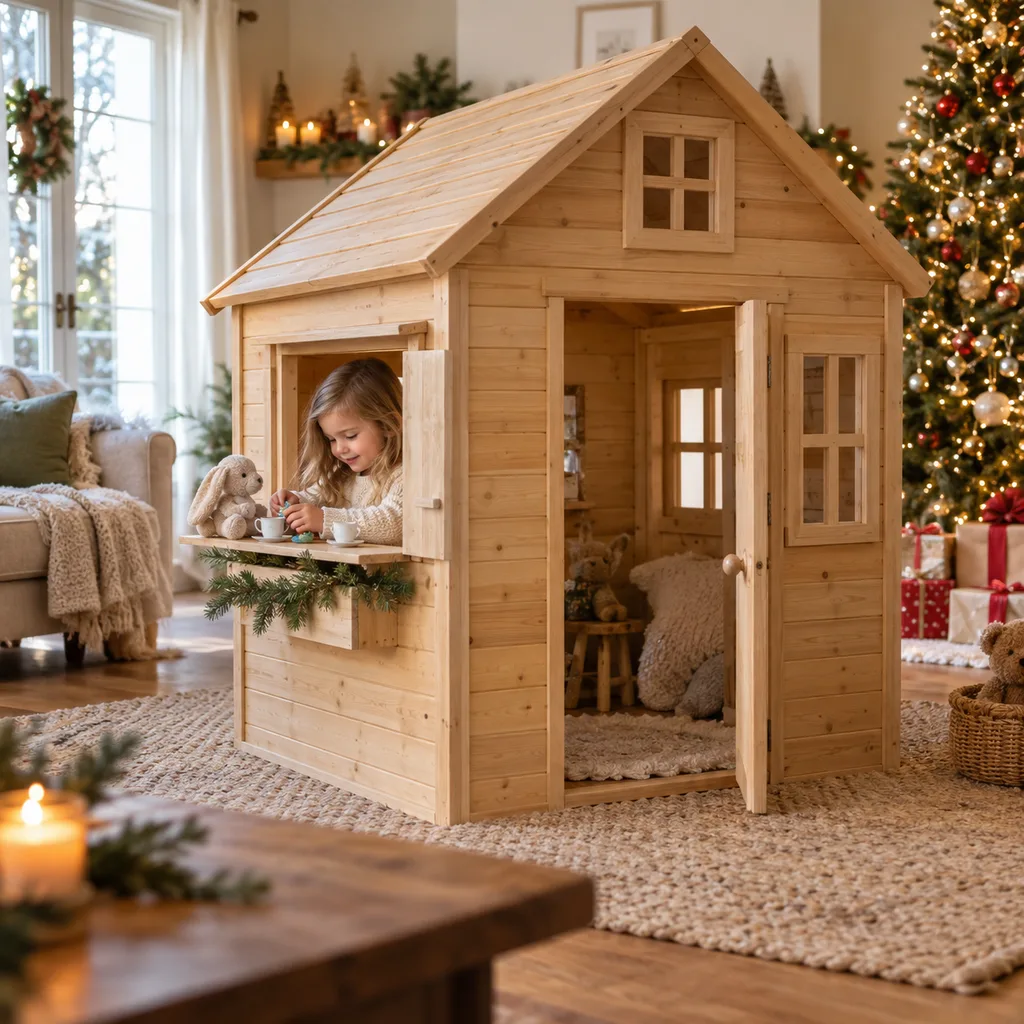
A cottage playhouse looks like a tiny home, with a peaked roof, shutters, a window box and sometimes a porch. It suits kids who love playing house, running a pretend shop or hosting tea parties. You can find it in wood for the yard or in plastic and fabric for smaller spaces. Check the size of the door and windows, whether there is a counter or shelf inside and whether the style lets the child paint or decorate it. A cottage the child can add to over time tends to hold their interest longer.
Inspire endless role-playing scenarios with a charming playhouse designed to resemble a cozy cottage, fostering imaginative domestic play.
Kind 8 of 8
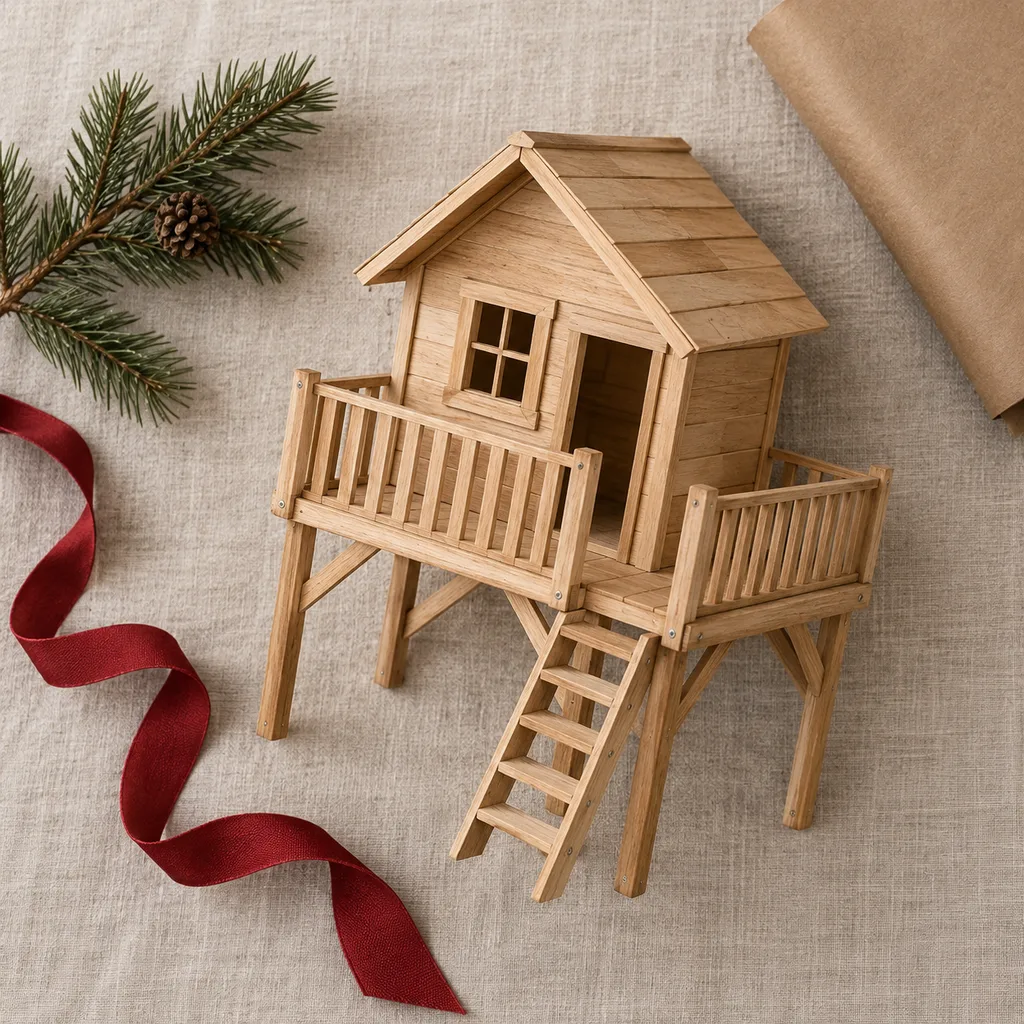
An elevated playhouse sits on posts or a deck with a ladder, ramp or stairs leading up, sometimes with a sandbox or swing underneath. It suits school-age kids who want a lookout or clubhouse more than a toddler's house. It is a large backyard project, so check the total height, the space it needs around it, the ground it will stand on and the assembly time. Confirm that the parents want a permanent structure in the yard and have somewhere to put it before you choose one.
This unique play structure provides an exciting raised perspective, encouraging active play and offering a sense of adventure for children.
Looking for one person in particular? Shop by person.
Everything else
Showing 1–8 of 8