Childrens drum kit
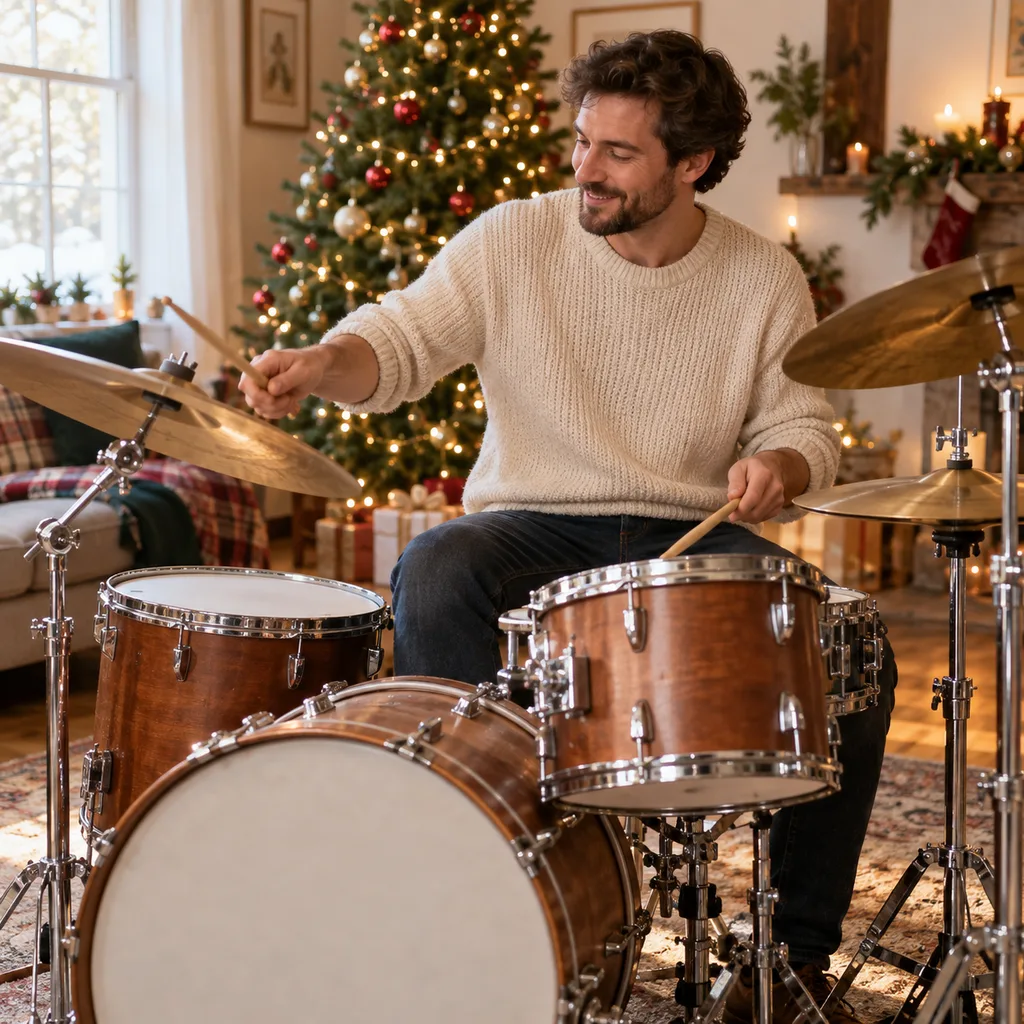
This compact drum kit introduces young musicians to rhythm and coordination in a fun, engaging way.
Kids & Baby
6 kinds worth knowing, 8 picks, and what to check before you buy.
Most drums bought as gifts go to kids who already bang on pots or teens who tap on every desk they sit at. The ones that get played are easy to set up, sound good from the first hit and fit the space where the family actually lives. A children's drum kit suits a young player who wants the full setup. A pair of bongo drums or a simple hand drum works better when room is tight or the child moves between houses. Think about noise and storage as much as the player's age. A smaller instrument that stays out in the living room usually gets more use than a big kit packed away in the basement.
Kind 1 of 6
A children's drum kit is a smaller version of a real setup, usually with a bass drum, a snare or tom, a cymbal and a short throne. It suits kids who watch drummers closely and want to play along to songs. Before buying, check the recommended age and height range, whether the throne adjusts, and how long assembly takes. Look at the footprint too, since even a compact kit needs a corner of its own. Kits with real drumheads sound far better than all-plastic toy versions and hold a child's interest longer.
This compact drum kit introduces young musicians to rhythm and coordination in a fun, engaging way.
Kind 2 of 6
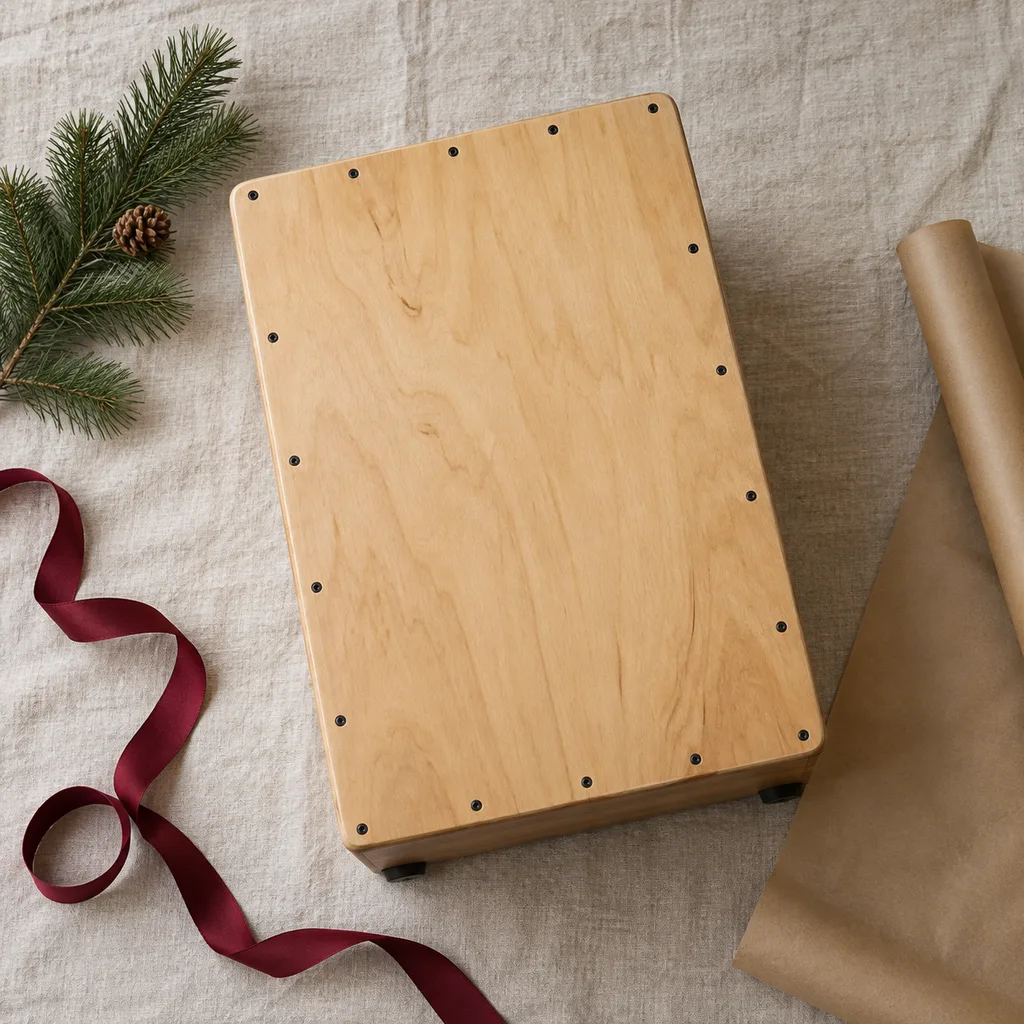
A cajon is a wooden box you sit on and play with your hands. Hitting the centre gives a deep bass note, and hitting near the top edge gives a sharp, snare-like snap. It suits teens and adults who play guitar with friends, busk, or want something quieter than a drum kit. Check the seat height against the player's size, whether it has internal snare wires for that crisp sound, and the build of the playing surface. It doubles as a stool, so it rarely ends up in a closet.
This unique box drum allows a seated player to create a full range of percussive sounds, from bass to snare-like effects.
Kind 3 of 6
Bongo drums are two small joined drums, one slightly larger than the other, played with the fingers and palms. They're light, easy to pass around and fun at family gatherings, so they suit kids, teens and friends who like music without much commitment. Check whether the heads can be tuned, whether a stand or strap is included, and the overall size for smaller hands. Kids' bongos are lighter and simpler, while full-size sets have a warmer tone that older players will appreciate.
Bongo drums provide distinct high and low pitches, allowing players to explore complex rhythms and percussive textures.
Kind 4 of 6
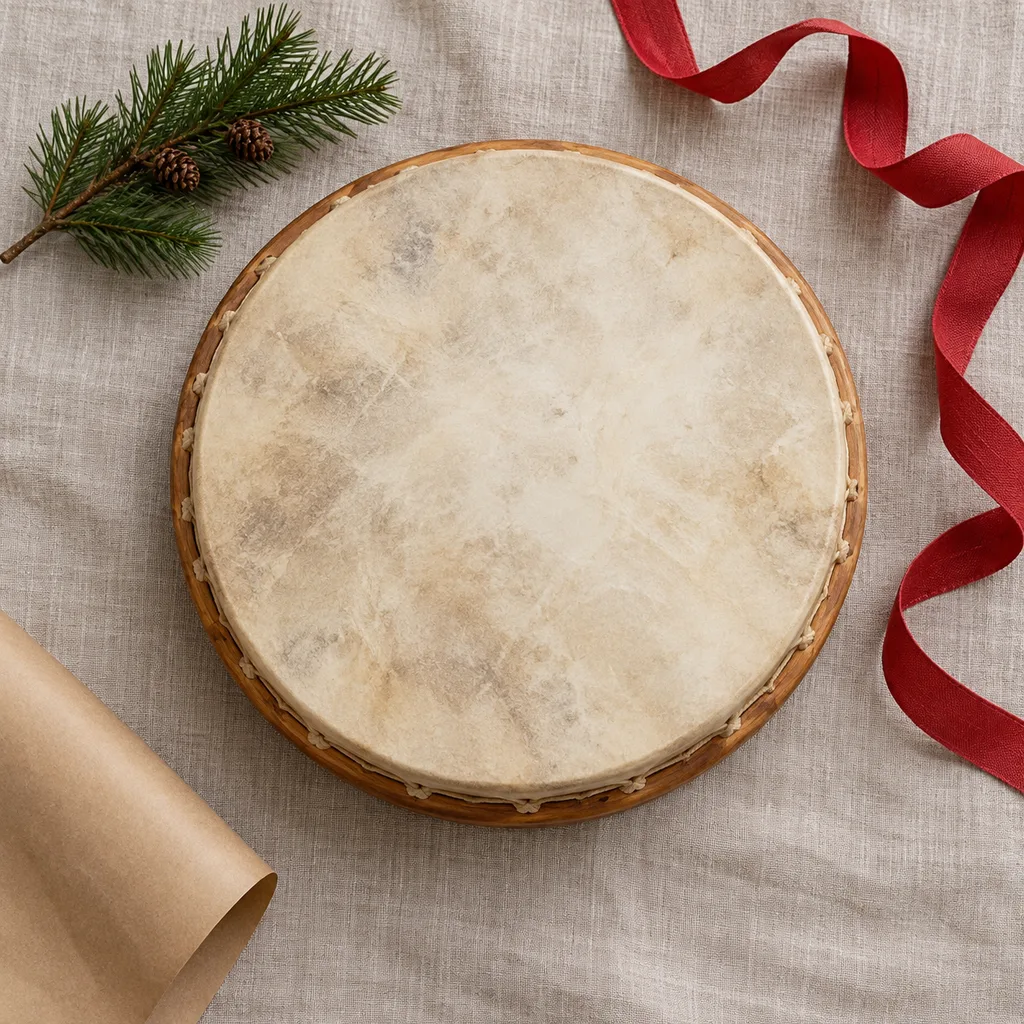
Hand drums covers a wide family: frame drums, djembe-style drums and small single drums held on the lap or under an arm. They're a good fit for toddlers who are just discovering sound, and just as good for adults who want something relaxing to play in drum circles. Check the weight so the player can hold it comfortably, what the head is made of, and whether it comes with a carrying bag. Smaller hand drums travel well to the cottage or to grandparents' houses.
A versatile hand drum offers an accessible way for all ages to explore rhythmic patterns and create unique sounds.
Kind 5 of 6
A box drum is another name for the cajon family, and it often means smaller or travel versions. Some are slim enough to fit in a backpack, and some are sized for children to sit on. They suit apartment dwellers, campers and kids who want a real instrument without a full kit's footprint. Check that the seat height works for the player, whether the box is sturdy enough to sit on, and whether the sound is adjustable. A compact box drum is a sensible middle ground between toy and serious instrument.
Kind 6 of 6
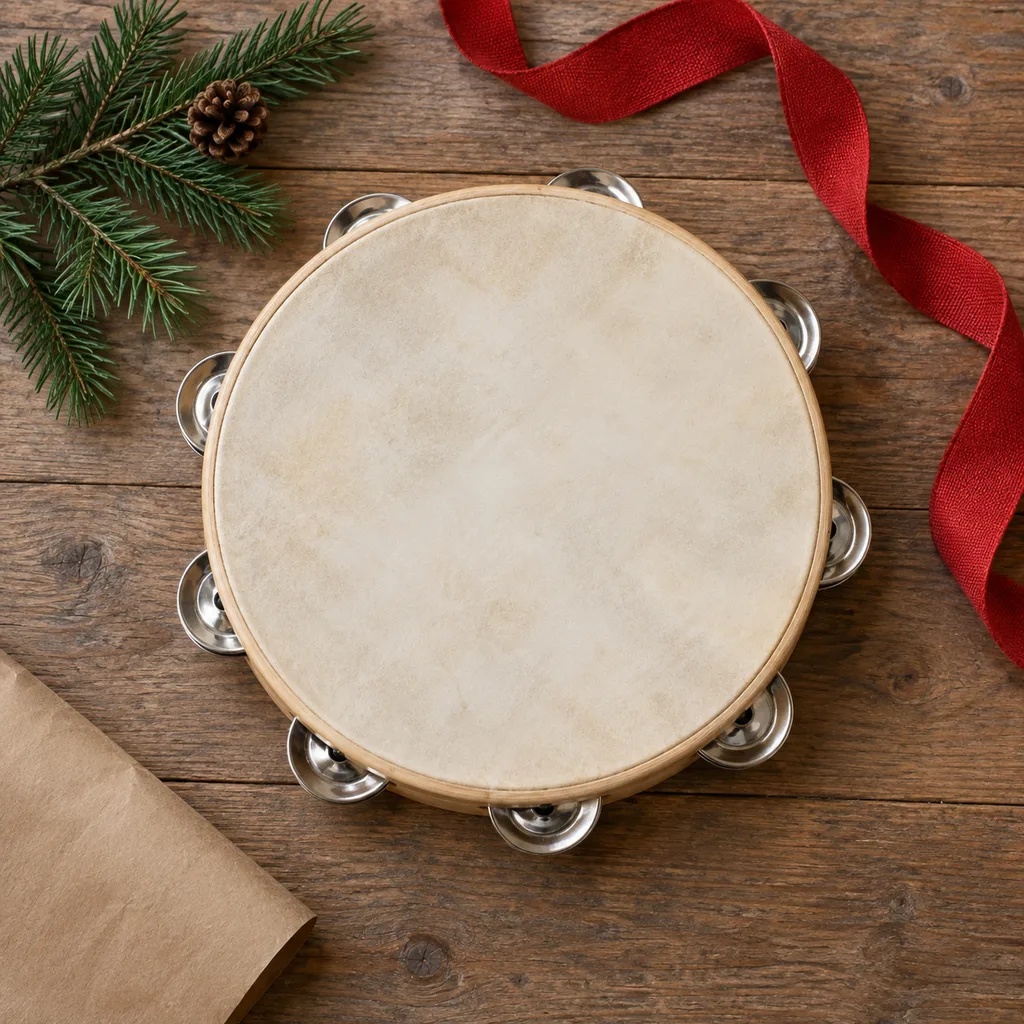
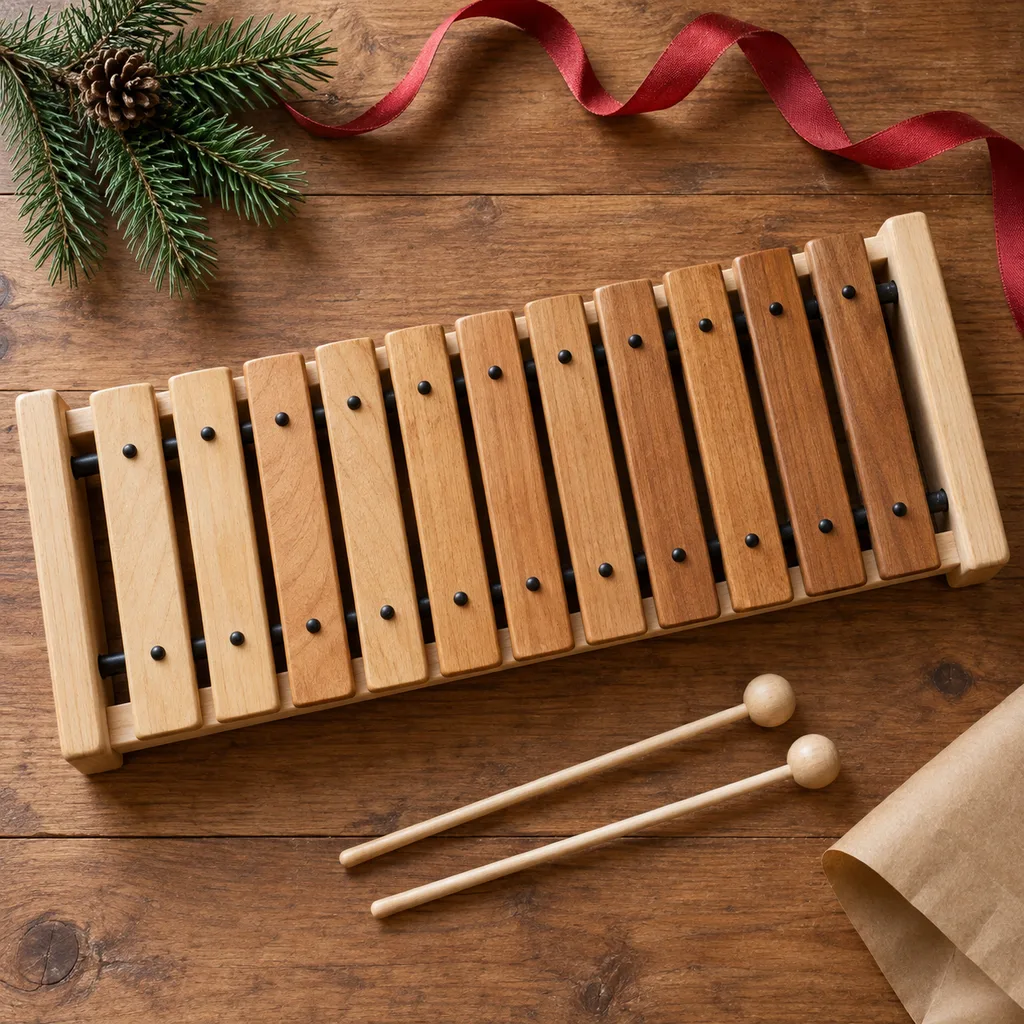
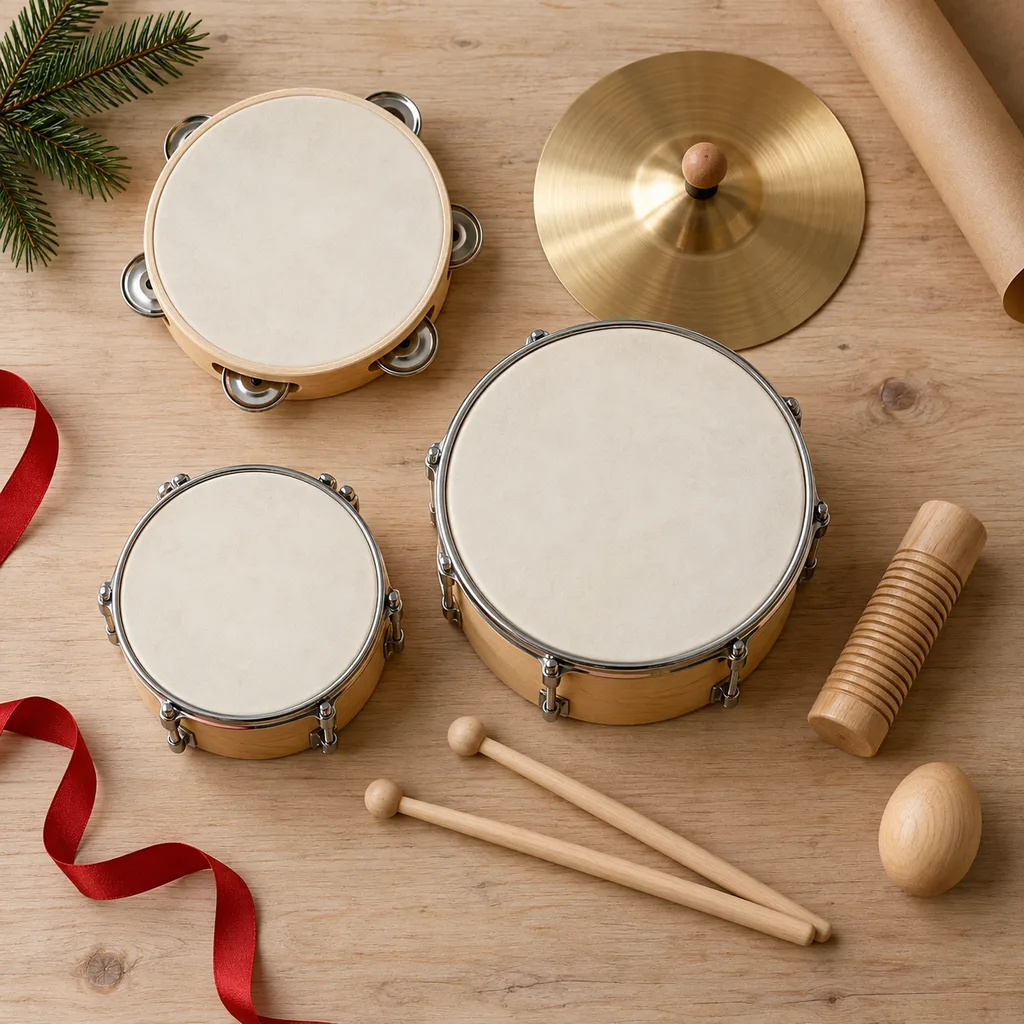
A percussion set bundles several small instruments, such as a tambourine, shakers, rhythm sticks and sometimes a xylophone. It suits toddlers and young kids who like to try everything, and families with siblings who'd otherwise fight over one drum. Check the age guidance on each piece, whether a storage bag or box is included, and the build quality of the small parts. A xylophone adds melody, so kids can play simple tunes rather than just beats. Sets also make it easy to hand out instruments for a family sing-along.
A tambourine offers a bright, jingly sound, making it a lively addition to sing-alongs and rhythmic play for all ages.
This classic instrument helps children develop pitch recognition and fine motor skills through striking colorful bars.
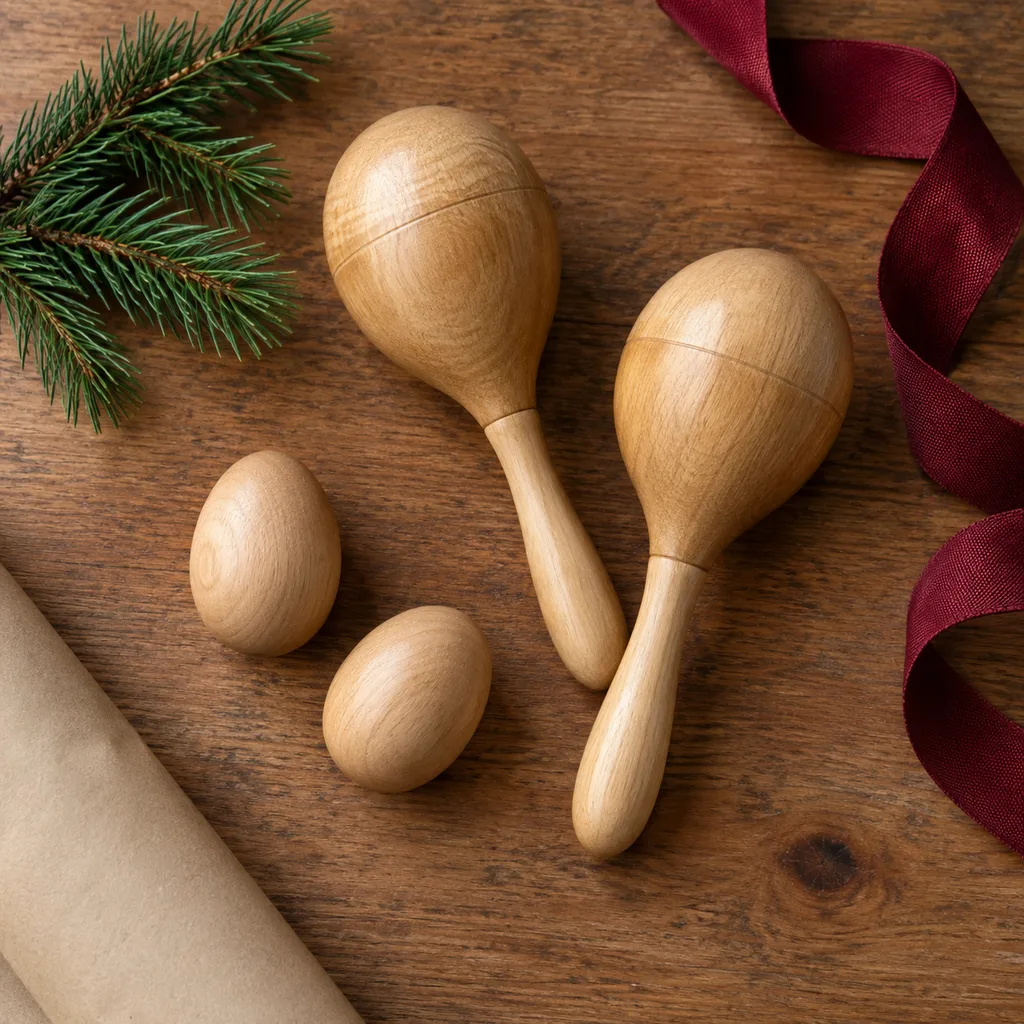
Simple to use, shakers provide instant rhythmic fun and are perfect for adding texture to any musical ensemble.
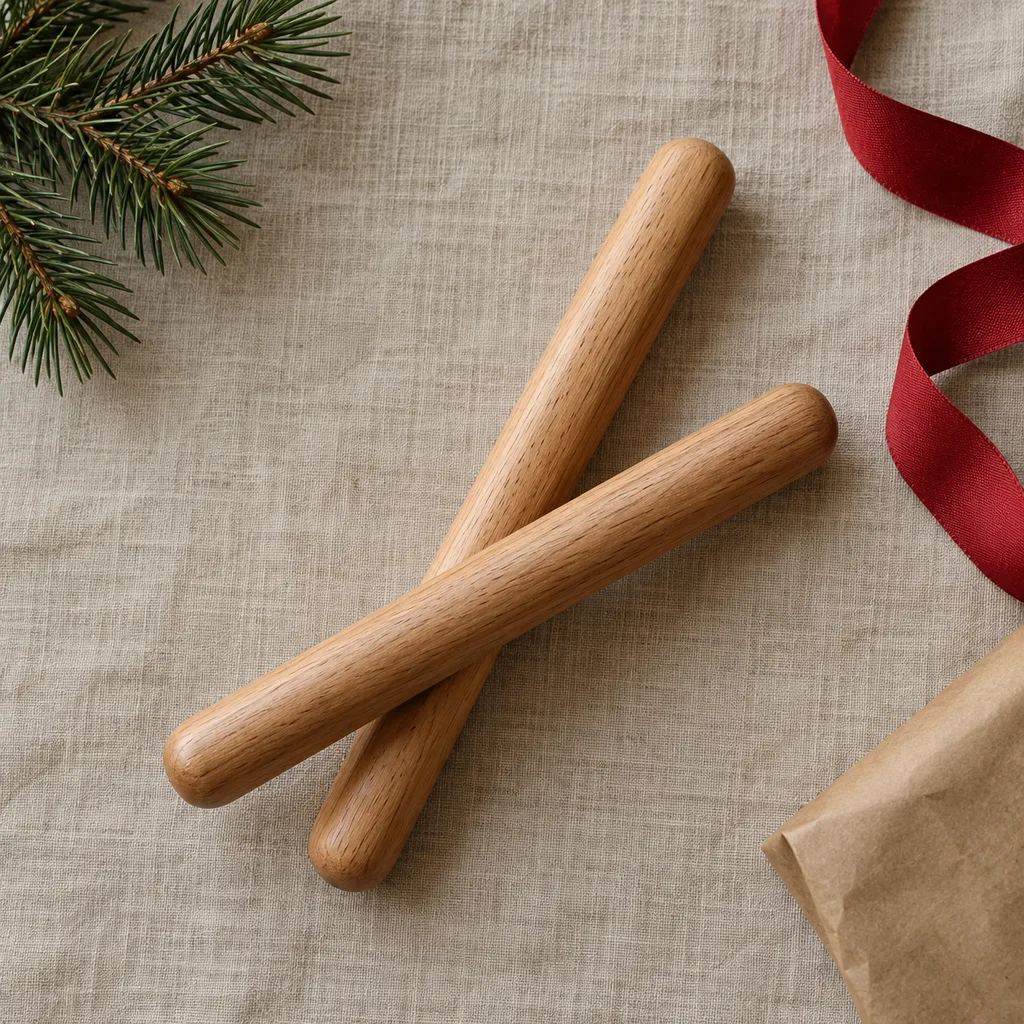
These fundamental percussion tools teach basic rhythm and timing through striking two sticks together.
Looking for one person in particular? Shop by person.
Everything else
Showing 1–8 of 8