Soft fabric building blocks
These lightweight and squeezable blocks allow babies to safely stack, build, and explore textures without any hard edges.
Kids & Baby
6 kinds worth knowing, 8 picks, and what to check before you buy.
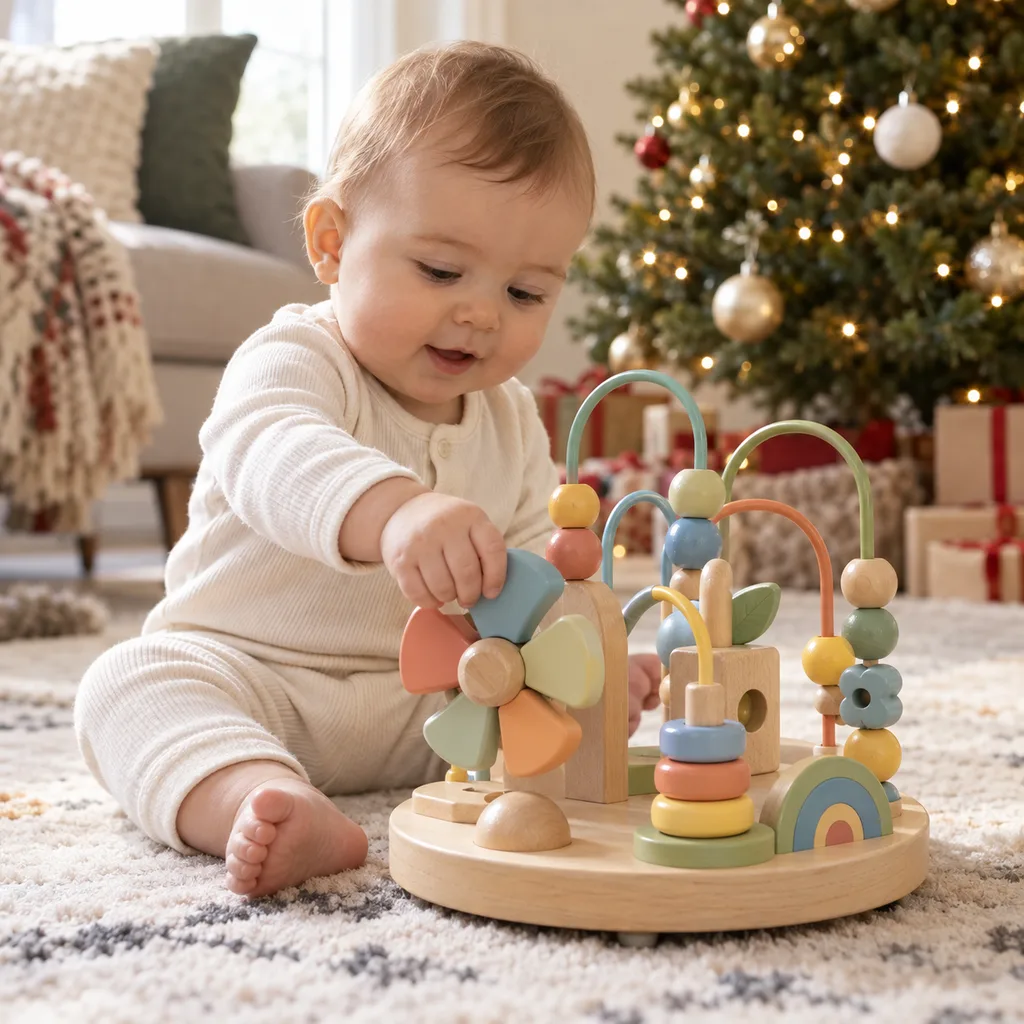
Baby activity toys are usually bought by grandparents, aunts and uncles, and friends of new parents who want something more lasting than another outfit. The ones that get used are simple: a set of soft fabric building blocks a baby can squeeze and knock over, or a classic stacking ring toy that works for months as skills develop. As a gift, think about the child's age now and a few months ahead, because babies change fast. It also helps to ask the parents what is already on the playroom floor, since duplicates are common and space in most homes is limited.
Kind 1 of 6
Soft fabric blocks are light, squishy cubes, often with crinkle sounds, bells, textures or pictures on each side. Younger babies grab and mouth them, and older babies start stacking and knocking towers down. They suit babies from the early months through toddlerhood and work well as a first gift. Before buying, check the age grade on the package, whether the fabric can go in the washing machine, and how many blocks come in the set. Muted or high-contrast colours are a matter of taste, so consider the family's style.
These lightweight and squeezable blocks allow babies to safely stack, build, and explore textures without any hard edges.
Kind 2 of 6
A baby music set usually includes a few simple instruments such as shakers, a small drum, a xylophone or bells, sized for small hands. Babies who can sit up enjoy the cause and effect of making noise, and toddlers keep playing with the set for years. Check the age grade printed on the box, how loud the instruments are, and whether the set comes with a bag or box for storage. Parents in apartments or small homes may like quieter wooden or fabric pieces better than metal ones.
Introduces babies to the joy of music and rhythm, encouraging auditory development and cause-and-effect understanding through sound.
Kind 3 of 6
A stacking ring toy is a central post with graduated rings that slide on and off. At first, babies chew and hold the rings; later they pull them off, and eventually they figure out the order. It suits babies from about six months and keeps being useful into the toddler years. Look at the material (wood, plastic or fabric), the size of the rings for small hands, and whether the base rocks or stays flat. It is a modest gift that pairs nicely with a book or blocks.
A timeless toy that helps babies develop hand-eye coordination and problem-solving skills as they learn to order and stack rings.
Kind 4 of 6
A shape sorter is a box, cube or bucket with cut-out holes and matching pieces that drop through. Babies start by putting pieces in and dumping them out, then slowly learn to match shapes. It suits older babies and young toddlers, roughly from nine months on, and makes a good step up from blocks. Check how many shapes are included, how easy the lid is for a small child to open, and the age grade. Fewer, simpler shapes are less frustrating for younger children.
This toy challenges toddlers to match different shapes to corresponding holes, fostering cognitive development and dexterity.
Kind 5 of 6
A tummy time water mat is a sealed, inflatable mat filled with water and floating shapes that move when a baby pats it. Soft activity play mats with hanging toys and textured panels do the same job for babies lying on their backs. Both suit newborns and babies in their first several months, which makes them a practical gift for new parents. Check the size against a typical living room floor, how the mat cleans, and how it folds for storage or travel.
A unique mat that provides a stimulating sensory experience for infants during tummy time, strengthening neck and shoulder muscles.
This engaging mat provides a safe and stimulating space for infants to explore textures, sounds, and visual elements during tummy time and play.
Kind 6 of 6
An activity cube puts several things to do on one toy: bead mazes, spinning gears, sliding pieces, doors or buttons. Sit-to-stand walkers take a similar idea, with a removable play panel for sitting babies and a handle to push once they start pulling up. Both suit babies from about nine months into the toddler years. Check the footprint, whether the toy needs batteries, how many activities it offers, and, for walkers, whether the wheels suit the family's floors, since hardwood and carpet behave differently.
A versatile toy offering multiple sides of engaging activities, perfect for keeping curious babies entertained and developing various skills.
Designed to support infants transitioning from sitting to standing and taking their first steps, promoting gross motor skill development.
Looking for one person in particular? Shop by person.
Everything else
Showing 1–8 of 8