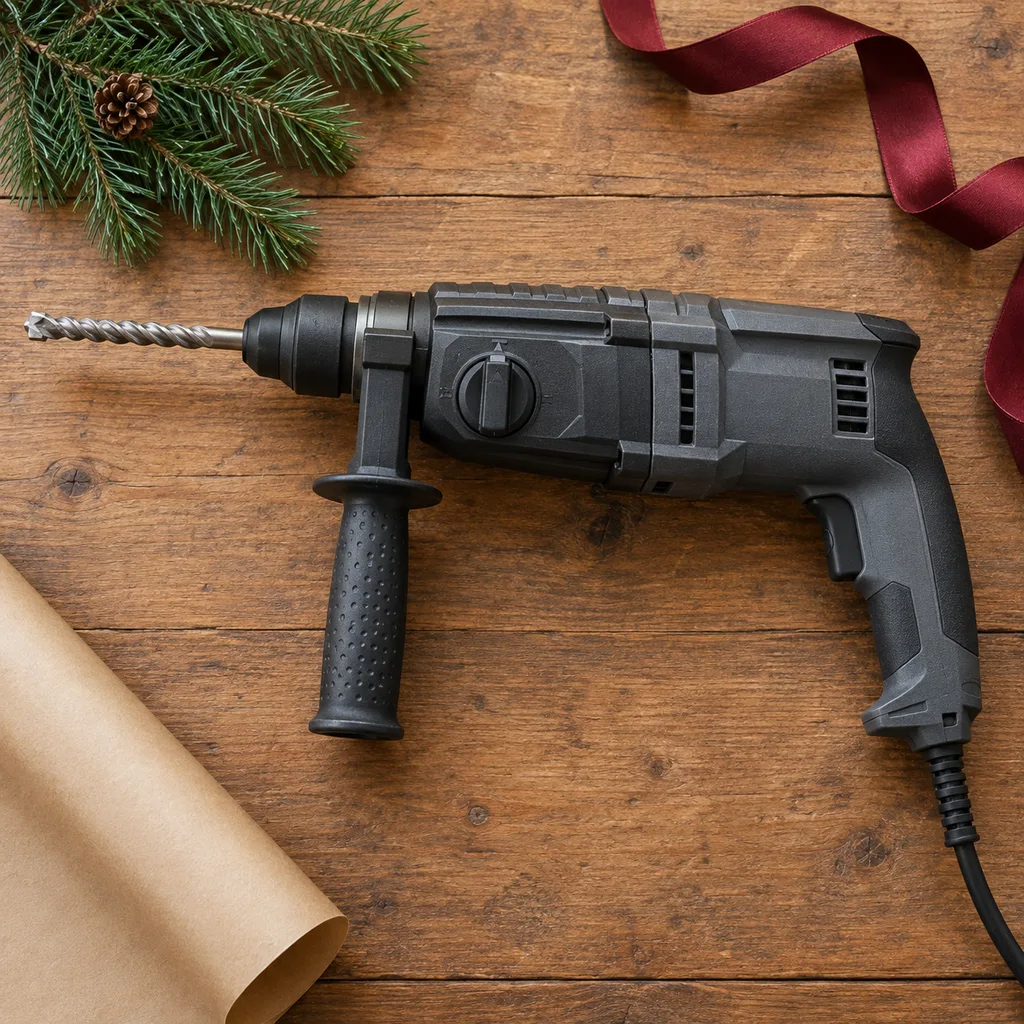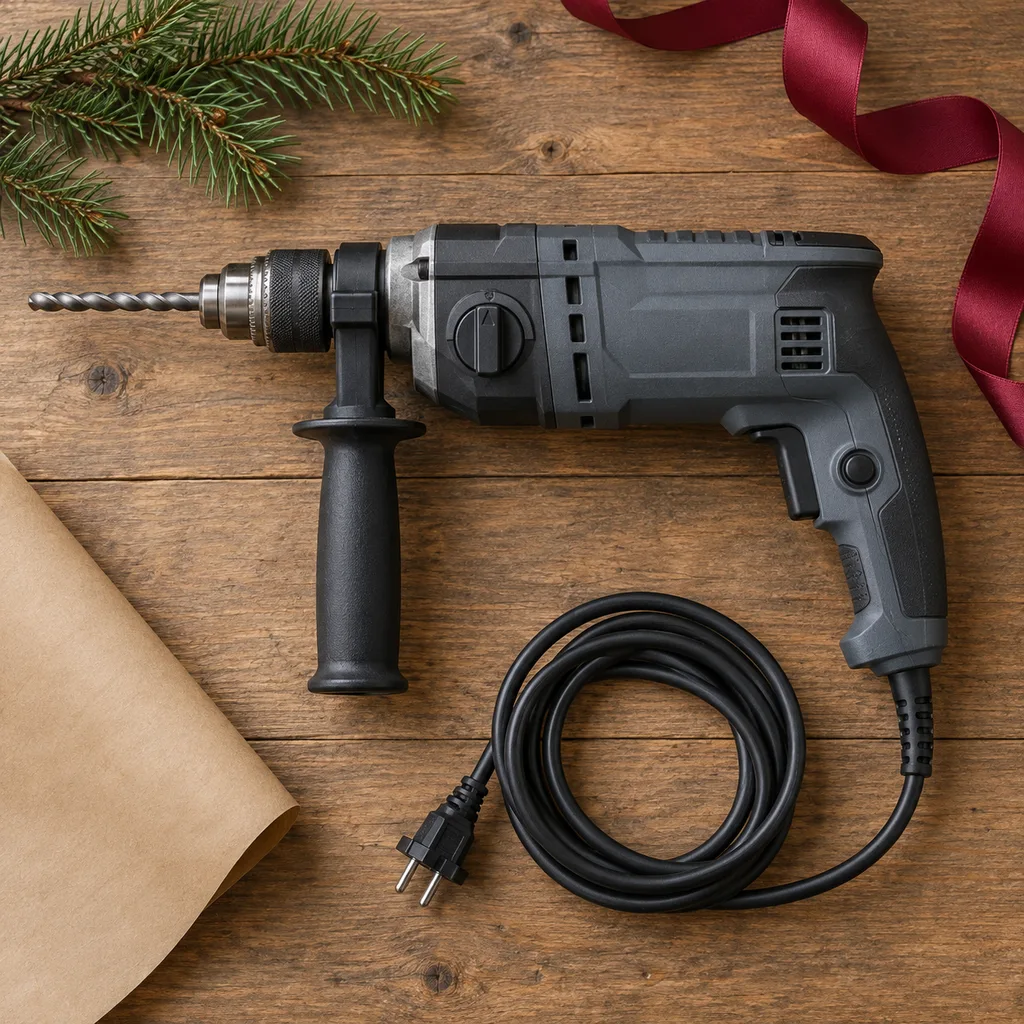
Corded hammer drill
An essential tool for those working with masonry, concrete, or brick, providing powerful percussive action.
Garden & DIY
8 kinds worth knowing, 6 picks, and what to check before you buy.
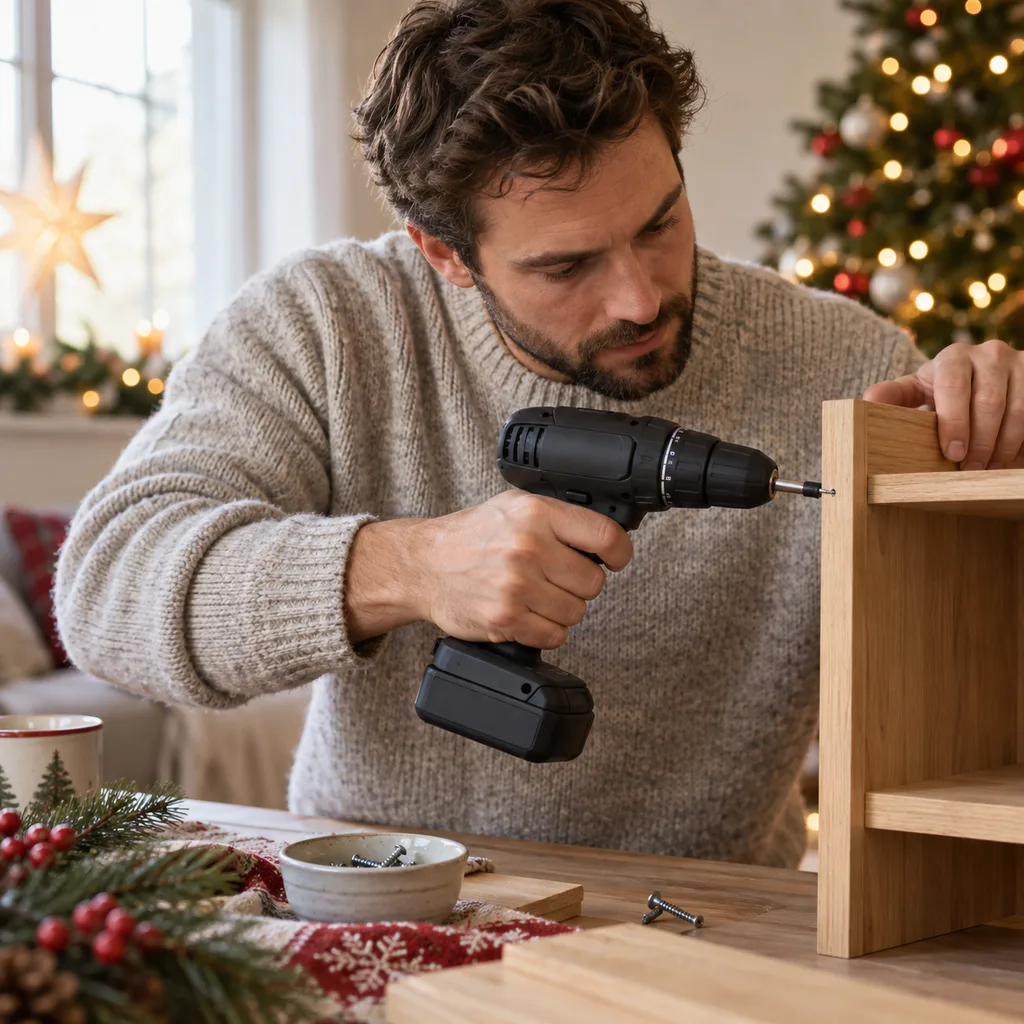
Drills usually go to someone who already fixes things, or to someone who just bought a house and needs to hang shelves. A good one gets used for years. When you pick one, think about what they'll actually do with it more than how powerful it is. For most homes, a cordless drill takes care of furniture assembly, curtain rods and small repairs. A hammer drill is for people who need to get into brick, block or concrete. Before you buy, look at what's already in their workshop. If they own batteries for one tool line, sticking with that line makes the gift more useful. If they already own the basics, a more specialized tool can fill a real gap.
Kind 1 of 8
A hammer drill spins the bit and taps it forward quickly at the same time. That lets it bore into brick, mortar and poured concrete. With the hammer action switched off, it also works as a regular drill. It suits someone who mounts things on basement walls, puts up fencing or works on an older masonry house. Before you buy, check whether it's corded or runs on batteries. Also check the chuck size and whether it has a side handle. A corded model keeps going through long jobs without stopping to recharge.
An essential tool for those working with masonry, concrete, or brick, providing powerful percussive action.
Kind 2 of 8
A drill press is a drill fixed to a stand. You lower the bit with a lever onto a table below. It makes straight, repeatable holes that are hard to get by hand, which matters for woodworking, metalwork and hobby projects. A benchtop model fits someone with a garage or basement workbench who builds furniture, jigs or small projects. Before buying, measure the space on their bench. Also check how deep the bit can travel, whether the speed can be adjusted and whether the table tilts or moves up and down.
Provides precision and consistency for woodworking and metalworking projects, ensuring perfectly straight holes every time.
Kind 3 of 8
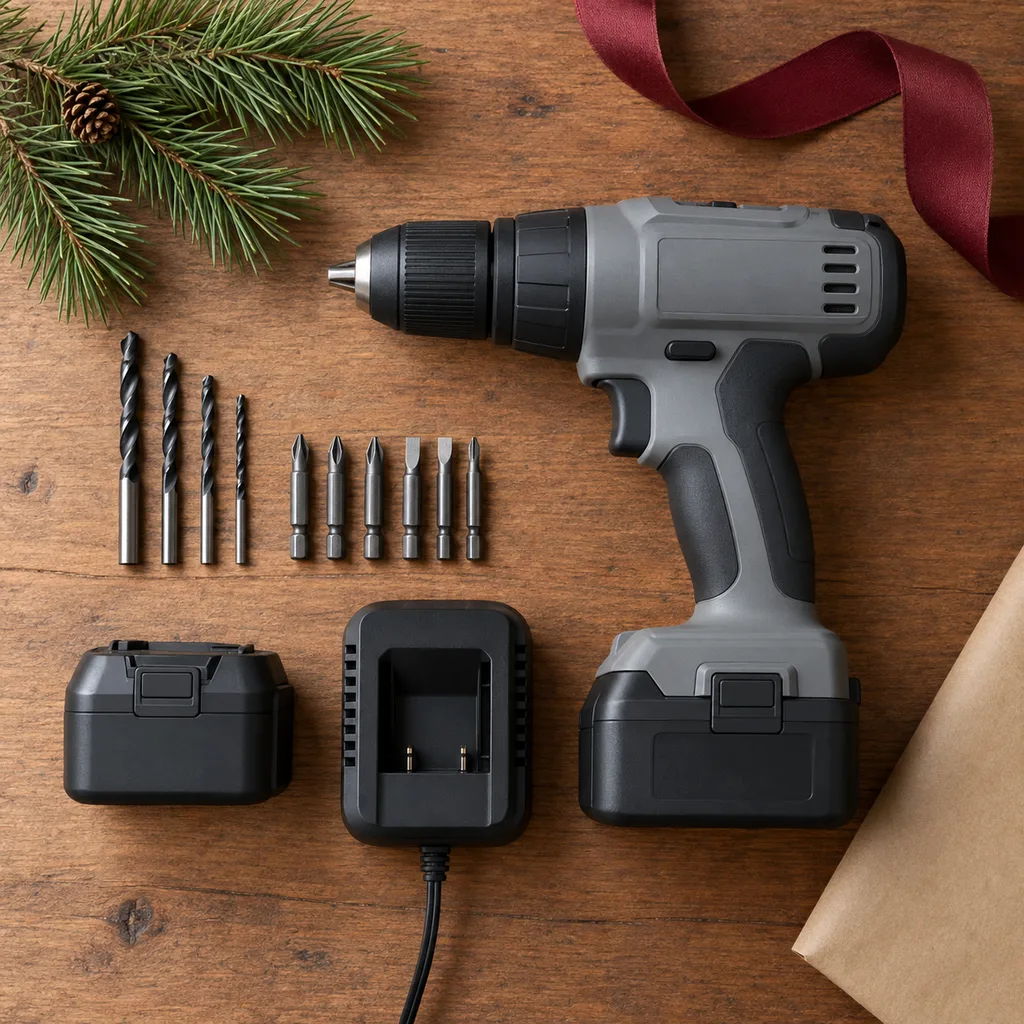
A cordless drill is the tool most households reach for first. It handles furniture assembly, hanging pictures, installing blinds and small repairs anywhere, with no outlet needed. A kit with a battery, charger and case makes a complete gift for a new homeowner or anyone without a drill of their own. Check the battery voltage, how many batteries come with it and whether it has a clutch for driving screws. If they already own cordless tools, choosing the same battery system saves them from keeping two sets of chargers.
A versatile tool for home improvement enthusiasts, offering portability and power for various drilling and driving tasks.
Kind 4 of 8
A rotary hammer is a step up from a hammer drill. It uses a piston to deliver much stronger blows, so it drills large holes in concrete with less effort. Many models also have a chisel-only mode for chipping out tile or mortar. It suits renovators, contractors and anyone doing serious basement or foundation work. For light household use, it's more tool than they need. Check which bit system it takes, what modes it offers and whether bits are included. Rotary hammers need their own style of bits.
A robust tool for professionals or serious DIYers tackling demanding demolition and drilling tasks in concrete and stone.
Kind 5 of 8
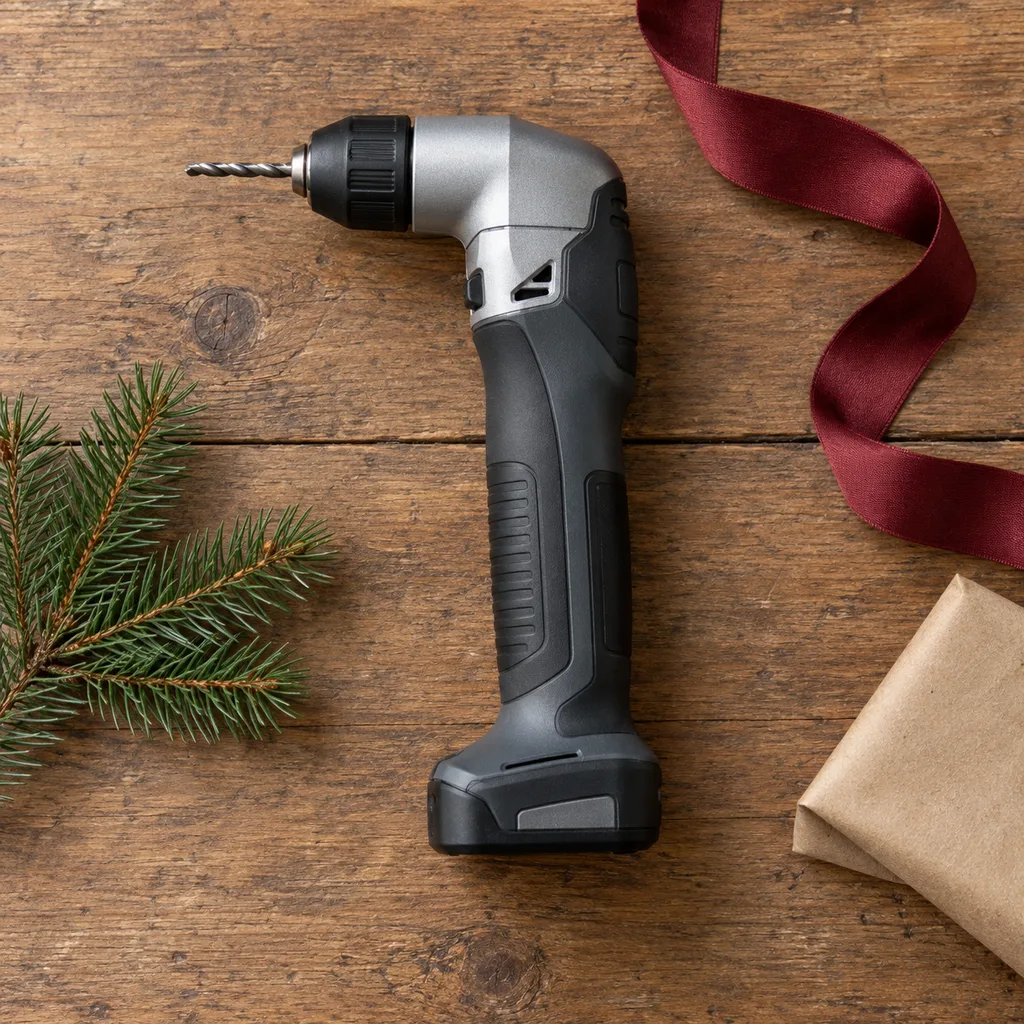
A right angle drill has its head turned sideways, so it fits between studs, joists and cabinet walls where a standard drill can't reach. Electricians, plumbers and people who run wires or pipe through framing use them a lot. Someone who works inside cabinets or car interiors will find one handy too. Because it's a specialized tool, it makes the best gift for someone who already owns a regular drill. Check the head length, whether it's corded or cordless, and whether it matches batteries they already have.
Ideal for plumbers, electricians, or anyone needing to drill in confined spaces where a standard drill won't fit.
Kind 6 of 8
A drill driver is the standard cordless drill most people picture. It has an adjustable clutch that stops the bit from turning once a screw is seated, which keeps it from stripping heads or sinking screws too deep. It works well for assembling furniture, putting up shelves and light woodworking. It's a sensible first tool for a new homeowner, student or apartment dweller. Check the weight and grip size, the number of clutch settings and whether it has a built-in work light. A lighter model is easier to use overhead.
Kind 7 of 8
A corded drill plugs into the wall, so it runs as long as the job lasts and has no batteries to wear out. It suits someone who works mostly in one garage or workshop, or who uses a drill only a few times a year and doesn't want to find a flat battery. Corded models are often compact and simple. Check the cord length, the chuck size and whether it has variable speed and a reverse setting. If they work far from outlets, a cordless model will serve them better.
Kind 8 of 8
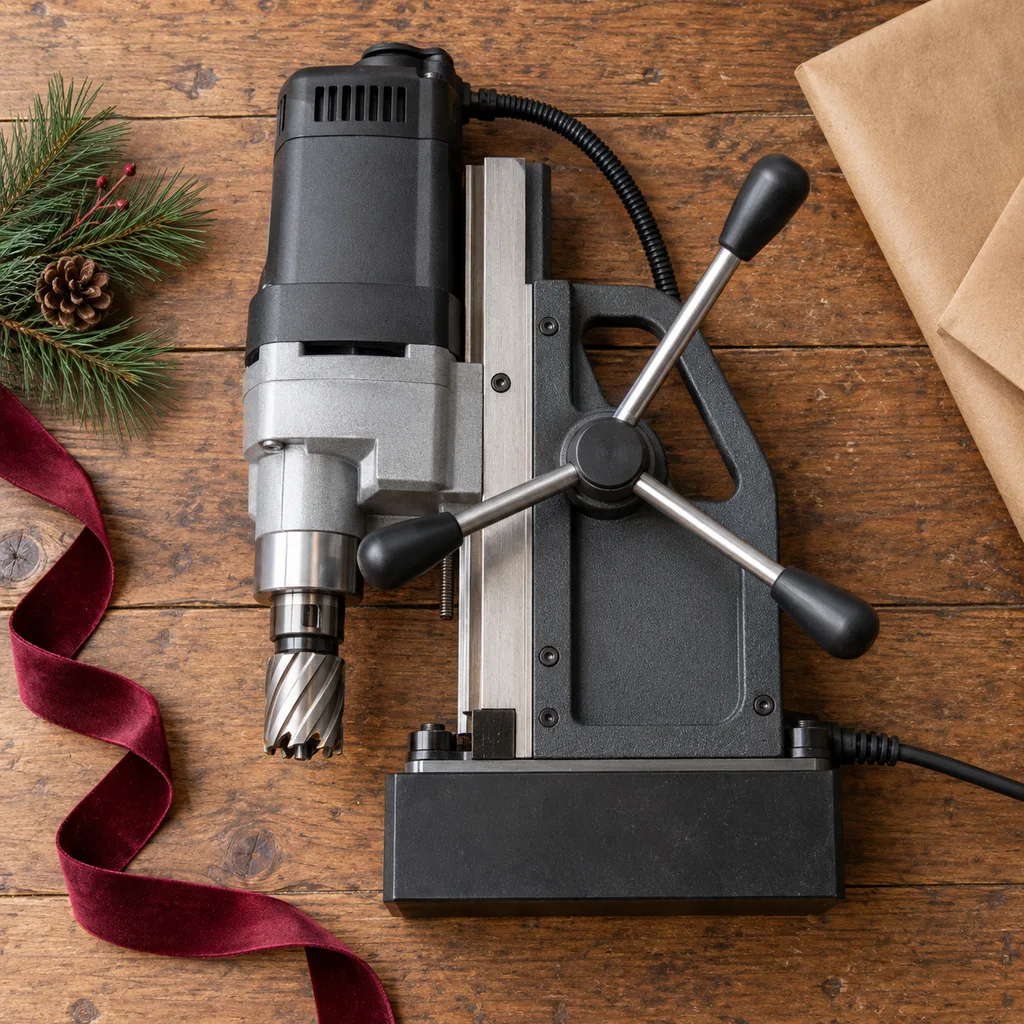
A portable magnetic drill has a strong electromagnetic base that locks onto steel. That lets it cut clean holes in beams, plates and structural pieces right where they sit. It's a tradesperson's tool for welders, fabricators, millwrights and steel erectors. Hobbyists rarely need one. Only give one if you know the person works with heavy steel regularly. Check the cutter capacity, whether it takes annular cutters, twist bits or both, and how much it weighs. They'll likely carry it around job sites.
A specialized tool for metal fabricators and structural workers, offering stable and precise drilling on steel surfaces.
Looking for one person in particular? Shop by person.
Everything else
Showing 1–6 of 6