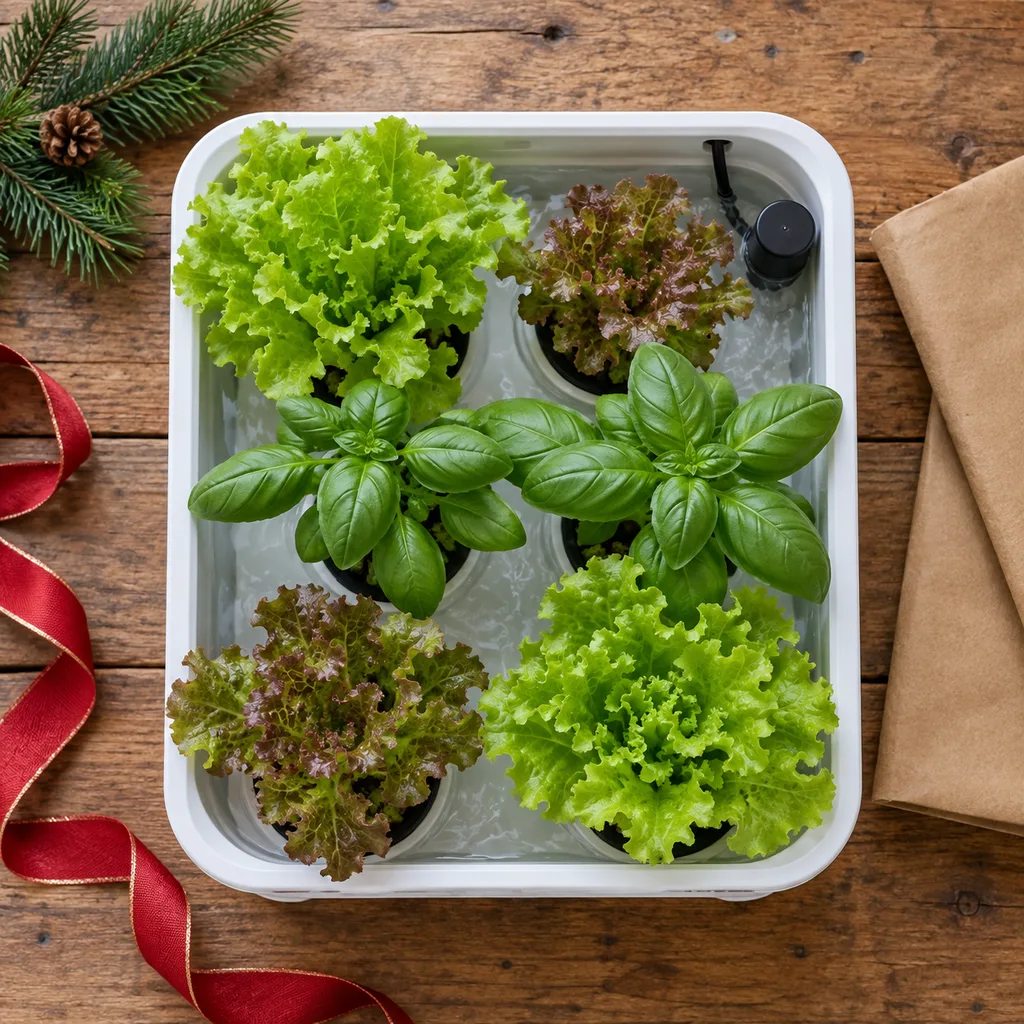
Indoor hydroponic garden
This kit provides a convenient way for urban dwellers or beginners to cultivate fresh herbs and vegetables year-round directly in their home.
Garden & DIY
7 kinds worth knowing, 8 picks, and what to check before you buy.
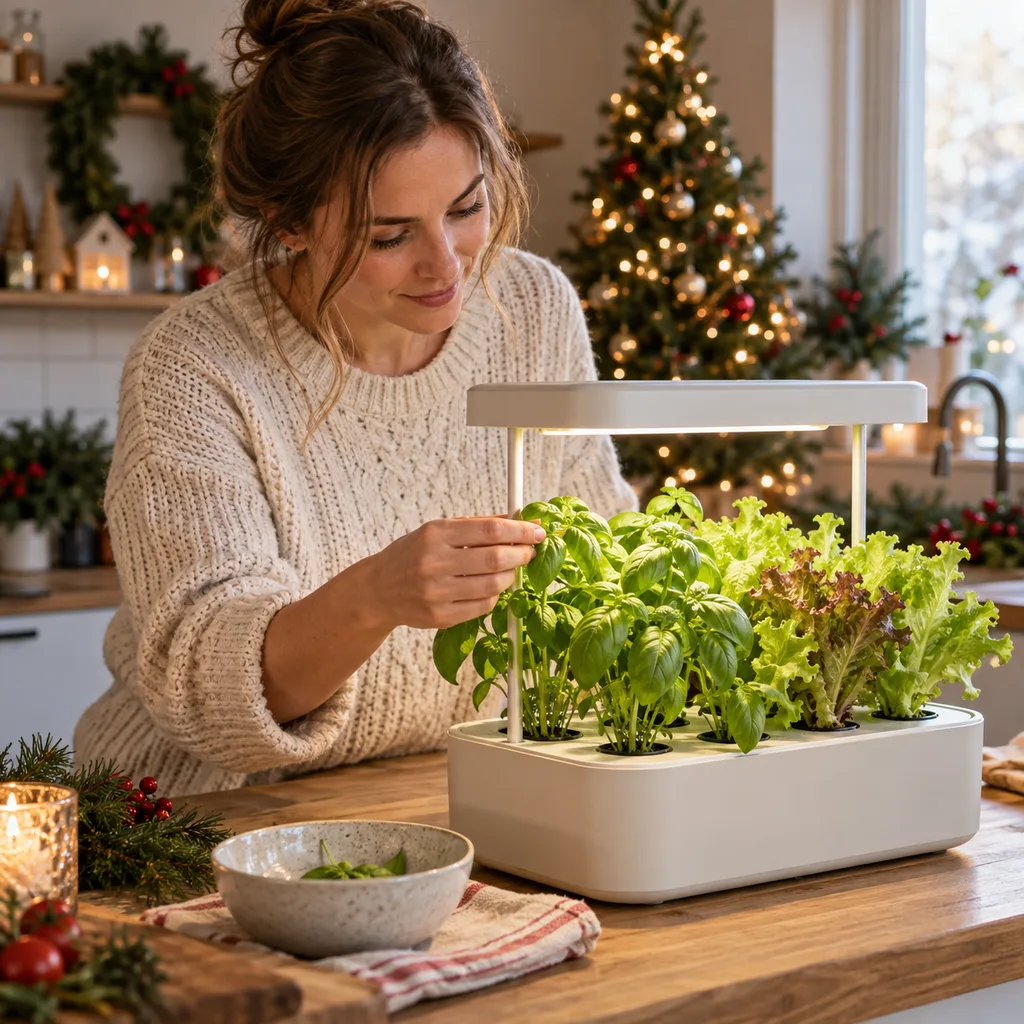
Growing food indoors in water instead of soil appeals to people who miss the garden in winter, cook with fresh herbs, or just like to tinker. Most people who search for this want either a ready-made hydroponic garden that sits on a counter or a bigger hydroponic tower that holds more plants in less floor space. As a gift, the counter kit gets used most because it takes little setup and shows results within weeks. Refills like nutrients and growing medium suit someone who already grows. Before you choose, think about where the unit will go, how much light that spot gets, and whether the person enjoys a daily check-in or wants something close to hands-off.
Kind 1 of 7
A hydroponic garden is a compact unit with a water tank, a built-in light and a few pods for seeds. It suits a home cook, a condo dweller or a parent who wants lettuce and basil through the winter. Before buying, check how many pods it holds, how tall the light arm extends, and whether it takes standard seed pods or only its own. Measure the counter or shelf too, since some units are wider than they look. A small, quiet unit that fits the kitchen tends to stay in use long after the holidays.
This kit provides a convenient way for urban dwellers or beginners to cultivate fresh herbs and vegetables year-round directly in their home.
Kind 2 of 7
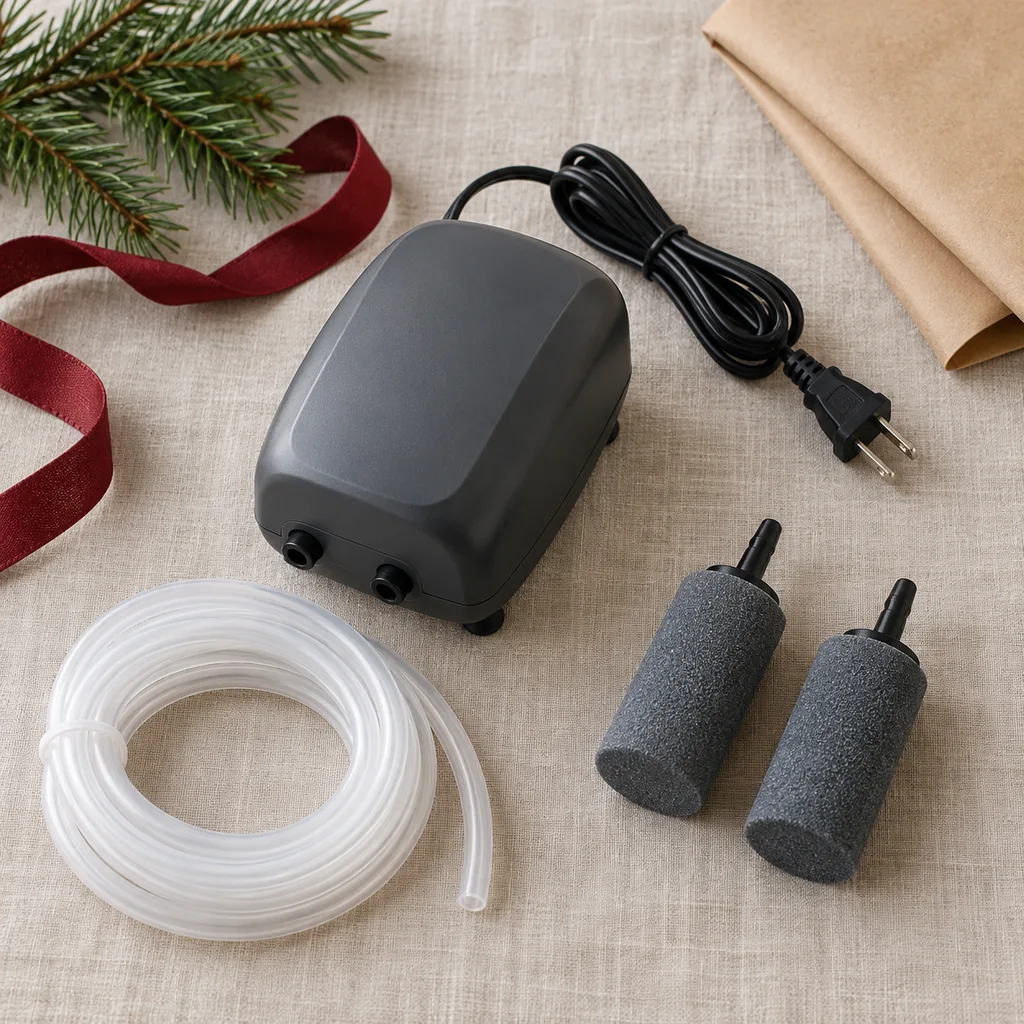
A hydroponic system is the whole setup: a reservoir, a way to move or oxygenate water, and something to hold plants. For someone who already grows or likes to build their own, the useful gifts are the working parts, such as an air pump with air stones that keeps roots from sitting in still water. Check the pump's size against the reservoir volume, how loud it runs, and whether tubing and a check valve come in the box. Parts suit a hobbyist far better than a beginner.
This set ensures proper oxygenation of the nutrient solution in hydroponic reservoirs, promoting healthy root development and preventing stagnation.
Kind 3 of 7
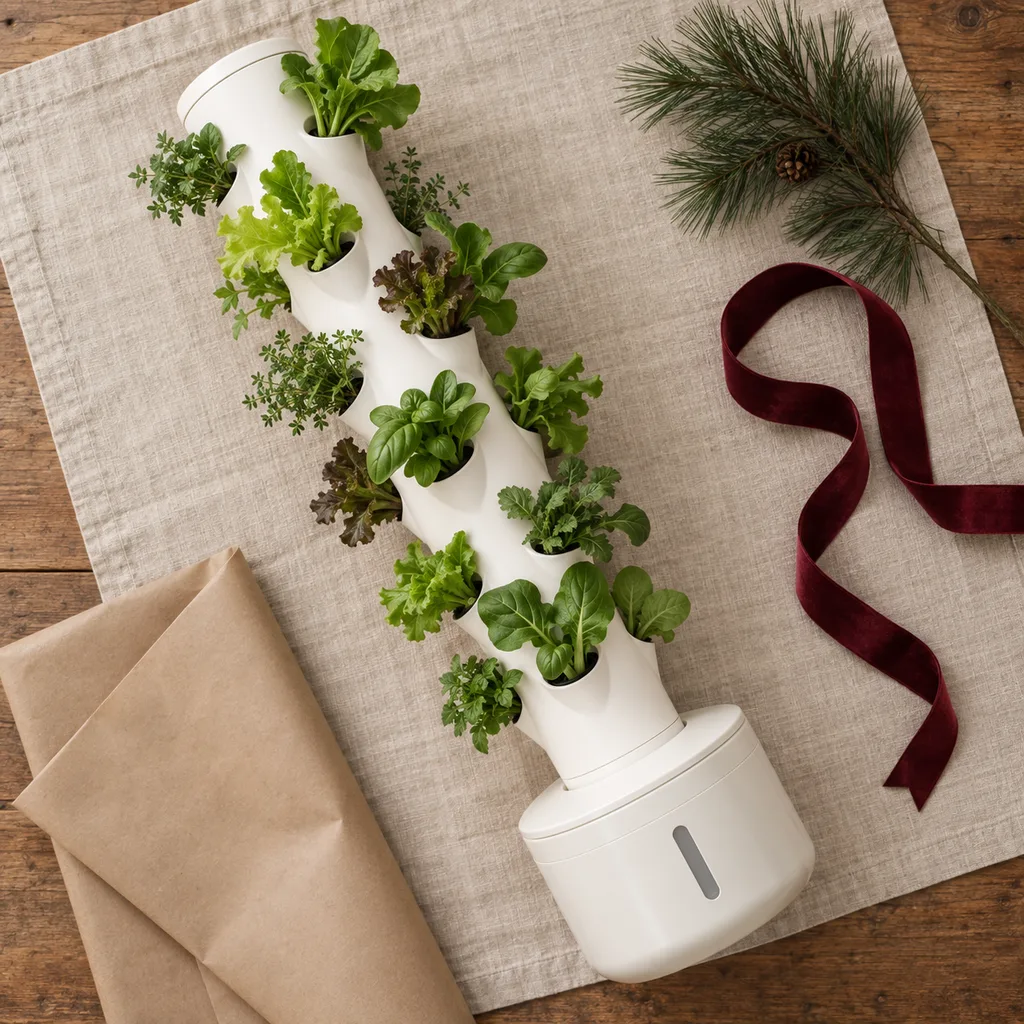
A hydroponic tower stacks planting pockets around a central column, with a pump sending water up to the top. It grows far more plants per square foot than a countertop kit, so it suits a keen grower, a family that eats a lot of greens, or someone with a sunroom or bright basement. Check the height against the ceiling or window, the number of planting sites, and whether it needs grow lights or strong natural light. Ask yourself whether the person has room for a floor-standing unit before you commit.
This innovative system allows for the cultivation of numerous plants in a compact vertical footprint, ideal for small spaces or maximizing yield.
Kind 4 of 7
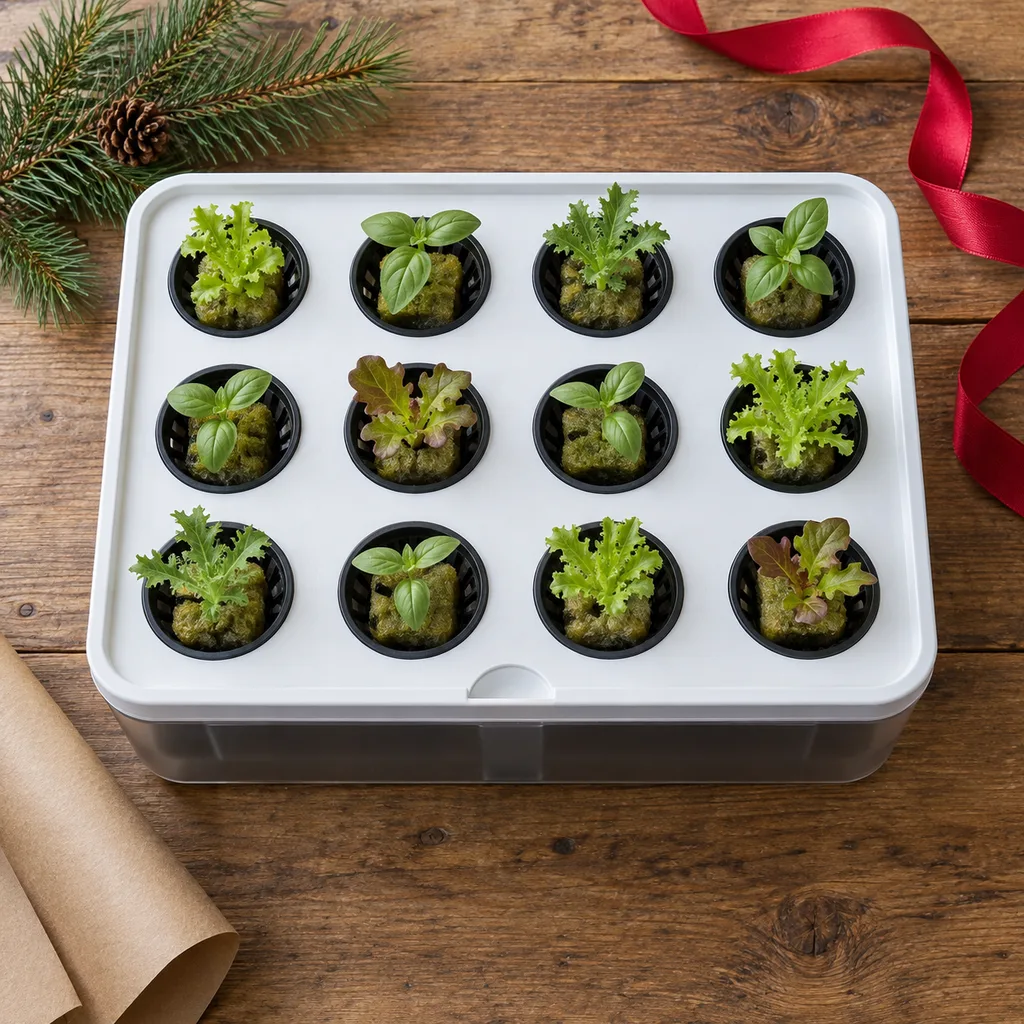
Leafy greens, herbs, cherry tomatoes and strawberries are the plants that do best in water, and most start from seed. A seed starting system with a tray, cover and plugs gets seedlings going before they move into a garden or tower. It suits someone who wants to grow varieties that don't come in pre-made pods, or who plans an outdoor garden in spring. Check the number of cells, whether the tray fits under a light they already own, and whether starter plugs are included.
This system provides an ideal environment for germinating seeds and nurturing young plants before transplanting them into a larger hydroponic setup.
Kind 5 of 7
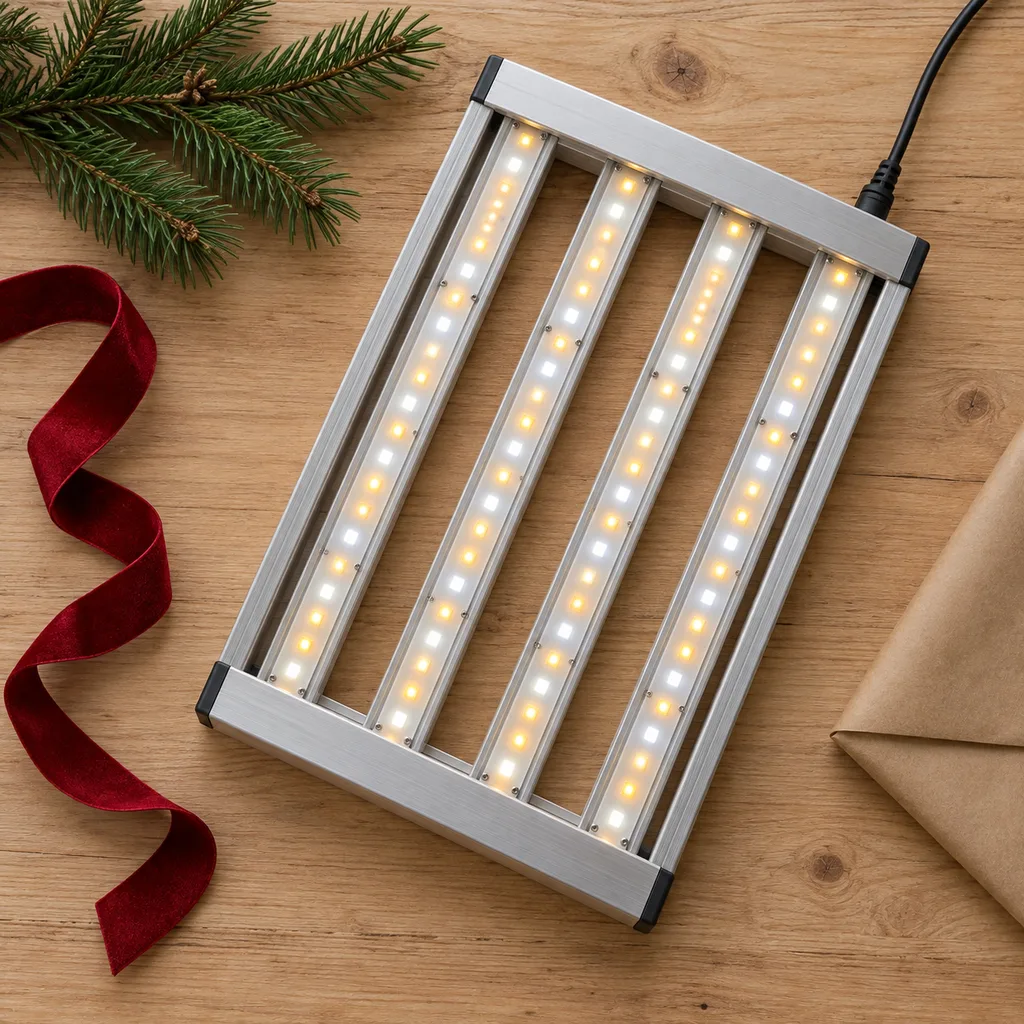
An indoor garden system depends on light more than anything else, and a Canadian winter window rarely gives enough. LED grow lights fill that gap for someone growing on a shelf, in a basement or under a cupboard. They suit a grower whose plants look tall and pale, or anyone setting up a DIY rack. Check the size of the area the light covers, whether it has a timer, how it mounts or hangs, and whether the glow will bother anyone in a shared living space.
These lights provide the full spectrum of illumination required for robust plant development in indoor hydroponic setups, simulating natural sunlight.
Kind 6 of 7
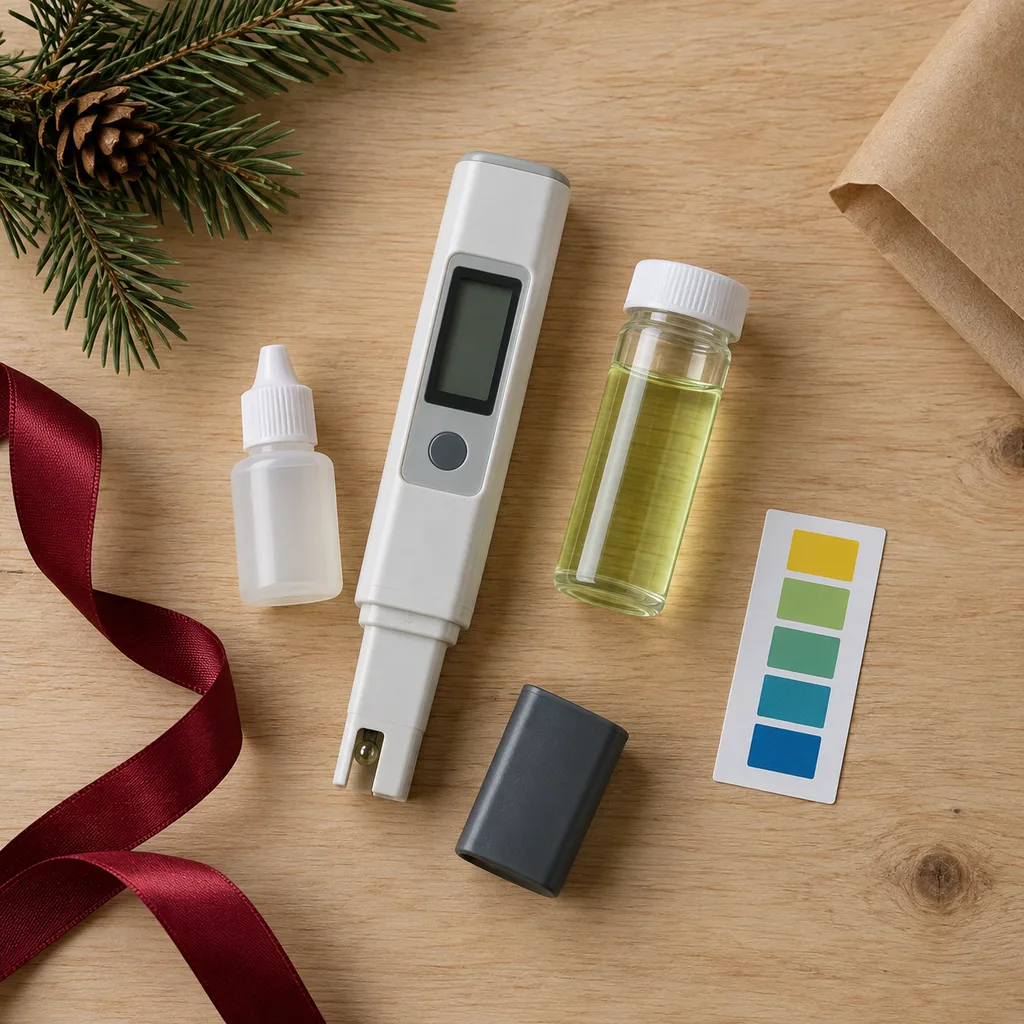
Plants in water get all their food from hydroponic nutrients, so a grower goes through them steadily. A nutrient set makes a practical gift for anyone who already owns a system, and a pH testing kit pairs well with it, since nutrients only work properly within a certain pH range. Check whether the nutrients are made for leafy greens, fruiting plants or both, and whether the kit uses drops, strips or a digital meter. Beginners usually find drops or strips easier to start with.
This set offers the vital minerals and compounds necessary for healthy plant growth in any soilless cultivation system.
This kit allows growers to precisely monitor and adjust the acidity or alkalinity of their nutrient solution, crucial for plant health and nutrient uptake.
Kind 7 of 7
Hydroponic growing medium replaces soil, holding plants upright and letting roots reach water and air. Common types include clay pebbles, rockwool cubes, coco coir and perlite, and each suits a different setup. An assortment lets a grower try a few and see what works with their system. It suits a hobbyist more than someone with a pod-based countertop kit, which usually needs its own pods. Check what their system uses and whether the medium needs rinsing or soaking first.
This selection of inert substrates provides physical support for plant roots and retains moisture in soilless cultivation systems.
Looking for one person in particular? Shop by person.
Everything else
Showing 1–8 of 8