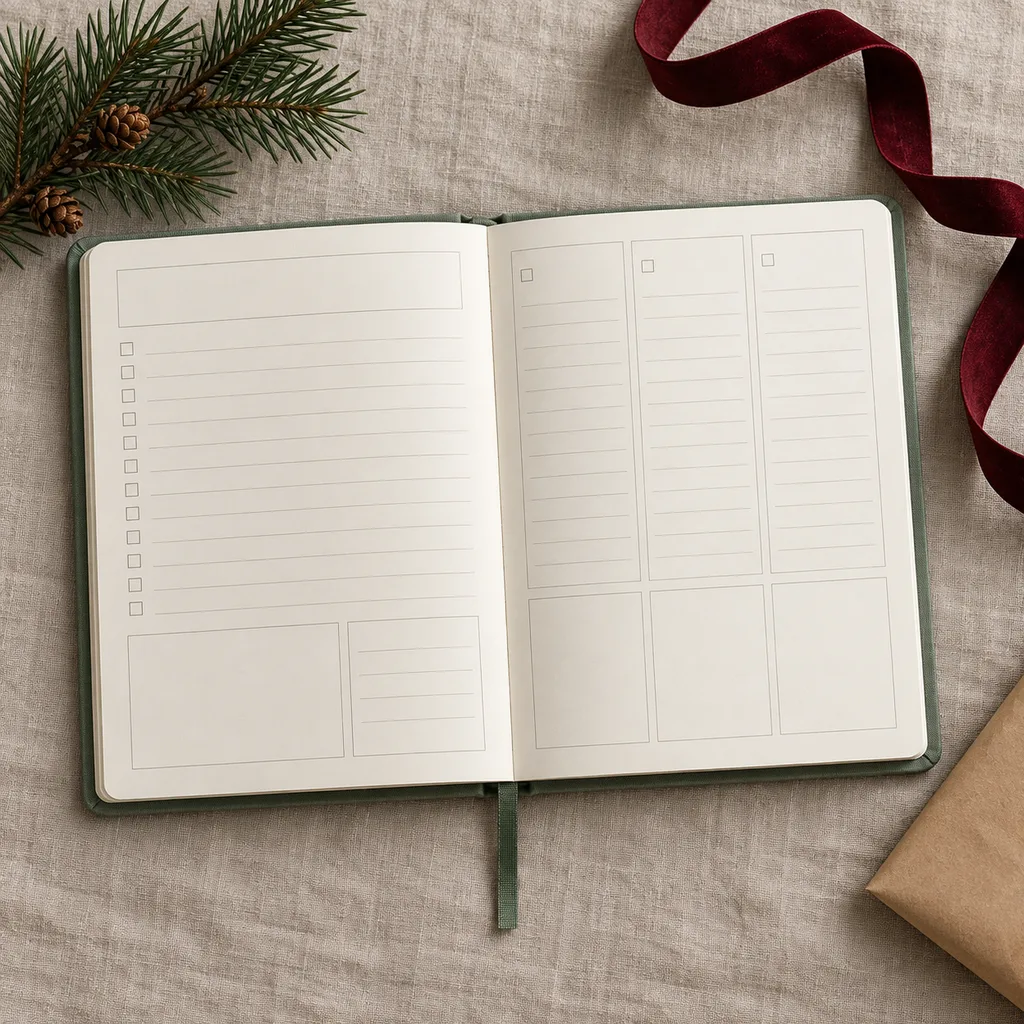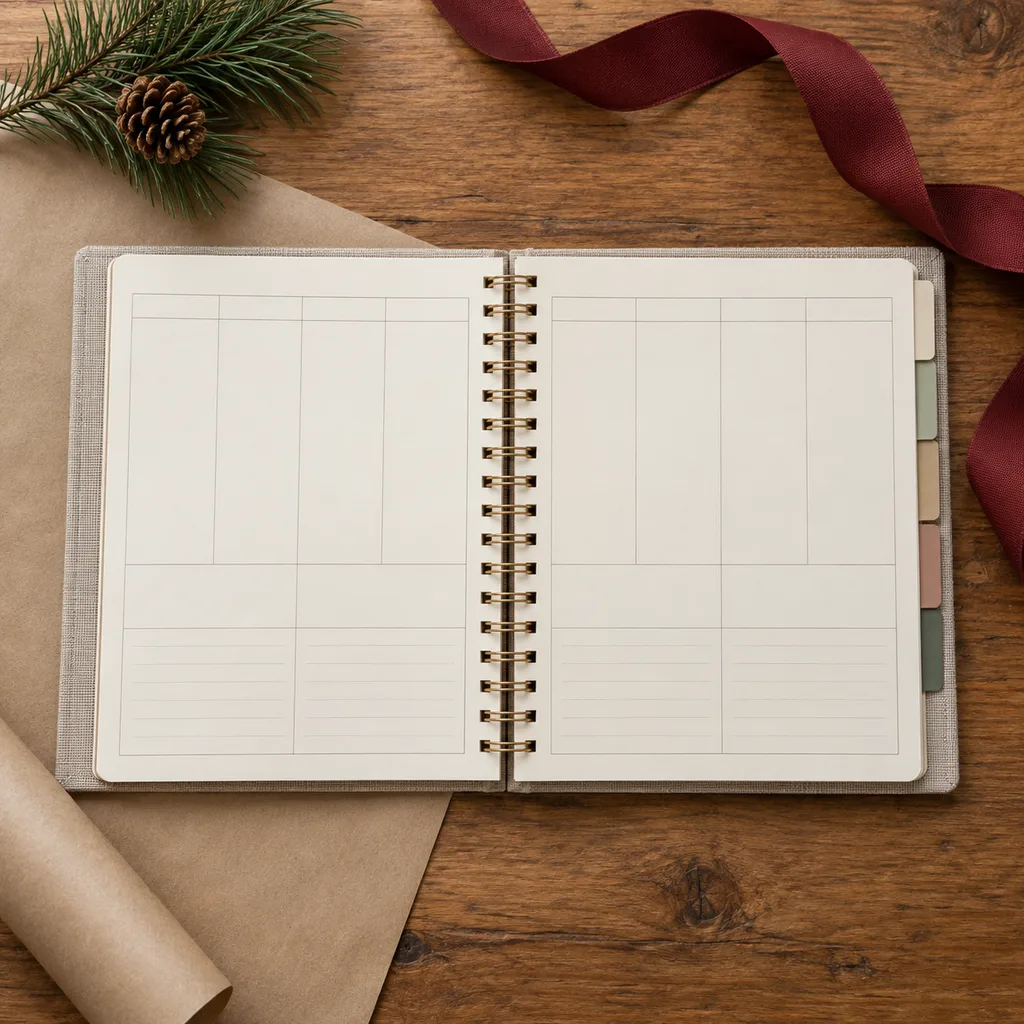
Weekly agenda notebook
Ideal for professionals and busy individuals who need a clear overview of their week's commitments and tasks.
Desk & Work
8 kinds worth knowing, 8 picks, and what to check before you buy.

Planners suit people who already like pen and paper: students juggling deadlines, young adults setting up their first real routines, and coworkers who keep a notebook beside the laptop. The ones that actually get used match how the person already thinks about time. Someone who lives by the week wants a weekly planner with room for a full seven days. Someone who runs on to-do lists wants a daily planner with a page per day. As a gift, look at layout and size before cover design. A handsome planner in the wrong format tends to sit untouched by February, while a plain one that fits the person's habits gets filled in.
Kind 1 of 8
A weekly planner shows all seven days across one or two pages, so appointments, shifts and deadlines are visible at a glance. It suits people with a steady mix of commitments who plan on Sunday evening and check in during the week. Before buying, check whether the spread gives weekends full-size boxes or squeezes them into half-boxes, whether days run in columns or horizontal rows, and whether there is a notes or to-do area beside the week. Also check whether it starts on Sunday or Monday, since people tend to have a strong preference.
Ideal for professionals and busy individuals who need a clear overview of their week's commitments and tasks.
Kind 2 of 8
A daily planner gives each day its own page or half-page, usually with an hourly schedule, a task list and space for notes. It works well for people with packed days: freelancers, managers, parents keeping track of a household, or anyone who likes crossing things off. Check the hour range, since some layouts stop at 5 pm and leave evenings out. Look at whether weekends get full pages, and think about thickness. A full year of daily pages makes a heavy book, which matters for someone who carries it in a bag.
This planner helps individuals meticulously organize their day, ensuring tasks and appointments are tracked efficiently.
Kind 3 of 8
A weekly calendar is simpler than a full planner. It usually has one grid per week, often on tear-off sheets or a pad that sits on a desk or fridge. It suits households that coordinate meals, school runs and activities, or anyone who wants a quick overview without writing a lot. Meal and grocery planners fit here, pairing a week of dinners with a shopping list. Check the size of the writing boxes, whether sheets tear off cleanly, and whether it can hang, stand or stick where the family will actually see it.
Simplifies household management by organizing weekly meals, creating shopping lists, and tracking food inventory.
Kind 4 of 8
A monthly planner is built around month-at-a-glance spreads, with lined pages or goal sections in between. It suits people who track birthdays, bills, travel and longer projects more than hour-by-hour tasks. Goal-oriented life planners often use this structure, adding space for reflection and monthly check-ins. Before buying, look at how big the date boxes are, since small boxes fill up fast, and whether there are prompts. Some people love guided questions, while others find them fussy and prefer open pages.
Supports individuals in setting and achieving personal and professional goals through structured reflection and action planning.
Kind 5 of 8
A student planner is laid out for a class schedule, with room for assignments, exam dates and extracurriculars. It suits teens in high school and college or university students who are managing their own deadlines for the first time. Check whether it runs on the school year rather than January to December, whether there is a timetable page for recurring classes, and whether it is small enough to fit in a backpack. A sturdy cover and binding matter, since it will get stuffed in bags daily.
Designed to help students manage coursework, exam schedules, and extracurricular activities throughout the school year.
Kind 6 of 8
An academic planner follows the school calendar, usually running from July or August through the following summer. Students use them, but so do teachers, professors, school staff and parents whose year is shaped by terms and holidays. As a Christmas gift, timing is worth thinking about. By December an academic planner is already several months in, so an undated or January-start version may be more useful unless the person wants one for the second term. Check the start month and whether there are term or semester overview pages.
Kind 7 of 8
An undated planner has blank spaces where the dates go, so the owner fills them in and can start any week of the year. It suits people who plan in bursts, take breaks, or have been put off by half-empty dated planners in the past. Bullet journal style notebooks go a step further, with dot-grid pages for building custom layouts. Check the paper weight if the person uses markers or fountain pens, and consider whether they will actually enjoy writing in the dates or would rather have that done.
Offers complete freedom to start planning at any time of the year without wasting pages, ideal for intermittent use.
Provides a versatile blank canvas for creative individuals to design their own planning system, trackers, and artistic layouts.
Kind 8 of 8
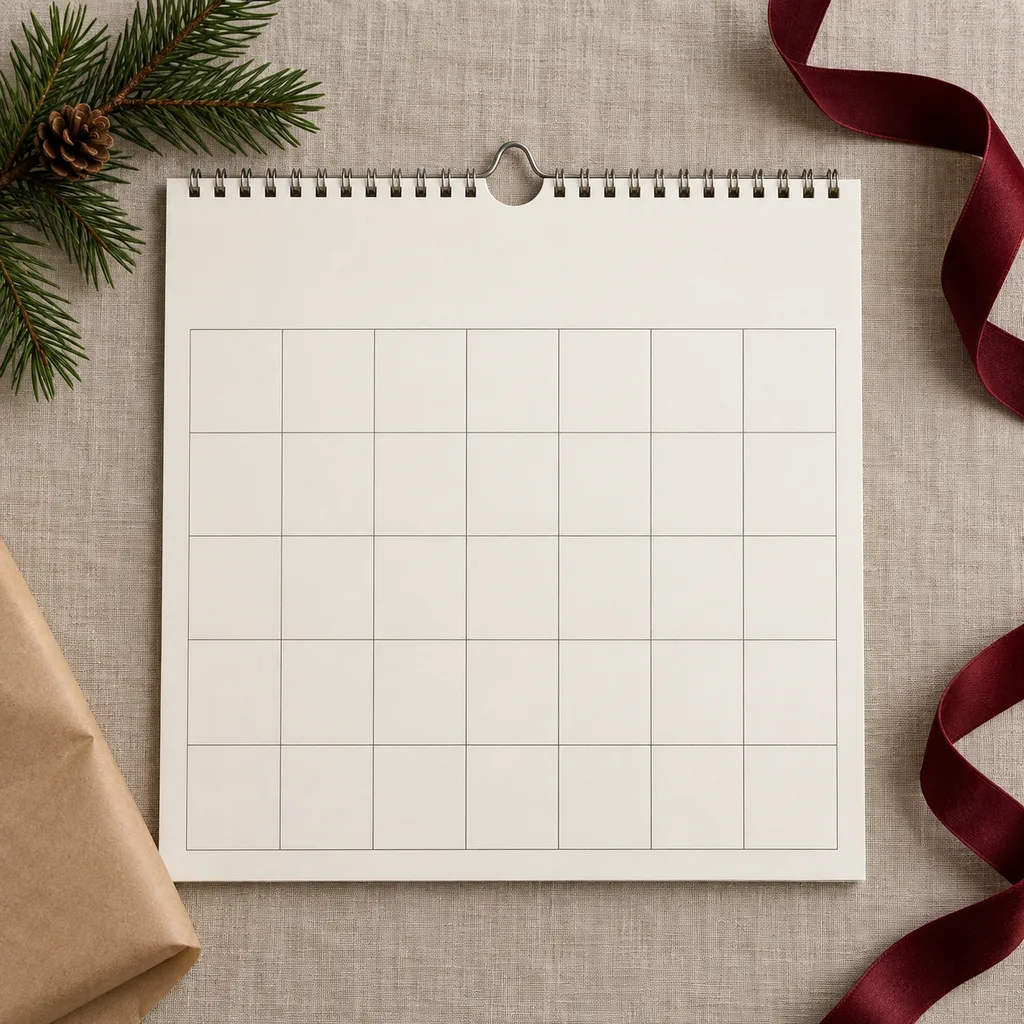
A calendar planner combines a calendar with room to plan, often as a wall calendar with large writing boxes or a desk pad with a monthly grid. It suits shared spaces like kitchens, offices and dorm rooms, and people who want dates visible without opening a book. Check the box size, whether it hangs flat or sits on an easel, and whether it starts in January. A December gift of a new-year wall calendar lines up nicely with the timing.
Perfect for families or teams coordinating shared schedules, appointments, and long-term events in a central location.
Looking for one person in particular? Shop by person.
Everything else
Showing 1–8 of 8